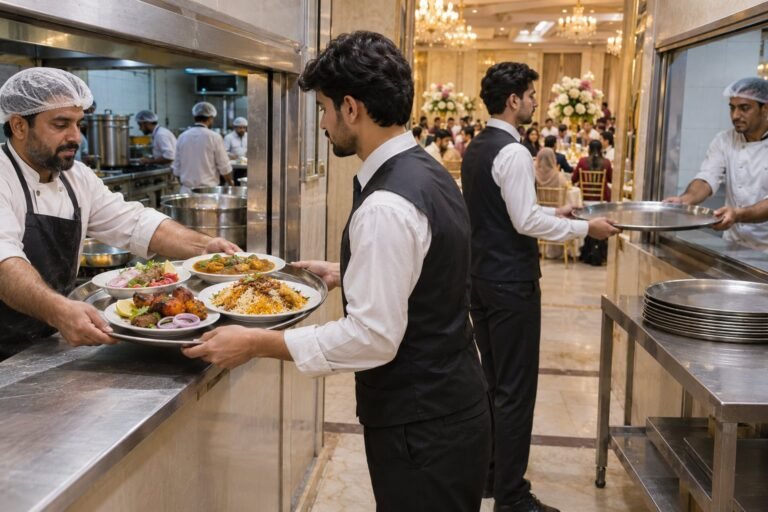
Once a tray has a tested load, the next question is how many trips will get a course to the room. Include loading, the walk, the handoff, and the return. The schedule should give runners a realistic pace and the kitchen a clear order for sending out plates.
Planning the numbers? Open the Serving Tray Capacity Calculator before filling in the worksheet.
Start With a Tested Load and a Named Route
Use the calculator or the linked tray test to confirm what fits. Have the service lead confirm the load and route with the actual dishes and trained runners. The trip plan treats the tested load as an upper bound and uses fewer plates when a stop or dish shape calls for it.
Write the kitchen pass, route, and destination on the plan. Follow the venue’s procedures. The OSHA Restaurant Serving Safety explains common restaurant service hazards such as carrying heavy loads and moving through busy service areas. More trips or a suitable cart may be better options when handling conditions change.
Calculate Trips for the Way Tables Are Served
Suppose one tested tray carries six standard plates and you are serving 54 guests. If the delivery plan allows mixing tables, nine full trips cover everyone. Count any exceptions in the plate total so the pass issues exactly one main plate for every person assigned one.
If you have six tables of nine and each trip serves only one table, each table needs two trips, one with six plates and one with three. The same 54 plates now require 12 trips. Both counts are correct for their service rules.
Assign the partial trips before the course begins. A runner should know whether to take three plates to finish a table, or whether a separate runner is already on that route. For any verified dietary meals, follow the service lead’s labeling and handoff process. The FDA Food Allergy Guidance provides background on cross-contact.
Time the Full Cycle and Allow for the Last Delivery
Time loading, travel to the destination, unloading, and the return to the ready position. A five-minute round trip might include one minute to load, one minute to walk, one minute to hand off, and two minutes to return and reset. Under those assumptions, one runner can complete two full cycles in ten minutes.
Two runners would need at least five dispatch rounds for nine trips, or six rounds for 12 trips, if each can do one trip per round. In a five-minute cycle, use 25 or 30 minutes as a simple planning block, respectively. The final plate may arrive earlier than the end of that block because the last runner still has to return.
Check whether the kitchen pass can actually release two loads together. If it tags only one tray at a time, or there is room for only one return at the pass, test that step before promising a shorter service window.
Set Up Pickup and Clear the Return Route
Give the pass one ticket per tray with the table number, course, quantity, and any designated handoff. Name a person to check the tray as it leaves. When a table changes seats or a dish must be replaced, update the ticket rather than sending a verbal instruction down a busy route.
Show runners where to hand off the load and where to return empty trays. Separate used items from food ready to leave. Keep the service lane clear and plan any temporary detour with the venue to protect guest circulation. See the U.S. Access Board Guide to Accessible Routes for route design background where applicable.
Record Delays at the Step That Caused Them
A late tray may reflect a missing plate, a slow handoff, or a return path blocked by another team. Write the dispatch and completion times and note the reason for any unusual delay. Use the same route and dish setup when you compare a later rehearsal.
Compare the time when the first table was served with the last table. If the gap is larger than the host can accept, add help at the pass, adjust the order of table zones, or ask whether a cart and route can serve the room safely. Test the revised plan before giving staff a new schedule.
Download the Planning Worksheet
Replace the example rows with counts from your own order or rehearsal.
اکثر پوچھے جانے والے سوالات
ٹرے میں کتنی پلیٹیں رکھیں؟
اصل پلیٹ، ٹرے اور راستے کے ساتھ آزمودہ تعداد رکھیں۔
کیا واپسی کا وقت شامل ہے؟
ہاں، دوبارہ تیار ہونے تک وقت ناپیں۔
دو میزوں کی پلیٹیں ملا سکتے ہیں؟
صرف جب منصوبے میں اجازت اور واضح شناخت ہو۔
خصوصی ڈش کیسے پہنچائیں؟
ذمہ دار سرور کو طے شدہ نشست بتائیں۔
ٹرے دیر سے نکلے تو؟
وجہ لکھیں اور رکاوٹ والا مرحلہ آزمائیں۔
Sources and Further Reading
Plan the Rest of the Event

Author and Founder