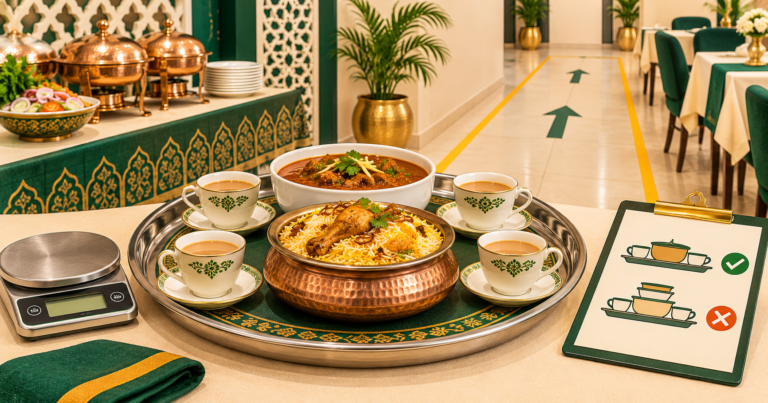
A tray can have enough surface area and still be unsafe or difficult to carry. Dish shape, total weight, balance, grip, sight line, walking route, and return items matter. A useful capacity test copies real service instead of counting how many plates fit on a table.
Define the Exact Tray and Service Task
Record tray material, outside dimensions, usable flat area, rim, non-slip surface, handle style, and empty weight. Two trays of the same size can behave differently when one flexes or becomes slippery.
Define whether the task carries plated meals, tea cups, used dishes, drinks, or mixed items. A clean outbound load differs from an uneven return load.
Use the Serving Tray Capacity Calculator after measuring item footprints and choosing a tested load.
Build the Load With Real Dishes
Use the plates, cups, bowls, cutlery, covers, and condiments used in service. Fill them to normal portions because empty crockery hides liquid movement and total weight.
Keep hot, sharp, or unstable items within the operation’s service rules. Do not use a trial to justify a load that staff are not trained or equipped to carry.
Photograph the accepted arrangement from above. The visual record helps staff rebuild the same balanced load.
Place Heavy Items Near the Center
OSHA restaurant guidance advises balancing the load evenly and placing heavier items in the center. Keep cups and small items where they cannot slide into the edge.
A balanced pattern should remain stable when the carrier starts, stops, turns, and sets the tray down. Test each movement slowly before trying normal service speed.
If one side repeatedly dips, reduce the load or change the arrangement. Do not compensate with a bent wrist or raised shoulder.
Weigh the Complete Load
Weigh the empty tray and the fully prepared tray. Record both values so the food-and-dish load is clear.
Capacity should not be set by one strong person’s maximum. Test with representative trained staff and follow workplace rules, equipment guidance, and reasonable handling limits.
Use carts, smaller loads, extra trips, or assistance when the tray becomes awkward. The best count is the repeatable count, not the largest count achieved once.
Walk the Real Service Route
Check doorways, turns, slopes, floor changes, crowded points, table height, and the place where the tray is set down. Keep the route clear before service.
The load must not block the carrier’s view. A neat high stack can still fail if it hides a step, child, chair, or spill.
Run an outbound and return test. Used dishes often stack less neatly and may contain liquids, loose cutlery, or food waste.
Inspect Grip and Tray Condition
OSHA advises keeping trays clean, dry, and serviceable. Check cracks, loose handles, worn non-slip surfaces, sharp edges, and flex before each shift.
Record whether one-hand, two-hand, or forearm support is required by the service method. Keep the wrist as neutral as practical.
Remove a damaged tray from service rather than lowering expectations for balance. Equipment condition belongs in the test record.
Avoid Common Serving Tray Test Errors
- Counting empty dishes: test normal filled portions.
- Using area only: include weight and balance.
- Ignoring sight lines: keep the route visible.
- Testing only outbound: include returns.
- Using one carrier: set a repeatable team standard.
Recheck the standard when crockery, tray type, menu, route, or service style changes.
Build a Repeatable Equipment Test Record
Use the downloadable CSV for at least three trials with the same equipment and method. Record the planned setup, actual measurements, staff observations, failures, leftovers, and the final decision.
Change one factor at a time when possible. If the utensil, recipe, route, service period, or equipment changes together, the team cannot tell which change improved the result.
Keep failed trials. They show the boundary that should not be repeated and help explain why the approved standard is lower than a printed maximum.
Review the record when a supplier, model, recipe, or service style changes. A capacity standard belongs to a defined setup, not every item that looks similar.
Name the person who ran the test and the date. Add a photo of the accepted setup when it will help another staff member repeat the arrangement without relying on memory.
Write the approved result as an operating range when natural variation matters. A single exact number can imply more precision than the equipment, recipe, or service conditions support.
Download the Equipment Test Worksheet
Open the CSV in a spreadsheet and replace the example row with your own measured trial.
Keep the Test Traceable
Record the setup, measured result, failure, correction, and approved operating standard.
Use the Serving Tray Capacity Calculator
The Serving Tray Capacity Calculator performs the matching arithmetic. This article covers the physical test and operational evidence that a calculator cannot observe.
Calculate With Measured Inputs
Complete a real equipment trial, then enter the verified capacity or yield.
سرونگ ٹرے کے عام سوالات
ٹرے کی گنجائش صرف جگہ سے طے ہوتی ہے؟
نہیں۔ وزن، توازن، گرفت، راستہ اور نظر بھی ضروری ہیں۔
بھاری برتن کہاں رکھیں؟
بھاری چیزیں مرکز کے قریب اور بوجھ دونوں طرف متوازن رکھیں۔
اصل کھانا کیوں استعمال کریں؟
خالی برتن مائع کی حرکت، پورا وزن اور عام عدم استحکام نہیں دکھاتے۔
راستہ کیسے ٹیسٹ کریں؟
دروازے، موڑ، فرش، میز کی اونچائی اور واپسی کا راستہ معمول کی رفتار پر جانچیں۔
ٹرے خراب ہو تو کیا کریں؟
کریک، ڈھیلا ہینڈل یا خراب نان سلپ سطح والی ٹرے کو سروس سے ہٹا دیں۔
Sources and Further Reading
Use These Cooking Tools
Related Kitchen Capacity Guides

Author and Founder
1 thought on “How to Test Serving Tray Capacity Without Overloading It”