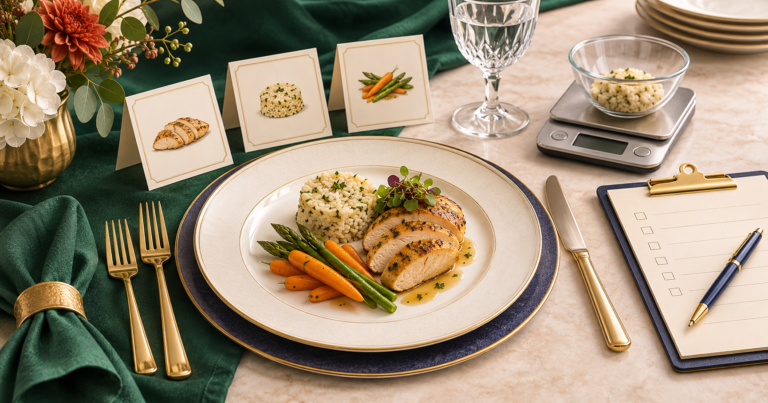
Plated service needs more than a total meal count. Each plate should have a defined portion for the main item, starch, vegetables, sauce, garnish, and any protected meal variation. Standardize the plate before scaling recipes so purchasing, production, and service teams work from the same specification.
Write a Complete Plate Specification
List every component and its service unit. Use grams for solid food when weight matters, milliliters for sauces, and pieces only when piece size is standardized.
Photograph or diagram the approved plate and record the scoop, ladle, slice, or count used for each component. A visual alone cannot show weight, while numbers alone may not show placement.
The Plated Meal Portion Count Calculator calculates plate and component counts. This guide helps define the plate it multiplies.
Scale Components From the Same Plate Count
Start with the committed meal count, then separate menu variations that use different components. Multiply every standard component by the plate count assigned to that version.
Component service quantity = planned plates × component portion
Recipe batches = component quantity ÷ verified usable recipe yield
Do not use one plate count for protein and a larger hidden count for sides unless the service plan documents the difference.
Verify Recipe Yield Before Full Production
The Institute of Child Nutrition describes recipe verification, product evaluation, and quantity adjustment as separate phases of standardization. A recipe should be tested before it becomes a large-event production assumption.
Prepare the recipe with the planned ingredients, equipment, and method. Measure the usable final yield after trimming, cooking, holding, and any normal service loss.
Record yield in the same unit used by the plate specification. A recipe that yields kilograms cannot be converted to plates until the portion weight is known.
Work Through a 120-Plate Example
Suppose 120 standard plates each require 150 g cooked protein, 180 g starch, 100 g vegetables, and 45 ml sauce. Base component demand is 18 kg protein, 21.6 kg starch, 12 kg vegetables, and 5.4 liters sauce.
A 5% controlled production allowance raises these values to 18.9 kg, 22.68 kg, 12.6 kg, and 5.67 liters. Divide each by its verified batch yield.
Round batches only after exact demand is known. Keep batch surplus visible instead of calling it another plate reserve.
Separate Standard and Special Plate Variations
Count each verified variation, such as vegetarian or allergy-managed meals, within the overall commitment. Give each variation its own plate specification and protected production plan.
Do not create a full standard plate plus a full special plate for the same guest. Extra protected meals should be deliberate and documented.
Quantity math cannot verify allergen control. Ingredients, equipment, surfaces, labeling, holding, transport, and service procedures require separate safety management.
Check Equipment Capacity and Plating Rate
A correct food total can still fail when ovens, pans, hot boxes, plating tables, or staff cannot support the service rate. Calculate how many complete plates must leave the line per minute.
Run a timed plating test with the approved tools and plate layout. Watch for portions drifting as staff work faster or pans become shallow.
Use smaller refill pans when that protects consistency and safe handling. The production schedule should connect batch completion, holding, plating, and service waves.
Audit Sample Plates and End-of-Service Results
Weigh or inspect sample plates at the start, middle, and end of service. Record corrections when a component becomes too heavy, too light, or inconsistent.
After service, reconcile plates issued, unused protected meals, component leftovers, damaged plates, and discarded food. Convert component leftovers back into approximate plate equivalents.
Revise the plate specification only when the menu goal changes. If one component was overproduced because its batch was rounded, fix the batch plan rather than reducing every plate.
Prepare a Plating-Line Brief
Give every station a one-page plate specification before service. Include the component, portion tool, plate position, refill source, and person responsible for corrections.
Mark where standard and special plates enter and leave the line. Use visible identifiers that do not reveal private guest information.
Run several practice plates and compare them with the approved example. A short briefing reduces hesitation, prevents tools from moving between pans, and makes live sample checks easier to interpret.
Download the Event Planning Worksheet
Replace the fictional row with your own event values and preserve the units used by the calculator and production record.
Plan, Produce, and Review
Keep the exact assumptions, operational rounding, and actual result in one file.
Use the Plated Meal Portion Count Calculator
The Plated Meal Portion Count Calculator performs the matching arithmetic. This guide helps you choose and verify the inputs.
Calculate With Your Event Values
Enter your confirmed count, service specification, yield, allowance, and practical rounding boundary.
پلیٹڈ میل پورشن کے عام سوالات
پلیٹ کی وضاحت میں کیا لکھیں؟
ہر جزو کا وزن، حجم یا پیس کاؤنٹ، استعمال ہونے والا اسکوپ اور پلیٹ پر جگہ واضح کریں۔
ریسپی ییلڈ کیسے چیک کریں؟
اصل اجزا، آلات اور طریقے سے آزمائشی بیچ بنائیں اور قابل استعمال تیار مقدار ناپیں۔
خاص پلیٹیں الگ گنیں؟
ہاں، مگر وہ مجموعی میل کاؤنٹ کا حصہ ہیں، ایک ہی مہمان کے لیے دونوں پلیٹیں نہ گنیں۔
بیچ کب راؤنڈ کریں؟
ہر جزو کی مکمل درست ضرورت نکالنے کے بعد عملی پورے بیچ تک راؤنڈ کریں۔
سروس کے دوران کیا چیک کریں؟
شروع، درمیان اور آخر میں نمونہ پلیٹ کا وزن یا بصری معیار چیک کریں۔
Sources and Further Reading
Related Catering and Cooking Tools
More Event Planning Guides

Author and Founder
1 thought on “How to Plan Plated Meal Portions”