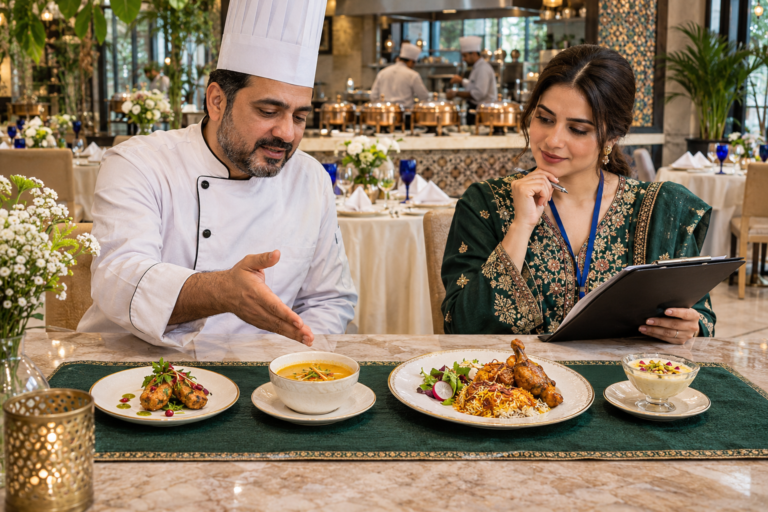
A multi-course meal is one connected experience. Planning every course as a full standalone meal can create oversized service and excess food. Define the role, portion, timing, and selection rule for each course before scaling recipes.
Map the Whole Meal Before Scaling Recipes
List the welcome bite, appetizer, soup, salad, main dish, sides, bread, dessert, and drinks in service order. Mark any course that is optional or offered as a choice.
Review the combined food load, not only each plate. A rich appetizer, large soup, full main, and heavy dessert may all be reasonable alone but excessive together.
The Multiple Course Portion Allocation Calculator combines course quantities. This guide helps define a balanced course plan.
Give Each Course a Clear Role
Decide whether a course is a taste, starter, bridge, main contribution, side, or finish. The role guides portion size and prevents two courses from competing as full mains.
Write the service unit for every course. Use pieces for standardized canapés, milliliters for soup, grams for plated solids, and servings for complete dishes.
Course demand = guests × selection share × portion per selected guest
Account for Choices Within a Course
If guests choose between two appetizers or mains, use selection shares rather than giving every guest a full portion of both. The shares for true alternatives should normally total about 100%.
Protect verified special meals before releasing extra portions to general service. Keep choice shares and dietary counts in the same course total without counting people twice.
For a tasting menu where everyone receives every item, use a 100% share but make the individual portions appropriately small.
Work Through a Four-Course Example
For 80 guests, suppose everyone receives 180 ml soup, 80% choose a 90 g salad, everyone receives a 320 g main plate, and everyone receives one 110 g dessert.
Base demand is 14.4 liters of soup, 5.76 kg of salad, 25.6 kg of main plate components, and 8.8 kg of dessert.
Apply one documented reserve to each production quantity, then divide by verified recipe yield. Keep batch-rounding surplus separate from the reserve.
Test Timing, Temperature, and Plate Capacity
Run a small service test from the first course through dessert. Record plating time, table clearing, holding time, equipment use, and the point when guests appear ready for the next course.
A correct quantity can still fail when the kitchen cannot plate two courses close together. Link batch schedules to ovens, pans, hot boxes, chillers, service staff, and table turns.
Follow the operation’s food-safety procedures. The FDA Food Code provides a model for retail and foodservice controls, but local requirements may differ.
Use a Meal-Wide Reserve, Not Hidden Extras
Choose one transparent reserve for uncertainty and apply it consistently. Do not enlarge guest count, increase every portion, and then prepare extra full plates.
Some protected items may need a specific backup rule. Label that backup by course and reason so it can be reviewed after service.
Round recipes and packages only after exact demand is known. Operational rounding creates surplus that should remain visible.
Review Consumption Course by Course
Record portions prepared, served, returned, and discarded for each course. Note substitutions, skipped courses, delays, and changes in serving tools.
When later courses have high leftovers, review earlier course size and pacing as well as the later recipe. Guests may have been satisfied before the main or dessert arrived.
Change one course variable at a time for the next comparable event. A meal-wide cut can hide which course caused the problem.
Compare planned and actual start times for every course. A delay can change appetite, temperature, texture, and the number of guests still seated.
Keep menu preference separate from portion size. A course may return because guests disliked it, not because the measured portion was too large.
Review beverage service too because large drinks before early courses can change later demand. Record welcome drinks, table water, and refills as context instead of adding them to food weight.
If guests choose between courses, preserve the selection counts. A low total may reflect fewer selections, while high plate returns may show an oversized portion.
Download the Planning Worksheet
Replace the fictional example with your own measured values. Keep units, assumptions, operational rounding, and actual results visible.
Plan and Review in One File
Use the worksheet before service, then record the actual result for the next comparable event.
Use the Multiple Course Portion Allocation Calculator
The Multiple Course Portion Allocation Calculator performs the matching arithmetic. This article helps you select and verify the inputs.
Calculate With Your Own Values
Enter the measured quantities and keep every assumption visible.
متعدد کورس پورشن کے عام سوالات
ہر کورس کو مکمل کھانا سمجھیں؟
نہیں۔ ہر کورس کا کردار اور پورشن پورے مینو کے ساتھ متوازن کریں۔
اختیاری ڈش کیسے شمار کریں؟
سلیکشن شیئر استعمال کریں اور حقیقی متبادل کے شیئر عموماً 100 فیصد کے قریب رکھیں۔
ریزرو کتنی بار لگائیں؟
ایک واضح ریزرو استعمال کریں اور چھپے ہوئے اضافی پورشن نہ بڑھائیں۔
سروس ٹیسٹ کیوں ضروری ہے؟
اس سے پلیٹنگ رفتار، ہولڈنگ، آلات اور کورسز کے درمیان وقت کا مسئلہ ظاہر ہوتا ہے۔
بچا ہوا کھانا کیسے ریکارڈ کریں؟
ہر کورس کی تیار، پیش، واپس اور ضائع مقدار الگ لکھیں۔
Sources and Further Reading
Related Catering and Cooking Tools
More Catering Planning Guides

Author and Founder