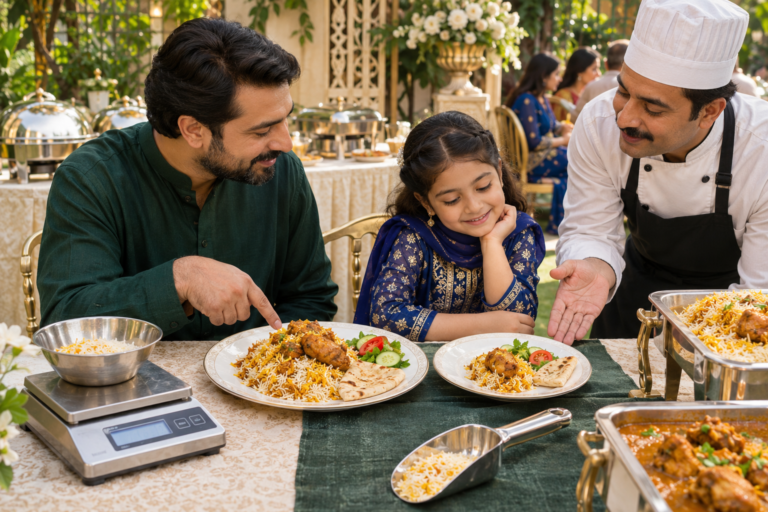
Children and adults may receive different portions, but age alone does not define appetite or need. A practical event plan uses clear service groups, tested portions, and the same menu boundary. It also avoids treating a rough planning estimate as nutrition advice.
Define the Service Groups Clearly
Write the age range or ticket rule used for the child group and the rule used for adults. If the event sells child tickets, use that definition consistently across registration, seating, and catering.
Do not assume every younger guest will eat the same amount. The groups are planning categories, not medical or nutrition recommendations.
The Adult and Child Portion Allocation Calculator combines group quantities. This guide explains how to define the inputs without double counting.
Specify Each Menu Component
List the main dish, starch, vegetables, bread, dessert, and drink separately. A child portion factor may differ by component because a smaller main portion does not always mean the same reduction for fruit, drinks, or a shared dessert.
Use weight, volume, or pieces that match the standardized recipe and serving tool. USDA guidance emphasizes careful measurement and age-appropriate serving size in program settings.
Total component demand = (adult count × adult portion) + (child count × child portion)
Test the Portion With Real Serving Tools
Serve sample adult and child plates using the planned scoop, ladle, slice, or count. Weigh or measure the result and photograph the approved plate for the service team.
The same scoop can produce different weights for different foods. Use volume tools for liquids and a scale when solid-food weight matters.
Level a measured utensil consistently. A heaped scoop can erase the difference between the two service groups.
Work Through an Adult and Child Example
Suppose an event has 70 adults and 30 children. The planned cooked rice portions are 180 g for adults and 120 g for children.
Adult demand is 12.6 kg. Child demand is 3.6 kg. Combined base demand is 16.2 kg.
A single 5% production allowance raises ready-to-serve rice demand to 17.01 kg. Apply recipe yield and purchase conversion after this service quantity is clear.
Handle Teenagers and Mixed Appetites
When the child group includes teenagers, one reduced portion may not fit the service plan. Use an intermediate group or count older children with adults when the event definition supports it.
Offer seconds through a controlled reserve instead of increasing every first plate. This protects availability while allowing guests to respond to appetite.
Record which group produced leftovers or requested more. Use the observation to adjust the next comparable event.
Keep Dietary Requirements Separate From Age
Vegetarian, allergy-aware, religious, and texture-modified meals should be counted by verified need, not inferred from age. One child may need a full special meal while an adult may prefer a smaller standard portion.
Keep special meal counts inside the correct attendance groups while giving them separate menu specifications. Avoid creating both a standard and special meal for one person.
Quantity planning cannot confirm nutrition or allergen safety. Ask qualified professionals and follow the caterer’s safety process where required.
Review Leftovers by Group and Component
After service, record adult plates, child plates, seconds, unused protected meals, and leftovers for each component. One combined leftover weight cannot show which portion needs adjustment.
Note whether servers used the intended tools and whether guests served themselves. A self-service line may produce different results from plated service.
Change the specific component or group that caused the mismatch. Do not reduce every child portion because one side dish was unpopular.
Separate untouched production surplus from food returned on plates. They have different causes and may require different handling under the operation’s safety rules.
For repeat events, compare at least several similar services before making a broad policy. One menu, one age mix, or one serving team may produce an unusual result.
Keep the original portion specification beside the revised version so staff can see exactly what changed.
Download the Planning Worksheet
Replace the fictional example with your own measured values. Keep units, assumptions, operational rounding, and actual results visible.
Plan and Review in One File
Use the worksheet before service, then record the actual result for the next comparable event.
Use the Adult and Child Portion Allocation Calculator
The Adult and Child Portion Allocation Calculator performs the matching arithmetic. This article helps you select and verify the inputs.
Calculate With Your Own Values
Enter the measured quantities and keep every assumption visible.
بڑوں اور بچوں کے پورشن کے عام سوالات
بچوں کا ایک ہی پورشن سب کے لیے درست ہے؟
نہیں۔ عمر اور بھوک مختلف ہو سکتی ہے، اس لیے واضح سروس گروپ اور حقیقی مشاہدہ استعمال کریں۔
ہر ڈش پر ایک ہی چائلڈ فیکٹر لگائیں؟
ضروری نہیں۔ مین ڈش، چاول، سبزی، میٹھا اور مشروب الگ پورشن رکھ سکتے ہیں۔
پورشن ٹول کیوں آزمائیں؟
اسکوپ یا چمچ کی اصل مقدار ناپنے سے سروس ٹیم یکساں پلیٹ بنا سکتی ہے۔
ٹین ایجرز کہاں شمار ہوں؟
ایونٹ کے اصول کے مطابق انہیں بالغ گروپ یا الگ درمیانی گروپ میں رکھیں۔
خاص غذائی ضرورت عمر سے معلوم ہوتی ہے؟
نہیں۔ تصدیق شدہ ضرورت الگ لکھیں اور محفوظ تیاری کے طریقے پر عمل کریں۔
Sources and Further Reading
Related Catering and Cooking Tools
More Catering Planning Guides

Author and Founder