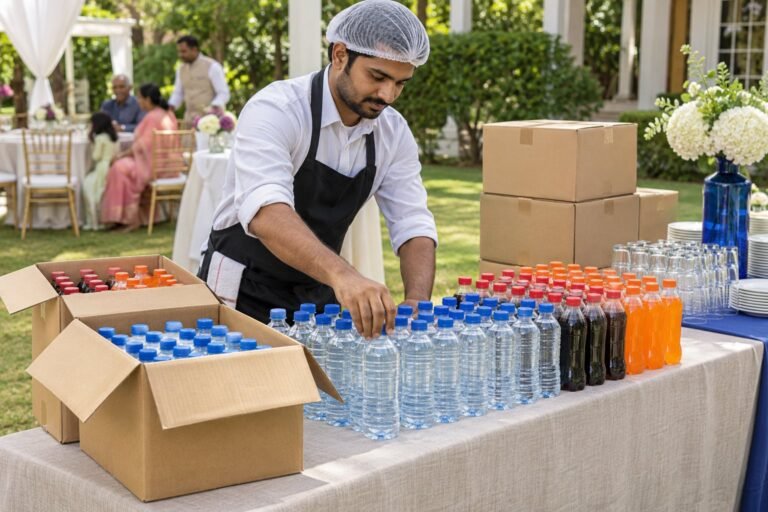
A drink estimate tells you how much people may use. The shop sells bottles and cases in fixed amounts. Pick the way you will serve each drink, then make a case order that meets the estimate and fits your storage and return options.
Planning the numbers? Open the Beverages for Guests Calculator before filling in the worksheet.
Decide Whether a Bottle Is a Serving
Count bottles directly when each person takes one sealed bottle. If staff pour from a shared bottle, count complete pours per bottle. The labeled volume tells you the amount in the package. The measured cup fill tells you how much a person receives.
For a 500 mL bottle handed to a guest, plan one issued bottle even if some water comes back unused. For a 1.5 L bottle poured into 200 mL cups, plan seven complete cups and 100 mL remaining if each bottle is served separately. Use the linked cup-yield guide for more detail about partial pours.
Set water aside as its own order line. Keep drink types and sizes visible so the supplier cannot replace one carton with another that happens to have the same total volume.
Convert Each Drink Type Into Cases
In this example, you need 92 individual water bottles. Cases hold 24 bottles each, so four cases give 96. Confirm that the carton has 24 bottles of the chosen size before comparing prices or asking someone else to buy it.
For 65 cups of soft drink, use bottles that give seven complete pours. You need ten bottles because nine cover 63 pours. If the supplier only sells six per case, order two cases to get 12 bottles. Rounding is done at both the bottle and case stage because those are separate units.
Keep individual bottles, packed cases, and loose bottles on separate worksheet columns. A bottle from a mixed flavor case only satisfies the flavor recorded for that bottle. Count mixed assortments by their actual contents.
Compare Pack Costs and Return Terms
Estimate the price of a case order, including any delivery fee or refundable deposit. If chilled drinks carry a premium, ask whether you can chill part of the order at the venue. Compare that option against the time and cooler space you actually have.
For a returnable case, check if the carton must be sealed, undamaged, or returned by a certain date. Get that condition before adding a case for reserve. Treat loose sealed bottles and opened cartons as separate stock because they may have different terms.
The FDA Bottled Water Guidance explains how bottled water is regulated and packaged in the United States. For a local purchase, check the actual supplier, seals, storage instructions, and local requirements.
Write a Cooling and Refill Plan
Count how many bottles you can stage without crowding the serving area. Leave the reserve clearly marked in a separate location. Have the drink lead record each transfer from reserve to service so a missing case does not appear to be a sudden jump in demand.
If six cases are ordered and four fit in cold storage at once, that is a staging limit. Choose the first cases to chill based on the start of service and the host’s water plan. Set a refill trigger with enough lead time to move the next case.
Follow the supplier’s storage advice for products that need refrigeration and the caterer’s own service rules. Use the FDA Buffet Service Guidance as background for planning chilled service.
Reconcile What Was Ordered and What Was Used
After service, record delivered cases, bottles issued, sealed bottles left, and any damaged or missing units. If 96 water bottles arrived, 81 were issued and two were damaged, 13 should remain sealed. Recount before treating a difference as additional guest demand.
Make a separate note when you changed bottle sizes, let people take several at once, or switched between counter and table service. Those changes explain why a second party with the same guest count could use a different number of bottles.
Use the count to reduce excess stock next time. The EPA Food Waste Prevention guide offers broader planning and inventory ideas that fit this process.
Download the Planning Worksheet
Replace the example rows with counts from your own order or rehearsal.
اکثر پوچھے جانے والے سوالات
بوتل اور گلاس الگ کیوں گنیں؟
بڑی بوتل سے کئی گلاس بھر سکتے ہیں۔
بڑی بوتل کی باقی مقدار گنیں؟
اس مثال میں ہر بوتل کے صرف پورے گلاس گنیں۔
اضافی کیس واپس ہو سکتا ہے؟
دکان سے بند اور کھلے کیس کی شرط پوچھیں۔
کولر میں جگہ کم ہو تو؟
پہلی باری کے کیس پہلے ٹھنڈے کریں۔
تقریب کے بعد کیا گنیں؟
جاری، بند، خراب اور گم شدہ بوتلیں الگ گنیں۔
Sources and Further Reading
Plan the Rest of the Event

Author and Founder