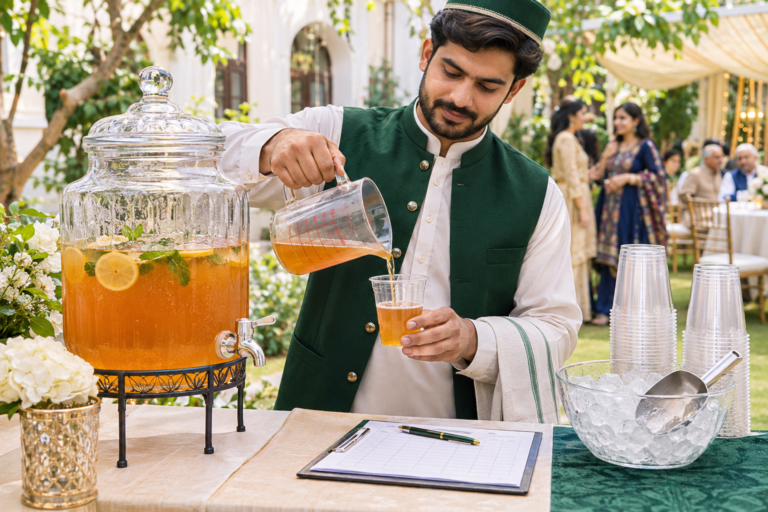
A container label tells you total capacity, but guests receive drinks from usable liquid. Ice, foam, fruit, safe headspace, sediment, and liquid below a dispenser tap can reduce the amount available. A simple measured test gives a more useful cup yield than dividing label volume by cup size.
Start With Usable Beverage Volume
Prepare the drink in the same container, dispenser, jug, or urn used during service. Measure the liquid that can actually be poured after ice, fruit, foam, headspace, sediment, and the tap position are considered.
Do not treat container capacity as usable volume. A 10-liter dispenser may hold less ready-to-serve drink when ice occupies space or the final liquid sits below the outlet.
The Beverage Cup Yield Calculator performs the arithmetic after these values are measured. This guide explains how to collect dependable inputs.
Measure the Real Cup Fill
Choose the cup used at the event and fill it as staff normally would. Pour that serving into a marked measuring container or weigh it when the beverage density is close enough to water for the planned test.
Repeat the measurement several times. A cup marked 250 ml may receive only 210 ml after headspace, or more than planned when staff fill to the rim.
Complete cup yield = floor(usable beverage volume ÷ measured fill per cup)
Remainder = usable volume − (complete cups × fill per cup)
Test Ice and Garnish as Separate Scenarios
Ice can reduce liquid per cup while also melting into the drink. Test the service condition you expect instead of assuming a universal displacement rate.
Run one trial without ice and another with the normal scoop of ice. Add lemon, mint, fruit, or foam only when it is part of the actual service specification.
Keep each result separate. Mixing measurements from different cup builds produces a yield that no guest will receive.
Work Through a 10-Liter Example
Suppose a dispenser has 10,000 ml of measured usable drink. Staff serve 225 ml of liquid per cup after allowing headspace. The exact quotient is 44.44 cups.
The service can promise 44 complete cups. Those cups use 9,900 ml and leave a 100 ml remainder. That remainder is visible, but it is not another complete serving.
If a measured ice service uses 190 ml of liquid per cup, the same usable volume yields 52 complete cups with 120 ml left. The difference comes from the cup specification, not from creating more beverage.
Account for Pouring and Service Loss
Spills, samples, line flushing, foam removal, and liquid trapped below a tap may reduce real output. Measure these losses during a trial or record them during service.
Apply one transparent loss allowance to usable liquid or subtract a measured amount. Do not reduce the liquid and then apply the same loss again to the cup count.
Keep safety and quality decisions separate from yield. A drink that has been held or handled outside an approved procedure should not be counted as usable merely to improve the result.
Plan Containers and Refill Batches
Divide required cups by the tested complete-cup yield per container. Round upward only when deciding how many whole containers or batches to prepare.
For 180 expected cups and a tested yield of 44 cups per dispenser, 180 ÷ 44 equals 4.09. Five dispenser loads are needed if every load is identical.
A smaller final batch may reduce leftovers when the recipe and equipment allow it. Record the actual batch size instead of quietly counting a partial load as a full one.
Record Actual Cups for the Next Service
At the end, record full cups served, partial cups, refills, spills, remaining beverage, and any change in cup or ice practice. Compare the result with the trial.
If the result differs, locate the cause before changing the formula. A larger cup, fuller ice scoop, different dispenser, or rushed pouring can shift yield.
Keep separate records for different drinks because foam, pulp, fruit, and viscosity affect service in different ways.
Download the Planning Worksheet
Replace the fictional example with your own measured values. Keep units, assumptions, operational rounding, and actual results visible.
Plan and Review in One File
Use the worksheet before service, then record the actual result for the next comparable event.
Use the Beverage Cup Yield Calculator
The Beverage Cup Yield Calculator performs the matching arithmetic. This article helps you select and verify the inputs.
Calculate With Your Own Values
Enter the measured quantities and keep every assumption visible.
مشروب کے کپ ییلڈ کے عام سوالات
بوتل یا ڈسپنسر کی پوری گنجائش استعمال کریں؟
نہیں۔ برف، جھاگ، خالی جگہ اور نل سے نیچے بچنے والے مشروب کے بعد قابل استعمال مقدار ناپیں۔
کپ کا سائز کیسے ناپیں؟
عام سروس جیسا کپ بھریں اور اس میں موجود اصل مائع کو ملی لیٹر میں ناپیں۔
اعشاریہ کپ کو مکمل کپ سمجھیں؟
نہیں۔ مکمل کپ نیچے کی طرف راؤنڈ کریں اور باقی مقدار الگ دکھائیں۔
برف کے ساتھ ییلڈ کیوں بدلتی ہے؟
برف کپ میں مائع کی جگہ لیتی ہے، اس لیے حقیقی مائع فی کپ الگ ناپنا ضروری ہے۔
اصل سروس کا ریکارڈ کیوں رکھیں؟
اس سے کپ بھرنے، ضیاع اور ڈسپنسر کے فرق کو اگلی منصوبہ بندی میں درست کیا جا سکتا ہے۔
Sources and Further Reading
Related Catering and Cooking Tools
More Catering Planning Guides

Author and Founder
2 thoughts on “How to Calculate Beverage Cup Yield”