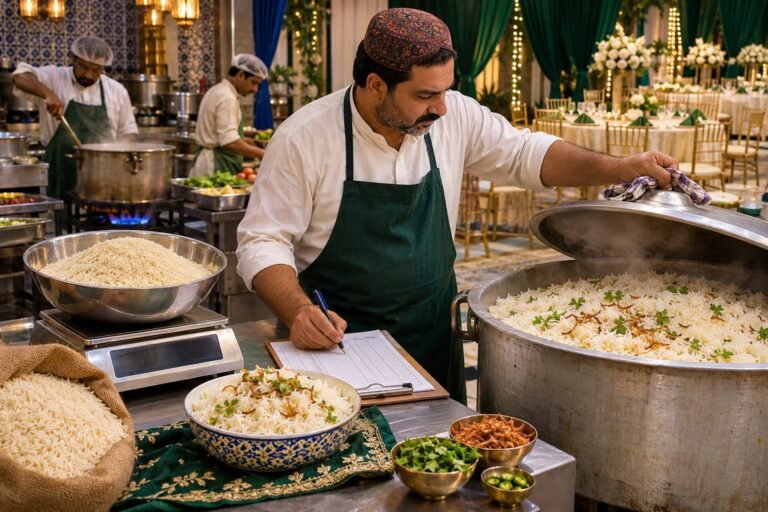
Rice can be a main base, a side dish, or one choice among several starches. The right quantity depends on its menu role, the cooked portion, the rice variety, and the yield produced by your method. Test one batch before using a general ratio for a large event.
Define the Role of Rice on the Menu
Decide whether rice is the main base, a side, or one of several starch choices. A biryani-style main needs a different rice amount from a small side beside meat, vegetables, and bread.
Count only guests expected to select rice when another full starch is offered as an alternative. If guests may take both, use smaller portions or measured selection shares.
The Rice for Guests Calculator scales the quantity. This guide helps you define the portion and yield behind that calculation.
Choose a Cooked Portion Before a Dry Quantity
Write the ready-to-serve portion in grams or cups and test it with the planned serving tool. Cooked portion is easier for the service team to recognize than an unexplained dry amount.
USDA grain yield tables connect dry purchase units with cooked servings, but the exact value depends on the rice product and preparation. Use the entry that matches your product or document an in-house test.
Cooked rice demand = guests × selection share × cooked portion × (1 + allowance rate)
Dry rice required = cooked demand ÷ tested cooked yield per unit dry rice
Run a Small Yield Test
Weigh dry rice, cook it with the normal water, pan, lid, heat, rest, and handling method, then weigh the usable cooked rice. Exclude scorched, spilled, or unsuitable product from usable yield.
Divide cooked weight by dry weight. Repeat the test when the variety, supplier, equipment, or method changes.
Keep water ratio separate from weight yield. Water absorbed during cooking increases cooked mass, but drained or evaporated water can change the result.
Work Through a 100-Guest Example
Suppose rice is a side for 100 guests at 180 g cooked per guest. Base demand is 18 kg cooked rice.
A 5% allowance raises demand to 18.9 kg. If your tested yield is 2.8 kg cooked rice for each kilogram dry, dry rice required is 6.75 kg.
If rice is sold in 5 kg bags, two bags must be available, but only the calculated amount should be prepared unless the production plan calls for more. Pack surplus is not another food allowance.
Plan Batch Size and Holding
Compare the total with pot, rice cooker, steamer, pan, and holding capacity. A large mathematical batch may cook unevenly or exceed safe operating limits.
Divide production into tested batches and schedule each batch for the service time. Label the exact dry and water quantities for every batch.
Follow the operation’s food-safety process for cooking, holding, cooling, and reheating. Quantity math cannot approve a holding method.
Control Serving Tools and Refills
Measure the scoop or spoon used at service. A heaped tool can increase portions quickly, while a partly filled tool can make the written portion meaningless.
Use smaller refill pans where they support quality and monitoring. Record opening quantity, refills, and returns instead of placing the full production amount on display.
If the event includes naan, pasta, or another starch, watch selection shares. A low rice uptake may reflect menu competition rather than a bad yield test.
Review Cooked Yield and Leftovers
Record dry rice used, cooked usable yield, portions served, unopened surplus, returned rice, and waste. Keep production leftovers separate from plate returns.
When actual yield differs, review variety, washing, soaking, water, heat, pot depth, rest time, and handling. Change the measured input that caused the variance.
Preserve the original test alongside the revised one. Several comparable events provide stronger evidence than one unusual service.
Avoid Common Rice Planning Errors
Do not switch between dry cups, dry weight, cooked cups, and cooked weight without a named conversion. Label every number with its unit and product form.
Avoid copying a yield from a different rice type or cooking method. Parboiled, brown, basmati, and short-grain rice can behave differently, especially when soaking and draining change.
Keep guest uncertainty, production allowance, and pack rounding as separate lines. When they are combined, the team cannot explain why extra rice remains.
Build a Repeatable Production Record
Write the rice variety, dry weight, cooked weight, water method, pot size, and rest time for every test. Add the date, supplier or product description, equipment, and person who measured the result.
Use the same units throughout one calculation and label every switch between purchase form and ready-to-serve form. Photographs can support the record, but they should not replace measured weights, volumes, or counts.
When a later event produces a different result, compare one checkpoint at a time. This protects a useful tested yield from being replaced by an unexplained guess.
Download the Guest Quantity Worksheet
Replace the fictional row with your own measured portion, tested yield, guest count, allowance, and actual service result.
Plan, Produce, and Review
Keep exact demand, operational rounding, and real returns in one file.
Use the Rice for Guests Calculator
The Rice for Guests Calculator performs the matching arithmetic. This guide helps you select and verify the inputs.
Calculate With Your Guest Count
Enter the menu role, portion, tested yield, and practical rounding boundary.
Open the Rice for Guests Calculator →مہمانوں کے لیے چاول کے عام سوالات
چاول خشک وزن سے شروع کریں؟
پہلے تیار چاول کا پورشن طے کریں، پھر آزمودہ ییلڈ سے خشک چاول نکالیں۔
ہر قسم کے چاول کی ییلڈ ایک ہے؟
نہیں۔ قسم، دھونا، پانی، برتن اور طریقہ ییلڈ بدل سکتے ہیں۔
بیگ راؤنڈنگ کو ریزرو سمجھیں؟
نہیں۔ پورے بیگ تک راؤنڈ ہونے والا سرپلس الگ دکھائیں۔
ایک بڑا بیچ بہتر ہے؟
صرف تب جب برتن اور طریقہ اس سائز پر آزمودہ ہوں، ورنہ کئی کنٹرولڈ بیچ بنائیں۔
اصل ییلڈ کیوں لکھیں؟
اس سے اگلی تقریب میں خشک مقدار اور بیچ منصوبہ بہتر ہوتا ہے۔
Sources and Further Reading
Related Guest and Catering Tools
Plan the Rest of the Menu

Author and Founder
1 thought on “How Much Rice to Cook for Guests”