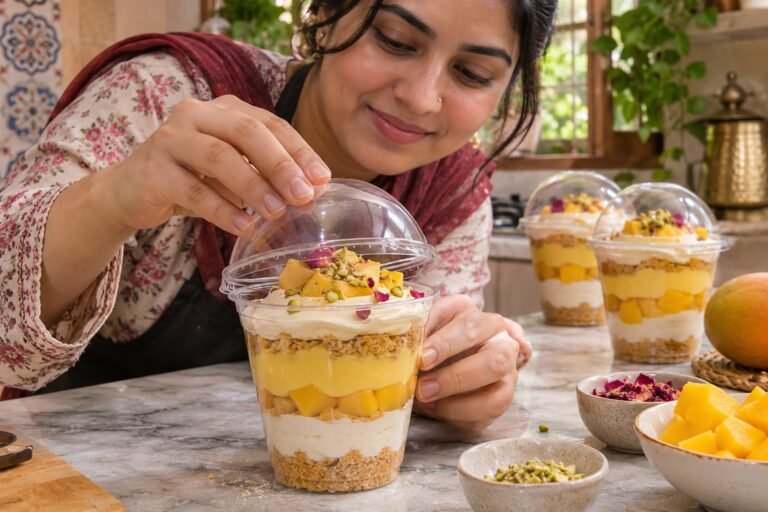
A cup sold as 150 mL may be too full at 150 mL once you add cream, garnish, and a lid. Test the complete dessert using the exact cup and lid you will buy. Use the highest fill that meets your appearance and packing needs.
Planning the numbers? Open the Dessert Cup Fill Quantity Calculator before filling in the worksheet.
Find the Lowest Point of the Fitted Lid
Get the actual cup and lid from the supplier and check how they snap together. Some lids have ribs, tabs, or a center shape that sits lower than the edge. Look at the clearance where the tallest garnish will sit.
A lid that closes when the cup is empty can still touch the dessert when it is full. Use the lid and container from the same batch you plan to use, and ask the supplier to confirm compatibility if they came from different packs.
If you switch from a domed lid to a flat one, repeat the test before you place the full order. Keep a sample of the approved pair at the packing station.
Build the Sample the Way You Will Serve It
Start with the base layer, then add the actual topping and garnish. Use the same scoop or piping tip you plan to use when filling the order.
In a fictional test, a 150 mL cup holds a 105 mL base at the first fill line, but the tallest garnish touches the lid. A second sample uses a 95 mL base and passes the same test with the same topping. Record 95 mL as the working base fill.
Check that shape and layer balance still look right at the new height. If lowering the base changes the intended portion too much, try a more suitable cup or lid and make another sample. The Institute of Child Nutrition Recipe Standardization Guide describes why the serving tool and portion size belong in the recipe record.
Close, Move, and Inspect a Small Set
Close several sample cups and place them in the carrier you plan to use. Carry them upright over a short representative route, then open one cup and inspect the lid for marks. Look for loose seals, smears, and cups that shift in the carrier.
If a topping comes off only during movement, first check the carrier and how tightly the cups fit. Increasing lid space may help if the garnish touches the lid, while a better-fitting carrier can address cups moving together.
Keep the kitchen’s food holding and handling procedures in place during the test. Use the FDA Guide to Safe Buffet Service as general guidance for cold service and the supplier’s ingredient information when checking allergens. See FDA Food Allergy Guidance.
Scale the Base and Topping on Separate Lines
For 36 cups with 95 mL of base each, the base total is 3,420 mL. If the tested topping uses 14 g per cup, the order also needs 504 g of topping. Keep the numbers in separate columns. Adding milliliters to grams gives no useful total.
Use the fill calculator for the planned base volume and its reserve. Write any expected transfer loss separately so the reason for extra mix stays clear. If the standard calls for a fixed topping portion, keep it steady when adjusting only the base.
Put one finished sample beside the worksheet while you fill the first row. If the ingredient or lid changes during production, stop and check a new sample before filling the remainder.
Download the Planning Worksheet
Replace the example rows with counts from your own order or rehearsal.
اکثر پوچھے جانے والے سوالات
کپ کی لکھی گنجائش کافی ہے؟
اصل ڈھکن اور مکمل سجاوٹ کے ساتھ آزمائیں۔
ڈھکن سجاوٹ کو چھوئے تو؟
بھراؤ کم کریں یا دوسرا ڈھکن آزمائیں۔
بھرے کپ ہلا کر دیکھیں؟
کپ سیدھے رکھ کر اصل کیریئر میں مختصر راستہ آزمائیں۔
بیس اور ٹاپنگ اکٹھے لکھیں؟
نہیں، ہر مقدار اور اس کی اکائی الگ لکھیں۔
سپلائر ڈھکن بدل دے تو؟
پورا آرڈر بھرنے سے پہلے نیا نمونہ چیک کریں۔
Sources and Further Reading
Plan Dessert Service

Author and Founder