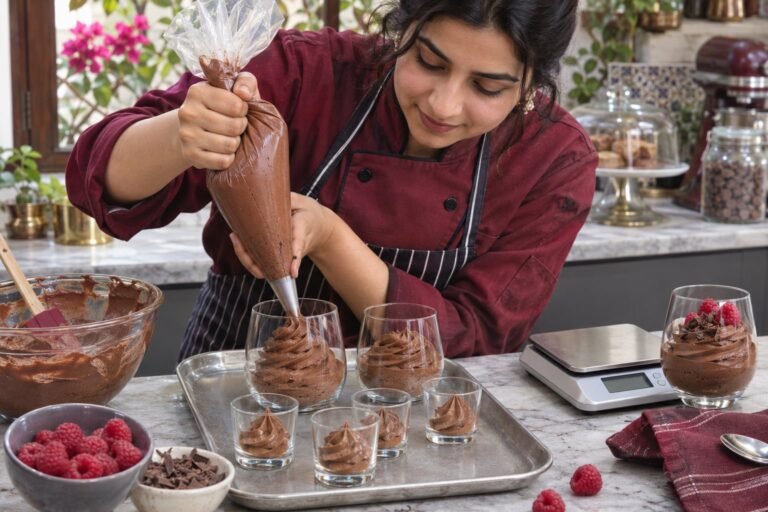
Two mousse portions can reach the same line on a glass and still weigh different amounts. How the mousse was folded and piped affects how much air is trapped in it. Weigh a few portions from your finished batch to set a target the team can repeat.
Planning the numbers? Open the Mousse Portion Volume Calculator before filling in the worksheet.
Pick One Glass and One Fill Line
Choose the glass you will serve and mark the height you want to fill. If you use a different glass for part of the order, give it a separate mark and trial.
Set the empty glass on the scale and press tare. Pipe the folded mousse into it using the same tip and motion you expect to use during production. Leave out the topping unless you are deliberately measuring finished cup weight.
The Institute of Child Nutrition Recipe Standardization Guide recommends recording the serving weight or volume and identifying the utensil used. A short written note helps another person reproduce your trial.
Compare Early, Middle, and Late Portions
Choose three positions in a trial run. A sample near the end of the bag can reveal a difference that three consecutive cups at the start would miss.
For example, three portions at the same line weigh 65 g, 70 g, and 69 g. Their mean is 68 g and their range is 5 g, from 65 to 70. The mean gives the team a starting target. The spread tells them how much the three trial servings varied.
If the variation is too large for your service, check the fill line and piping method first. Retest with a steadier filling technique or weigh each cup. Set an acceptable range based on the actual shape and appearance of the portion you want.
Allow for What Stays Behind in the Bag
At a working target of 68 g, 30 cups need 2,040 g served. If your trial leaves 60 g in the bag and bowl, plan 2,100 g of finished mousse for this example. Use the loss estimate for the equipment and transfer method you actually tested.
If you change bags midway, check how much mousse stays in each bag. Repeated bag changes may increase total loss. Have staff tare a clean transfer bowl if they need to measure the amount available for the next bag.
Keep reserve servings on a separate line. A reserve portion is something you plan to serve if needed. The mousse that stays behind in equipment is part of your process loss.
Recheck After a Change in Recipe or Equipment
A scale result from one recipe does not carry over automatically to another. If the team switches cream, changes the folding method, or uses a new tip, pipe another small set and compare it with the trial.
Use the portion volume calculator when you have a reliable volume for the finished mousse and the cup fill. Use this worksheet when you are setting a fill target in grams. Convert between grams and milliliters only using measurements for your own mousse.
Follow the tested recipe and the kitchen’s cold-holding procedure. For uncooked egg mixtures, review the pasteurized-egg guidance in the FDA Guide to Safe Buffet Service. Record toppings and ingredient changes for allergen checks using information from the supplier. See FDA Food Allergy Guidance.
Download the Planning Worksheet
Replace the example rows with counts from your own order or rehearsal.
اکثر پوچھے جانے والے سوالات
خالی گلاس کا وزن کیسے نکالیں؟
گلاس ترازو پر رکھ کر صفر کریں، پھر موس بھریں۔
موس اوپر تک بھرنا ہے؟
وہی نشان رکھیں جو پیش کرنے کے لیے مناسب ہو۔
کئی نمونے کیوں تولیں؟
شروع، درمیان اور آخر کی مقدار میں فرق معلوم ہوتا ہے۔
بیگ میں بچا موس الگ ہے؟
ہاں، اسے پیش کی جانے والی مقدار سے الگ لکھیں۔
نیا گلاس استعمال ہو تو؟
اس گلاس کا بھراؤ اور وزن دوبارہ آزمائیں۔
Sources and Further Reading
Plan Dessert Service

Author and Founder