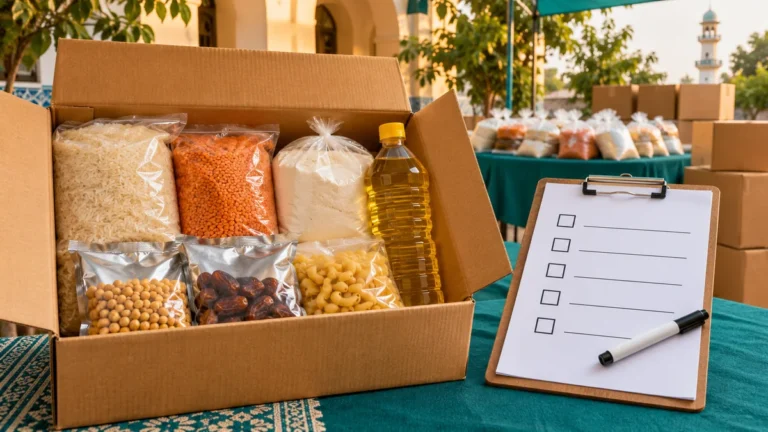
A food parcel packing checklist creates one shared record from the stock table to the final sealed box. It helps volunteers count the same item the same way, pause when numbers do not reconcile, and document substitutions without presenting the parcel as a government entitlement or nutrition standard.
Approve One Parcel Contents List Before Packing
Name every item, package form, and number per parcel. “Rice” is too broad when stock includes different bag sizes. Use a description such as one sealed 5 kg rice bag.
Give the list a batch ID and date. Place the same version at receiving, packing, and final checking stations so volunteers do not work from different drafts.
This checklist is an operational record. It does not define a legal benefit, official ration amount, or nutrition recommendation. The organizing group must approve the contents separately.
Count Received Stock in the Same Units
Count stock in the unit that will enter the parcel, such as sealed bag, bottle, carton, or packet. Do not mix cases and individual units in one total.
Record damaged, open, leaking, or unidentified items outside the usable count. Follow the organization’s food-safety rules before accepting any item for distribution.
Use two people for a high-value or high-volume delivery when possible. One person counts while the other records and checks package identity.
Stage One Item at a Time
Arrange parcels in a clear row and move one product through the full batch before starting the next item. This reduces skipped boxes and makes the remaining stock easier to compare.
Keep allergens, fragile containers, and products with storage limits visible to the team. Food packages should remain protected from contamination and damage during handling.
Do not place a substitute into a box silently. Pause, record the approved change, and apply it consistently to the affected parcel group.
Reconcile Packed, Remaining and Exception Counts
At each item station, compare the starting usable count with the amount packed and the amount left. An unexplained difference can signal a double pack, missed parcel, damaged item, or recording error.
Do not force the numbers to match by changing the record. Recount the staged item and review the exception notes. A transparent shortfall is better than a false completed total.
The CSV provides fields for batch, planned parcel contents, received count, packed count, remaining count, exceptions, and checker initials.
Use a Food Parcel Packing Checklist
Keep item counts and exceptions in one batch record.
Add an Independent Final Check
A checker who did not pack the box should review a sample or every parcel according to the group’s risk rules. Use the approved list in the same item order.
Confirm package condition, count, and identity before sealing. Record the checker and time so a later question can be traced to the correct batch.
Separate privacy records from the box contents checklist. Recipient names, phone numbers, or identification details should not appear on a public packing board.
Close One Batch Before Starting Another
Give each packing session a clear start and end. Do not carry an unexplained remainder into the next session because the old count can hide a shortage or duplicate.
Record sealed parcels, incomplete parcels, damaged goods, approved substitutions, and remaining usable stock. Have the responsible coordinator sign the batch summary.
Use a handoff count when completed parcels move to another room or delivery team. The receiving person should confirm the number without reopening sealed boxes unless the quality plan requires it.
Store the checklist according to the organization’s record policy. The document should support an audit without exposing personal recipient information to volunteers who do not need it.
When a correction is needed, keep the original value readable and add the corrected value, reason, date, and initials. Silent overwriting makes later reconciliation harder.
Use the Community Ration Pack Calculator Before Staging
The Community Ration Pack Calculator estimates item totals for the parcel count and package rules you enter. The checklist verifies the physical operation.
Freeze the approved calculation before packing. If the parcel count or item specification changes, issue a new batch record rather than editing totals without a trace.
Plan the Parcel Batch
Bring the approved item list, package units, usable stock, parcel count, and current prices.
Avoid Common Food Parcel Packing Errors
- Using vague item names: state the package form and size.
- Mixing cases and units: choose one counting basis.
- Changing contents silently: document every approved exception.
- Skipping reconciliation: explain all count differences.
- Implying official entitlement: describe the plan as the group’s approved batch.
فوڈ پارسل پیکنگ کے عام سوالات
ہر پارسل کی فہرست کون منظور کرے؟
ذمہ دار تنظیم ایک حتمی آئٹم فہرست منظور کرے اور اسی ورژن کو تمام پیکنگ اسٹیشن استعمال کریں۔
کیس اور انفرادی پیک کیسے گنیں؟
پہلے کیس کو انفرادی پیکوں میں تبدیل کریں، پھر پیکنگ یونٹ میں گنتی لکھیں۔ دونوں اکائیاں ایک ہی کل میں نہ ملائیں۔
متبادل آئٹم کب رکھا جا سکتا ہے؟
صرف منظوری کے بعد۔ تبدیلی، وجہ اور متاثرہ پارسلوں کی تعداد الگ نوٹ کریں۔
گنتی نہ ملے تو کیا کریں؟
پیکنگ روکیں، باقی اسٹاک دوبارہ گنیں اور استثنا ریکارڈ دیکھیں۔ غلط عدد کو زبردستی مکمل نہ دکھائیں۔
کیلکولیٹر اور چیک لسٹ میں فرق کیا ہے؟
کیلکولیٹر مطلوبہ کل مقدار کا اندازہ دیتا ہے، جبکہ چیک لسٹ حقیقی وصولی، پیکنگ اور باقی اسٹاک کی تصدیق کرتی ہے۔
Sources and Food Parcel Handling Resources
View 4 Sources
- Feeding America. Retail and Foodservice Food Safety Guidelines
- USDA. Donating Wholesome Food
- U.S. FDA. Safe Food Handling
- FoodSafety.gov. Four Steps to Food Safety
Related Ration Planning Tools
Planning More Household Groceries?
Browse calculators for measured quantities, usable stock, package rules, and current costs.

Author and Founder