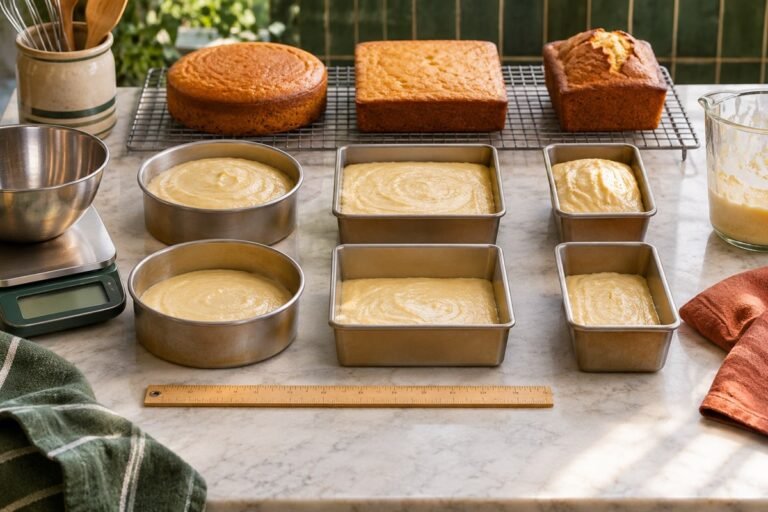
Scaling ingredient weights does not automatically scale baking time. A different pan changes batter or dough depth, exposed surface, heat flow, and the distance heat travels to the center. Match pan capacity first, then check doneness earlier and record the result.
Separate Ingredient Scaling From Heat Transfer
The Recipe Scaling Calculator multiplies ingredient quantities by a factor. That arithmetic does not model pan geometry or oven heat.
When batter depth changes, heat reaches the center over a different distance. Surface area also changes how quickly moisture escapes and edges set.
Do not multiply baking minutes by the same factor as the ingredients. Keep time as a new observation that must be tested.
Compare Pan Capacity and Baking Area
Measure the pan called for in the recipe and the pan you want to use. For many cakes and bars, bottom area helps preserve a similar depth; for shaped pans, usable volume also matters.
King Arthur Baking recommends calculating pan volume before substitutions. An 8-inch square pan and a 9-inch round pan can be closer in capacity than their names suggest.
Outside dimensions can mislead because walls may slope or curve. Measure the interior and avoid filling past the safe level recommended for the recipe and pan.
Keep Batter Depth Close When Possible
A larger batch in the original pan creates a deeper layer and a longer path to the center. The edges may overbake before the middle sets.
A smaller batch spread in the original pan creates a shallow layer that can bake quickly and dry out. A proportionally smaller pan usually preserves the intended shape better.
Divide a large scaled batch across multiple matching pans when that produces a more familiar depth. Record the fill weight for each pan.
Build a New Doneness Check Schedule
Use the recipe’s original time as context, not a guarantee. Start checking earlier when the layer is shallower or the portions are smaller.
For deeper products, allow more time but protect the surface if the tested recipe permits. Use the correct doneness test for the product, such as structure, internal temperature, or a clean tester.
Opening the oven too early can damage delicate cakes. Choose a sensible first check based on the product and prior trials.
Control Pan Material and Oven Position
A change from light metal to dark metal, glass, or ceramic adds another variable. Keep material constant during the first size comparison when possible.
Place pans according to the recipe and leave room for airflow. If several pans bake together, hot spots and crowded racks may create different results.
Write down material, color, rack position, oven mode, actual bake time, and cooling method. These details turn a successful substitution into a repeatable one.
Avoid Common Scaled-Recipe Baking Mistakes
- Scaling minutes like grams: test doneness separately.
- Ignoring pan depth: preserve a similar layer.
- Using outside dimensions: measure usable capacity.
- Changing material too: isolate the pan-size variable.
- Skipping a small trial: test before an important event.
Some recipes do not scale cleanly because leavening, mixing, or structure becomes limiting. When the product is sensitive, make multiple original-size batches instead.
Build a Repeatable Kitchen Record
Use the downloadable log for at least three comparable sessions. Record measurements before starting, conditions during the process, and the result at the same checkpoint. A note such as “better” is useful only when it explains what improved.
Label every sample and add units to every number. Keep photographs, weights, temperatures, times, and equipment names beside the written result so the next decision does not depend on memory.
Before changing the next session, review the full record and identify one likely cause. Preserve the other conditions when possible. A controlled change is slower than changing everything, but it produces information that can be used again.
Include the outcome that matters to the eater or baker, not only a convenient measurement. Texture, handling, doneness, flavor, and consistency can reveal a poor result even when the timing or weight matched the plan.
If a session differs unexpectedly, mark it as an exception instead of deleting it. The exception may reveal a scale, ingredient, oven, handling, or environment problem that deserves a separate test.
When the pattern becomes stable, write a short operating rule. State the input, target sign, acceptable range, and action when the result falls outside that range.
Download the Practical Log
Open the CSV in a spreadsheet and replace the example row with your own measurements.
Keep the Plan and Result Together
A consistent record makes the next adjustment smaller and easier to explain.
Use the Recipe Scaling Calculator
The Recipe Scaling Calculator handles the arithmetic for this task. This article explains the observation, equipment, and process decisions the calculator cannot measure.
Calculate first, then record what actually happened. That separation keeps the article useful without repeating the complete calculator guide.
Calculate the Measured Plan
Set the quantity first, then test the process under controlled conditions.
پین سائز اور بیکنگ وقت کے عام سوالات
کیا بیکنگ وقت بھی اسی فیکٹر سے ضرب ہوگا؟
نہیں۔ اجزا کا وزن ریاضی سے بڑھتا ہے، مگر وقت پین کی گہرائی، سطح اور پروڈکٹ کی ساخت سے بدلتا ہے۔
پین کی گنجائش کیسے ملائیں؟
اصل اور نئے پین کا اندرونی سائز، نیچے کا رقبہ اور قابل استعمال حجم دیکھیں تاکہ تہہ کی گہرائی قریب رہے۔
چھوٹی تہہ جلد بیک ہوگی؟
اکثر کم گہری تہہ جلد تیار ہوتی ہے، اس لیے مناسب وقت سے پہلے جانچ شروع کریں اور زیادہ خشک ہونے سے بچائیں۔
گہری تہہ کا خطرہ کیا ہے؟
کنارے پہلے پک سکتے ہیں جبکہ درمیان کچا رہے، اس لیے صحیح پین اور پروڈکٹ کے مطابق پختگی جانچیں۔
بڑا بیچ کیسے محفوظ آزمائیں؟
اہم موقع سے پہلے چھوٹا ٹیسٹ کریں، ہر پین کا فل وزن اور اصل بیکنگ وقت ریکارڈ کریں۔
Sources and Further Reading
Related Cooking Tools

Author and Founder