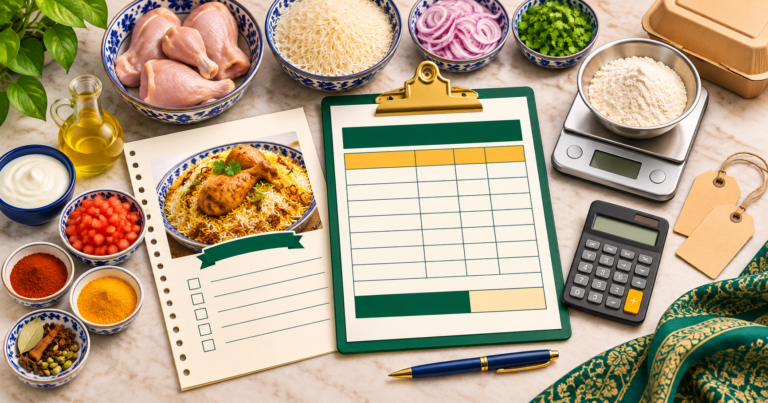
A standard recipe cost card connects a tested recipe with the prices actually paid for its ingredients. It should show the ingredient form, matched unit cost, usable quantity, expected batch yield, portion size, and update date. The card becomes useful only when the kitchen follows the same recipe and records real results.
Start With a Tested Standard Recipe
A cost card needs one stable recipe, not a rough memory of how a dish is usually made. Record the exact ingredient form, quantity, method, batch yield, and serving size before adding prices.
University of Nevada, Reno Extension lists yield and serving size as key parts of a standardized recipe. These details let different cooks produce a comparable batch and give the cost record a fixed basis.
Test the recipe under normal kitchen conditions. If the actual yield changes every time, improve portioning and process control before treating one cost per portion as reliable.
Match Every Quantity to Its Price Unit
Write the purchase unit beside every invoice price. A price per kilogram cannot be multiplied directly by grams until both values use the same unit.
Keep package count, net weight, drained weight, and usable weight separate. A carton price may describe the purchase, while the recipe may use only part of the edible contents.
Use the Recipe Batch Cost Calculator after the units match. The tool handles arithmetic, while the card records why each input was chosen.
Account for Edible Yield and Preparation Loss
Raw purchase weight may include peel, bone, stems, liquid, or trim that never reaches the finished dish. Price the usable ingredient rather than assuming the full purchase weight is edible.
The USDA Food Buying Guide explains that yield information can estimate purchase quantities, compare foods, control costs, and prevent waste. Match the guide description to the form you actually buy and serve.
When local products differ, run a small in-house yield test. Weigh the item before and after consistent preparation, document the samples, and keep the measured result with the cost card.
Record the Complete Batch Cost
Add all measured ingredient costs for the tested batch. If you include packaging, fuel, or another overhead amount, label it separately so readers can see what the total contains.
Do not hide free stock, donated ingredients, or old prices inside a zero. Record the source and date because the next batch may require a normal purchase.
Keep optional garnishes and variable add-ons in their own rows. This makes it easier to update one component without rebuilding the whole card.
Use Actual Yield for Portion Cost
Portion cost depends on the number of saleable portions the batch really produced. A planned yield of 20 does not justify dividing by 20 if only 18 equal portions were served.
Use a consistent ladle, scoop, scale, or cutting guide. USDA guidance notes that careful portioning helps a recipe produce its expected yield.
Record both target and actual yield. A repeated gap can point to oversized portions, cooking loss, spills, or an unrealistic recipe standard.
Set a Price Review and Approval Routine
Date each ingredient price and name the supplier or invoice. Review high-cost or volatile ingredients more often than stable low-value items.
When a price changes, update the cost card before changing a selling price or portion. One invoice can contain a temporary promotion, so note whether the new price appears normal or exceptional.
Keep a short approval history with the old cost, new cost, reason, and reviewer. This prevents silent edits and helps explain why a portion cost moved.
Avoid Common Recipe Cost Card Mistakes
- Using an untested yield: count actual saleable portions.
- Mixing grams and kilograms: convert before multiplying.
- Ignoring trim: cost the usable ingredient form.
- Leaving prices undated: connect every value to a source.
- Combining all overhead: label what the total includes.
A cost card is a controlled record, not a promise of profit. Labor, rent, taxes, spoilage, discounts, and sales mix may require separate analysis.
Build a Repeatable Review Record
Use the downloadable CSV for at least three comparable checks. Record the source document, units, date, physical result, person responsible, and final action. Replace the fictional row with your own information.
Keep exceptions instead of deleting them. A damaged delivery, unusual event, temporary promotion, or different preparation method can explain why one result does not match the normal pattern.
Review the complete record before changing a standard. One result can raise a useful question, while repeated comparable results provide a stronger basis for a new operating rule.
Use clear status words such as pending, verified, approved, rejected, or monitor. Vague notes make it difficult for the next person to understand whether a decision is complete.
Attach the supporting receipt, invoice, photograph, temperature log, or recipe version when it matters. The number should be traceable without relying on memory.
Download the Practical Record
Open the CSV in a spreadsheet and replace the example row with your own measurements and evidence.
Keep the Decision Traceable
Record the source, unit, result, owner, and next action in one place.
Use the Recipe Batch Cost Calculator
The Recipe Batch Cost Calculator performs the matching arithmetic. This article covers records, evidence, and operational decisions that the calculator cannot observe.
Calculate the Measured Result
Confirm the units and source values first, then save the result with the evidence.
ریسیپی کاسٹ کارڈ کے عام سوالات
کاسٹ کارڈ میں کیا لکھنا چاہیے؟
ہر جزو کی مقدار، خریداری یونٹ، قابل استعمال وزن، قیمت، بیچ کی پیداوار، پورشن سائز اور قیمت کی تاریخ واضح لکھیں۔
کیا منصوبہ شدہ پورشن کافی ہیں؟
نہیں۔ اصل بیچ سے نکلنے والے برابر اور فروخت کے قابل پورشن گنیں، پھر ان کی بنیاد پر فی پورشن لاگت دیکھیں۔
چھلکے اور ہڈی کا کیا کریں؟
جو حصہ کھانے میں استعمال نہیں ہوتا اسے پیداوار کے حساب میں الگ رکھیں، کیونکہ قابل استعمال مقدار کی لاگت زیادہ ہو سکتی ہے۔
قیمت کتنی بار بدلنی چاہیے؟
نئی رسید یا سپلائر قیمت ملنے پر تاریخ کے ساتھ جانچ کریں، خاص طور پر مہنگے اور تیزی سے بدلنے والے اجزا کی۔
کیا کاسٹ کارڈ منافع بتاتا ہے؟
یہ بنیادی ریسیپی لاگت دکھاتا ہے۔ مزدوری، کرایہ، ٹیکس، رعایت اور ضائع ہونے والی چیزیں الگ تجزیہ مانگ سکتی ہیں۔
Sources and Further Reading
View 6 Sources
- OpenStax: How and Why a Standard Cost Is Developed
- OpenStax: Compute and Evaluate Materials Variances
- University of Nevada, Reno Extension: All About Recipes Part I
- University of Nevada, Reno Extension: All About Recipes Part II
- USDA Food Buying Guide: About the Guide
- USDA Food Buying Guide: Introduction
Related Cooking Tools
Related Food Cost and Catering Guides

Author and Founder
2 thoughts on “How to Build a Standard Recipe Cost Card”