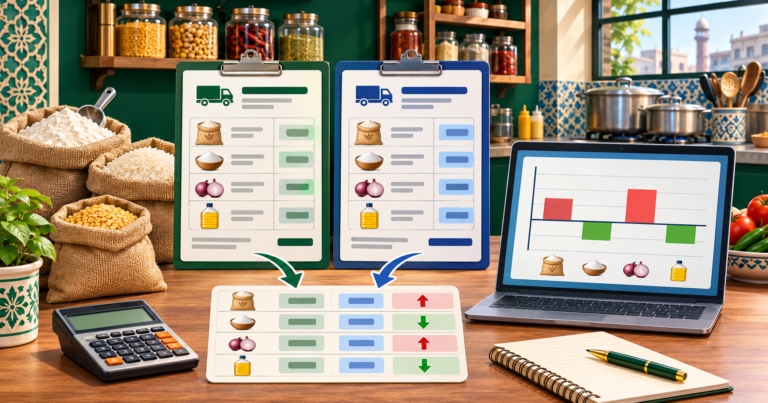
An ingredient price variance shows how much the price paid differs from an approved standard across the quantity purchased. The number becomes useful when the invoice unit, pack size, quality, freight, tax, and date are checked before anyone labels the result favorable or unfavorable.
Set an Approved Standard Price
A standard price should have a source, effective date, unit, pack description, and owner. It may come from an approved quote, contract, budget, or recent normal purchase.
OpenStax explains that standard costs provide a budgeted point of comparison with actual performance. A standard that nobody maintains will create noise instead of control.
Do not overwrite the old standard without an effective date. Keep enough history to explain which expectation applied when the purchase was made.
Normalize the Invoice Unit
Check whether the invoice price is per kilogram, carton, bottle, tray, or case. Confirm net contents and the number of units inside a multipack.
Convert the actual and standard price to the same basis before comparing them. A case price may look higher simply because the case size changed.
Separate line-item price from freight, tax, rebates, and credits. Include them only according to the approved costing policy.
Calculate the Quantity Impact
The Ingredient Purchase Price Variance Calculator applies the price difference across the entered purchase quantity.
OpenStax presents material price variance as actual quantity multiplied by the difference between actual and standard price. A higher actual price produces an unfavorable variance under that sign convention.
Keep the sign rule visible in the report. Teams can use different display conventions, but the meaning must stay consistent.
Assign a Cause Code With Evidence
Useful cause codes include supplier increase, emergency purchase, changed pack size, quality upgrade, freight, exchange rate, promotion ended, invoice error, or outdated standard.
Attach the invoice, quote, receiving note, or approval that supports the code. Do not guess that inflation caused every difference.
One purchase can have more than one cause. Name the primary verified cause and note secondary factors rather than forcing a false single explanation.
Separate Favorable Price From Good Value
A lower price is favorable in the arithmetic, but it may not be good value if quality, yield, shelf life, or delivery reliability falls.
Compare usable yield and recipe performance when a cheaper substitute changes the product. A price variance report should not approve unsafe or unsuitable ingredients.
Escalate repeated favorable purchases that also create higher waste or more labor. The cost may have moved to another part of the operation.
Review Material Variances Promptly
OpenStax notes that price variance is useful at purchase time because earlier awareness allows earlier action. Review large or repeated differences while evidence is easy to find.
Set thresholds by value and importance. A small percentage on a high-volume staple can matter more than a large percentage on a rare garnish.
Close each review with one action: correct the invoice, update the standard, renegotiate, approve a substitute, or monitor the next purchase.
Avoid Common Price Variance Mistakes
- Comparing different packs: normalize net quantity.
- Using an expired standard: date every baseline.
- Ignoring freight or credits: follow one policy.
- Calling cheap good: review yield and quality.
- Logging without action: assign an owner and due date.
Price variance explains a purchase difference. It does not by itself explain recipe usage, waste, sales, or profit.
Build a Repeatable Review Record
Use the downloadable CSV for at least three comparable checks. Record the source document, units, date, physical result, person responsible, and final action. Replace the fictional row with your own information.
Keep exceptions instead of deleting them. A damaged delivery, unusual event, temporary promotion, or different preparation method can explain why one result does not match the normal pattern.
Review the complete record before changing a standard. One result can raise a useful question, while repeated comparable results provide a stronger basis for a new operating rule.
Use clear status words such as pending, verified, approved, rejected, or monitor. Vague notes make it difficult for the next person to understand whether a decision is complete.
Attach the supporting receipt, invoice, photograph, temperature log, or recipe version when it matters. The number should be traceable without relying on memory.
Download the Practical Record
Open the CSV in a spreadsheet and replace the example row with your own measurements and evidence.
Keep the Decision Traceable
Record the source, unit, result, owner, and next action in one place.
Use the Ingredient Purchase Price Variance Calculator
The Ingredient Purchase Price Variance Calculator performs the matching arithmetic. This article covers records, evidence, and operational decisions that the calculator cannot observe.
Calculate the Measured Result
Confirm the units and source values first, then save the result with the evidence.
اجزا کی قیمت کے فرق کے عام سوالات
معیاری قیمت کیا ہونی چاہیے؟
منظور شدہ قیمت کے ساتھ یونٹ، پیک سائز، سپلائر، مؤثر تاریخ اور ذمہ دار شخص کا نام بھی ریکارڈ کریں۔
رسید کی قیمت کیسے ملائیں؟
اصل اور معیاری قیمت کو ایک ہی یونٹ اور خالص مقدار میں تبدیل کریں، پھر فرق کو خریدی گئی مقدار سے ضرب دیں۔
کم قیمت ہمیشہ اچھی ہے؟
نہیں۔ کم معیار، خراب پیداوار، کم شیلف لائف یا زیادہ مزدوری سستی خریداری کو مجموعی طور پر مہنگا بنا سکتی ہے۔
قیمت کے فرق کی وجہ کیسے لکھیں؟
رسید، کوٹیشن، پیک تبدیلی، فریٹ، کریڈٹ یا منظوری کی دستاویز کے ساتھ تصدیق شدہ وجہ اور مالک درج کریں۔
رپورٹ کب دیکھنی چاہیے؟
بڑے یا بار بار آنے والے فرق خریداری کے قریب جانچیں تاکہ رسید، سپلائر اور منظوری کا ثبوت آسانی سے مل سکے۔
Sources and Further Reading
Related Cooking Tools
Related Food Cost and Catering Guides

Author and Founder
1 thought on “How to Track Ingredient Price Variance From Invoices”