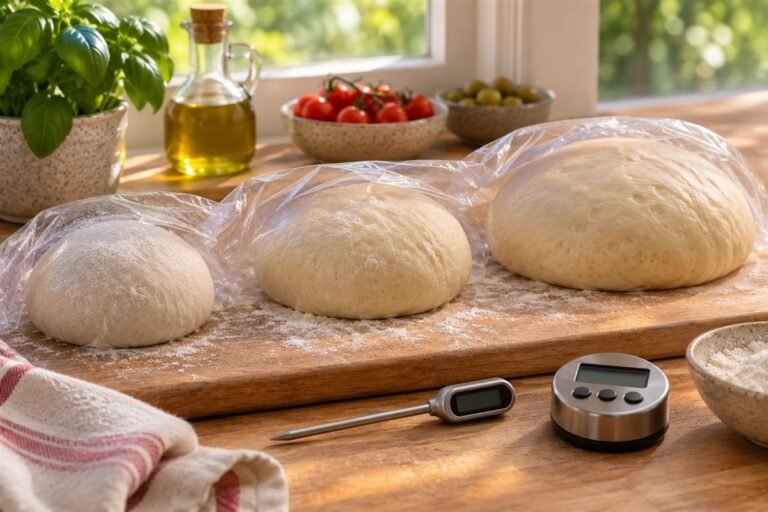
Cold pizza dough often feels tight and springs back when stretched. A covered rest at room temperature lets the dough warm and the gluten relax. The right time depends on dough size, temperature, fermentation, and the room, so use physical signs rather than one fixed schedule.
Why Cold Dough Resists Stretching
Refrigeration slows fermentation and firms the dough. Cold gluten and fat are less flexible, so a dough ball may shrink back or tear when it is forced too soon.
A longer cold fermentation can improve flavor and extensibility, but the dough still needs an appropriate transition before shaping. King Arthur Baking advises giving resistant dough more bench time so it can warm and relax.
Temperature is only one factor. Dough strength, hydration, ball weight, flour, fermentation stage, and handling also change how quickly it becomes workable.
Move the Dough Without Drying It Out
Take out only the dough balls you expect to bake. Keep each ball in a lightly prepared covered container with enough room to expand.
Do not leave the surface exposed to moving air. A dry skin will resist stretching and can create tough patches, even when the center has warmed.
Mark the removal time and note the refrigerator and room temperatures. These two readings make the next pizza session easier to plan.
Read the Dough Instead of Following One Timer
Press the dough gently. A ready ball should feel softer, show some gas, and recover slowly rather than snapping back at once. It should release from the container without becoming a puddle.
Start shaping with gentle pressure from the center toward the edge. If it fights back, cover it and rest it again instead of pulling harder.
If the dough feels very warm, fragile, and overly gassy, it may have gone too far. Handle it carefully and record the actual warming period before adjusting the next batch.
Keep Dough Ball Weight and Pizza Size Connected
The Pizza Dough Ball Weight Calculator sets a measured dough amount for the pizza diameter and thickness target. Warming does not change that planned relationship.
Large balls usually take longer to warm through than small ones. Compare balls of the same weight when testing a bench schedule.
Do not trim away large pieces after warming and expect identical crusts. Weigh and divide the balls before cold storage so each pizza begins from the same plan.
Stretch Without Knocking Out Every Bubble
Use a lightly floured surface and enough flour to prevent sticking without burying the dough. Press the center while preserving the outer rim when the pizza style calls for one.
Lift and rotate the dough gradually. Stop if thin spots appear, and avoid pulling one edge while the opposite side remains thick.
Prepare toppings and the oven before final shaping. A warmed base should not sit loaded for a long time while the oven catches up.
Avoid Common Dough Warming Mistakes
- Using direct heat: choose a stable room-temperature rest.
- Leaving dough uncovered: prevent a dry skin.
- Forcing snapback: rest the dough again.
- Warming every ball: remove only what you need.
- Ignoring ball size: compare equal weights.
Food safety and recipe instructions still apply. If the dough has unusual color, mold, or a putrid odor, warming will not make it suitable to eat.
Build a Repeatable Kitchen Record
Use the downloadable log for at least three comparable sessions. Record measurements before starting, conditions during the process, and the result at the same checkpoint. A note such as “better” is useful only when it explains what improved.
Label every sample and add units to every number. Keep photographs, weights, temperatures, times, and equipment names beside the written result so the next decision does not depend on memory.
Before changing the next session, review the full record and identify one likely cause. Preserve the other conditions when possible. A controlled change is slower than changing everything, but it produces information that can be used again.
Include the outcome that matters to the eater or baker, not only a convenient measurement. Texture, handling, doneness, flavor, and consistency can reveal a poor result even when the timing or weight matched the plan.
If a session differs unexpectedly, mark it as an exception instead of deleting it. The exception may reveal a scale, ingredient, oven, handling, or environment problem that deserves a separate test.
When the pattern becomes stable, write a short operating rule. State the input, target sign, acceptable range, and action when the result falls outside that range.
Download the Practical Log
Open the CSV in a spreadsheet and replace the example row with your own measurements.
Keep the Plan and Result Together
A consistent record makes the next adjustment smaller and easier to explain.
Use the Pizza Dough Ball Weight Calculator
The Pizza Dough Ball Weight Calculator handles the arithmetic for this task. This article explains the observation, equipment, and process decisions the calculator cannot measure.
Calculate first, then record what actually happened. That separation keeps the article useful without repeating the complete calculator guide.
Calculate the Measured Plan
Set the quantity first, then test the process under controlled conditions.
ٹھنڈے پیزا ڈو کے عام سوالات
پیزا ڈو واپس کیوں سکڑتا ہے؟
ٹھنڈا ڈو سخت اور تناؤ والا ہوتا ہے، اس لیے اسے ڈھانپ کر آرام دینے سے گلوٹن نرم اور پھیلنے کے قابل ہوتا ہے۔
ڈو کو کتنی دیر باہر رکھیں؟
ایک مقررہ وقت سب کے لیے درست نہیں۔ ڈو کے وزن، کمرے کے درجہ حرارت اور اس کی نرمی کو دیکھیں۔
کیا ہیٹر کے پاس رکھ سکتے ہیں؟
براہ راست گرمی سے سطح اور اندرونی حصہ غیر برابر ہو سکتے ہیں، اس لیے مستحکم کمرے کی حالت بہتر ہے۔
ڈو کو ڈھانپنا کیوں ضروری ہے؟
کھلی سطح خشک ہو کر جلد بنا سکتی ہے جو اسٹریچنگ میں پھٹتی اور سخت حصہ بناتی ہے۔
ڈو کب تیار ہے؟
جب وہ نرم ہو، آہستہ واپس آئے اور زور لگائے بغیر پھیلنے لگے تو شکل دینے کے لیے مناسب ہے۔
Sources and Further Reading
Related Cooking Tools

Author and Founder