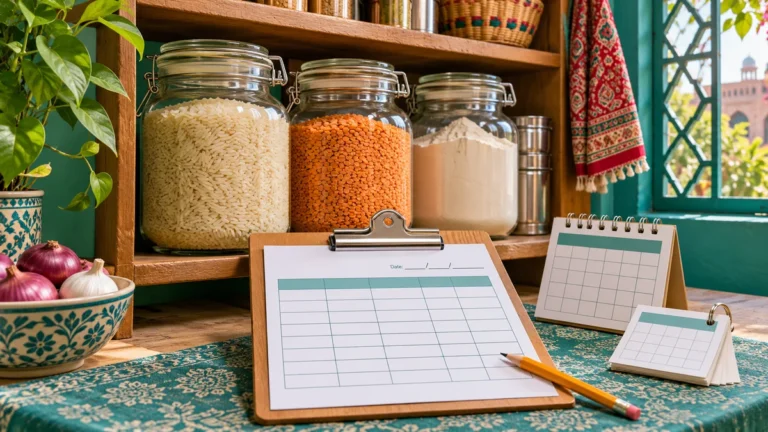
A pantry stock cover result is only as stable as the stock and use records behind it. A dated case record can show why the estimate changed after guests, travel, a menu change, waste, or reserved stock. It helps a household learn from the result without repeating the calculator’s formula.
Start With a Measured Pantry Snapshot
Choose one staple and record the date, product form, amount, and unit. Keep sealed and open stock on the same line only when they are the same product and can use the same unit.
Mark stock reserved for another meal, event, or household purpose. Reserved stock may be physically present but unavailable for the plan you are reviewing.
Photograph or sign the record when several people use the pantry. A clear starting point makes later changes easier to explain.
Use a Dated Observation Period
Record a starting amount, purchases added during the period, and an ending amount. Note the first and last date. An estimate based on an unnamed “usual month” is hard to audit.
Use a period that represents the household’s current routine. A school holiday, travel week, fasting period, illness, or large gathering can change use.
Do not hide unusual days. Write them in the record so you can decide whether to include the period in a normal-use estimate.
Separate Consumption, Waste and Transfers
Food leaving the shelf is not always household consumption. It may be discarded, donated, transferred to another container, or moved to a different storage area.
Record a short reason when stock changes outside normal meals. This prevents a broken bag or pantry cleanout from looking like a permanent increase in daily use.
Keep measurement units consistent. If a jar is weighed in grams, do not enter one purchase as a bag count unless the bag’s labeled mass is also recorded.
Document the Conditions That Changed the Result
In a hypothetical case, a family may begin with the same rice stock in two months but see different cover estimates. Guests, more meals at home, or a switch from rice to another staple can change observed use.
The purpose of the case record is not to prove one universal number. It is to show which household conditions made the new result more or less representative.
The CSV keeps stock, dates, purchases, ending stock, reserved amounts, waste, and routine changes together.
Create a Pantry Stock Cover Record
Keep the evidence behind each estimate.
Decide When an Old Estimate Is No Longer Useful
Review the result after a major household change, a new product form, a different storage location, or a long gap in records. A stale use pattern can give a precise-looking but unhelpful answer.
Also review after finding hidden stock. Duplicate containers, forgotten bulk bags, and items stored in another room can change the usable total.
Food storage guidance and package dates remain separate from arithmetic stock cover. Use FoodKeeper and the product label for storage decisions.
Compare Two Observation Windows Before Changing the Plan
One month can be noisy. Compare it with a second dated period before deciding that the household’s normal use has changed.
Use the same product definition and measurement unit in both windows. A switch from loose rice to prepacked portions can make the records look different even when meals are similar.
Check whether purchases occurred inside each observation window. Missing a refill can make apparent use larger than the amount actually consumed.
If the two periods disagree, keep both and explain the conditions. The record should preserve uncertainty rather than force a false average.
Choose the period that best matches the next planning window and state why. A transparent choice is easier to review than an unexplained blended number. Keep both records for the next household review.
Use the Record With Published Ration Tools
The planned Pantry Stock Cover Calculator is not yet published. Keep this dated evidence record and use the Ration hub to choose an available tool without relying on a broken or placeholder page.
When a matching calculator becomes available, enter the verified stock and the use value that best represents the current household routine. Save the record date beside every result.
Continue With Available Ration Tools
Browse published calculators for household quantities, usable stock, package rules, and current costs.
Avoid Common Stock Cover Record Errors
- Using an undated estimate: record the observation period.
- Counting reserved food: mark what is not available.
- Treating waste as use: keep the reasons separate.
- Mixing units: use one compatible basis per product.
- Trusting an unusual week: explain guests, travel, and menu changes.
پینٹری اسٹاک کور ریکارڈ کے عام سوالات
اسٹاک ریکارڈ پر تاریخ کیوں ضروری ہے؟
تاریخ سے معلوم ہوتا ہے مقدار کب ناپی گئی اور استعمال کی مدت کون سی تھی۔ پرانا ریکارڈ موجودہ معمول کی نمائندگی نہیں کر سکتا۔
محفوظ رکھا ہوا اسٹاک شامل ہوگا؟
اگر وہ دوسرے کھانے یا موقع کے لیے محفوظ ہے تو اسے دستیاب مقدار سے الگ نوٹ کریں۔
ضائع ہونے والی خوراک کیسے لکھیں؟
ضائع مقدار اور وجہ الگ لکھیں تاکہ اسے معمول کے استعمال میں شمار نہ کیا جائے۔
مہمان آنے سے نتیجہ بدل سکتا ہے؟
ہاں۔ مہمان، سفر یا گھر میں زیادہ کھانے سے استعمال بدلتا ہے، اس لیے اس مدت کو واضح نوٹ کریں۔
کیلکولیٹر دوبارہ کب چلائیں؟
جب گھر کا معمول، مصنوعات، ذخیرہ یا استعمال کا قابل اعتماد ریکارڈ بدل جائے۔
Sources and Pantry Record Resources
View 4 Sources
- USDA. FoodKeeper App
- USDA. Reducing Food Waste at Home
- USDA FSIS. Food Product Dating
- NIST. SI Units and Prefixes
Related Ration Planning Tools
Planning More Household Groceries?
Browse calculators for measured quantities, usable stock, package rules, and current costs.

Author and Founder