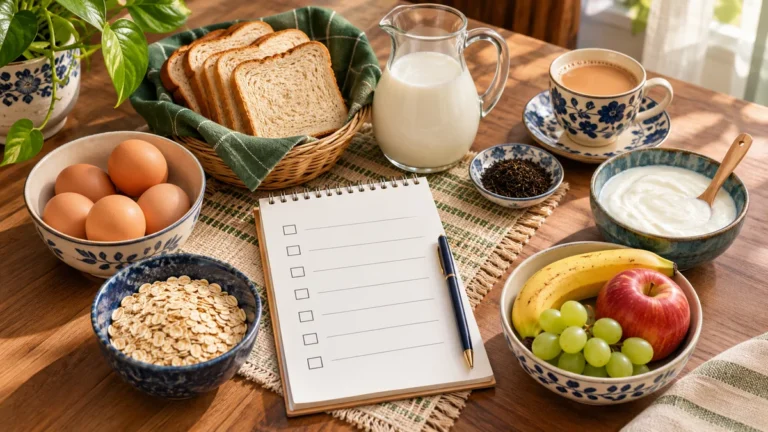
A shared breakfast list works when each ingredient has one owner row, even if several dishes use it. Milk used in tea and oats should not appear as two unrelated purchases. Different products, such as fresh milk and powdered milk, should not be merged just because their names sound similar.
Start the Shared Breakfast Shopping List With Meals
Write the breakfasts you realistically expect during the planning period. Include weekday and weekend differences, but do not turn the list into a nutrition prescription.
USDA MyPlate meal-planning guidance suggests checking what is already in the refrigerator, freezer, and cabinets, then making a list from planned meals. That sequence keeps stock ahead of buying.
Name each breakfast in plain language: tea and toast, eggs and paratha, oats with milk, or yogurt with fruit. The meal names become a source list for ingredients.
Add days or meal occasions beside the names, but do not calculate quantities yet. This first pass is only for coverage and shows which ingredients repeat before a repeated line becomes a repeated purchase.
Give Every Ingredient One Owner Row
Make one row for an ingredient that appears in several breakfasts. Add the planned uses in a notes field. Milk can list tea, oats, or cereal without becoming three purchase rows.
Use the same rule for bread, eggs, butter, fruit, and yogurt. One owner row prevents the same household need from being counted more than once.
When two household members keep separate products, make that distinction visible. Lactose-free milk and ordinary milk are not duplicates. Whole-wheat bread and a specific flatbread may also be separate planned products.
Merge Only True Breakfast Duplicates
Two notes are duplicates only when the product, form, unit basis, and household use match. Tea milk and cooking milk can share a row when they come from the same household supply.
Do not merge fresh milk, milk powder, and yogurt. Do not merge eggs and an egg-based frozen product. Similar use does not erase product identity.
When the decision is unclear, mark verify. Ask which package actually supplies both uses before merging. A visible question is safer than a hidden assumption.
Check Existing Breakfast Stock Before Shopping
Walk through the kitchen with the draft list. Check open and sealed stock, package condition, and the unit used on the list. Keep grams, litres, pieces, and packs visible.
Cross off items already covered by usable stock. Keep a note when stock is reserved for another purpose. A carton planned for a dessert should not silently cover breakfast milk.
The CSV provides one owner row with planned breakfasts, household use, existing stock, action, and assignment. Replace the example with your own plan.
Ask another household member to review the draft against the actual kitchen. A second check often catches a spare loaf, unopened tea packet, or reserved item that the writer did not see.
Build a Shared Breakfast List
Assign every ingredient once before adding quantities or prices.
Use Clear Shopping Actions and Notes
Mark buy, hold, verify, or use first. A short action helps another household member understand the list without reading the whole meal plan.
Keep the planned uses in the notes field. That note explains why an item is present and prevents someone from deleting a shared line after seeing only one breakfast.
USDA food-waste guidance recommends buying the amount needed for the household and choosing loose items when a large bundle would create surplus. Apply that idea only after the shared list is clean.
Keep optional items visibly optional. A backup breakfast is not the same as a required daily item. This label helps the household remove lower-priority purchases when the basket exceeds the available budget.
Use the Breakfast Calculator After Deduplication
The Breakfast Grocery Quantity Calculator handles quantities, current stock, buying units, and prices. The shared list prepares distinct product lines for that calculation.
Enter each final owner row once. Do not copy the same full household need into every breakfast dish. Keep different products on separate lines even when they appear in one meal.
Calculate the Clean Breakfast List
Bring the verified product rows, usable stock, seller units, and current prices.
Avoid Common Breakfast List Errors
- Listing milk under every dish: use one shared owner row.
- Merging different products: keep forms and household needs separate.
- Skipping the stock check: inspect open and sealed items first.
- Hiding reserved stock: note food planned for another meal.
- Calculating before cleaning: deduplicate the list before entering quantities.
مشترکہ ناشتے کی فہرست کے عام سوالات
ایک چیز کئی ناشتے میں ہو تو کیا کریں؟
اس چیز کی ایک مشترکہ قطار بنائیں اور نوٹس میں تمام استعمال لکھیں۔ دودھ کو چائے اور اوٹس کے لیے دو بار نہ لکھیں۔
مختلف قسم کا دودھ ایک قطار میں ہوگا؟
صرف وہی مصنوعات ملائیں جو حقیقت میں ایک ہی ذخیرے سے آتی ہوں۔ تازہ دودھ اور دودھ پاؤڈر الگ قطار میں رہیں۔
موجودہ ذخیرہ کب دیکھیں؟
کھانے کی فہرست بنانے کے بعد اور خریداری مقدار طے کرنے سے پہلے فریج، فریزر اور الماری کا ذخیرہ چیک کریں۔
کسی چیز کا استعمال دوسرے کھانے میں ہو تو؟
نوٹس میں محفوظ استعمال لکھیں۔ اس طرح ناشتے کی فہرست دوسرے کھانے کے لیے رکھی مقدار کو غلطی سے استعمال نہیں کرے گی۔
کیلکولیٹر کب کھولیں؟
جب فہرست سے اصل نقل ختم ہو جائے اور ہر مصنوعات کی ایک واضح قطار، موجودہ ذخیرہ اور خریداری اکائی موجود ہو۔
Sources and Breakfast Planning Resources
View 4 Sources
- USDA MyPlate. Meal Planning Tip Sheet
- USDA MyPlate. Grocery Shopping
- USDA Climate Hubs. Reducing Food Waste
- FoodSafety.gov. FoodKeeper App
Related Ration Planning Tools
Planning More Household Groceries?
Browse calculators for measured quantities, usable stock, package rules, and current costs.

Author and Founder