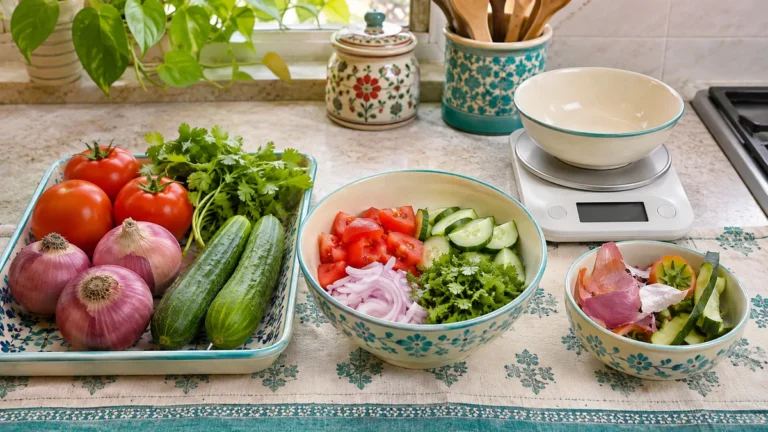
Purchased weight and usable recipe weight are not always the same. Peels, stems, bones, damaged parts, and preparation choices can reduce what reaches the recipe. A simple in-house yield test makes that difference visible without pretending one published percentage fits every ingredient and kitchen.
Define the Ingredient and Preparation Method
Name the ingredient precisely enough to repeat the test. Variety, size, maturity, condition, and purchased form can affect the result.
Write the preparation method before weighing the edible portion. Peeled, trimmed, boned, drained, cored, and chopped are different endpoints.
Do not combine several unrelated ingredients into one yield percentage. Test each ingredient and preparation method separately.
Weigh the Ingredient as Purchased
Place a clean container on the scale and press tare, or weigh the ingredient directly when safe and practical. Record the purchased weight before washing, peeling, trimming, draining, or cooking.
Remove packaging unless packaging is explicitly part of the purchased-weight record. A label’s net contents can be a reference, but an in-house test should use the weight basis you actually compare.
Use grams for a compact record and keep the same scale and unit across the test.
Separate Edible Portion, Trim, and Other Loss
Prepare the ingredient using the written method. Place usable pieces in one tared container and peels, stems, bones, damaged sections, or other trim in another.
Keep avoidable waste visible rather than mixing it with unavoidable trim. This distinction can reveal a training or knife-work issue without changing the edible-yield arithmetic.
If the weights do not add back to the purchased amount, look for water, scraps on tools, spillage, draining, or a tare error. Record an explained difference instead of forcing the numbers to balance.
Calculate and Interpret Edible Yield
Edible yield percentage equals edible prepared weight divided by purchased weight, multiplied by 100. A 780 gram edible portion from 1000 grams purchased gives a 78% yield.
The percentage describes the tested ingredient, quality, and preparation method. It is not a nutrition recommendation and does not guarantee the next delivery will match.
Use the reciprocal carefully when planning purchases. Required purchased weight equals desired edible weight divided by the yield expressed as a decimal.
Repeat the Yield Test Before Setting a Standard
Run several ordinary batches rather than selecting the best result. Seasonal quality, supplier grading, storage, and staff technique can change preparation loss.
Keep extreme damage or unusual spoilage notes visible. Decide whether those cases belong in the normal planning range or should be investigated separately.
USDA’s Food Buying Guide notes that actual yields can differ with product condition, storage, handling, equipment, cooking, and portion control. An in-house record helps identify the conditions that matter in your kitchen.
Summarize the range as well as the average. If three tests produce 76%, 79%, and 81%, the average alone hides useful variation. A cautious shopping plan may use the lower ordinary result when a shortage would disrupt the recipe, while still keeping the full observations available.
Keep Cooking Yield Separate From Preparation Yield
Preparation yield ends at the edible raw or drained state you define. Cooking can cause moisture loss, fat loss, or water absorption and should be recorded as a separate stage.
Do not compare a raw purchased weight directly with a cooked serving and call the full difference trim. That combines multiple processes and hides the reason for change.
When both stages matter, keep purchased, edible prepared, cooked, and served weights in separate columns.
Download the Edible Yield Test Record
The CSV stores purchased weight, edible weight, trim, other loss, method, and product-quality notes. Replace the sample row with one ingredient test.
Add a new row for each batch. Keep different suppliers or preparation methods identifiable when comparing results.
Build an In-House Yield Record
Keep edible portion and preparation loss on the same measured basis.
Use the Usable Ingredient Yield Calculator
The Usable Ingredient Yield Calculator calculates edible amount, loss, and yield from the weights you enter. This article owns the physical test and classification method.
Enter weights from one defined preparation stage. Read the result with the ingredient, quality, and method recorded beside it.
Calculate a Measured Ingredient Yield
Take the purchased and edible weights from your test to the calculator.
Common Edible Yield Test Mistakes
- Changing preparation method: define the endpoint before testing.
- Including packaging: use the intended net ingredient basis.
- Hiding avoidable waste: separate trim categories when useful.
- Mixing raw and cooked stages: record cooking yield separately.
- Using one perfect batch: build a range from ordinary tests.
قابل استعمال پیداوار کے عام سوالات
خریدے ہوئے وزن میں پیکنگ شامل ہے؟
عام طور پر خالص جزو کا وزن لیں، مگر اپنے ریکارڈ کی بنیاد واضح لکھیں۔
چھلکے اور خراب حصہ ایک ساتھ لکھیں؟
ضرورت ہو تو الگ لکھیں تاکہ لازمی تراش اور قابل بچت ضیاع میں فرق نظر آئے۔
پکی ہوئی مقدار اسی ٹیسٹ میں شامل کریں؟
تیاری کی پیداوار اور پکانے کی پیداوار الگ مرحلوں میں ریکارڈ کریں۔
ایک ٹیسٹ کافی ہے؟
نہیں۔ عام بیچوں کے کئی ٹیسٹ زیادہ قابل اعتماد حد دیتے ہیں۔
کیلکولیٹر کیا فیصلہ نہیں کر سکتا؟
یہ جزو کی تازگی، معیار، محفوظ استعمال یا غذائی مناسبیت کا فیصلہ نہیں کرتا۔
Sources and Edible Yield Resources
View 4 Sources
- USDA Food and Nutrition Service. About the Food Buying Guide
- USDA Food and Nutrition Service. Vegetable Yield Resources
- USDA Agricultural Research Service. Food Yields by Preparation Stage
- NIST. Metric Kitchen: Cookware and Tools
Related Ingredient Planning Tools
Explore More Cooking Calculators
Browse tools for recipe scaling, ingredient yield, bread formulas, dough production, and kitchen measurements.

Author and Founder