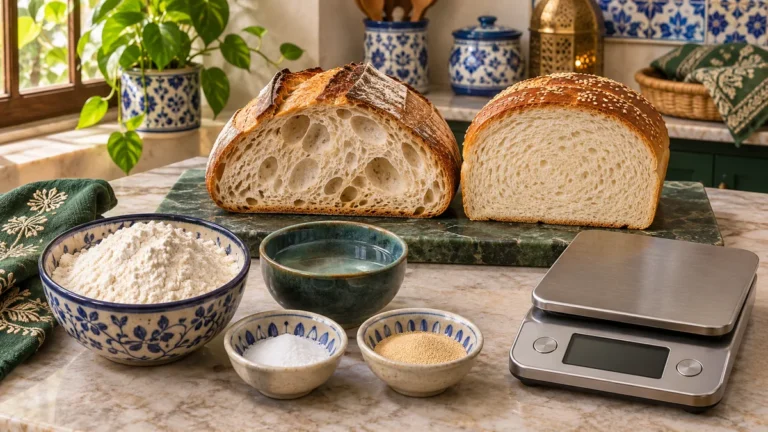
Two bread formulas can use different batch weights yet keep the same ingredient relationships. Baker’s percentages place total flour at 100% and express each other ingredient against that flour weight. This common basis helps you compare formulas without confusing batch size with dough design.
Use Total Flour as the 100 Percent Base
Add every flour in the formula, including wheat, whole wheat, rye, and other ingredients you classify as flour. That total becomes 100% even when several flour types are used.
Divide each ingredient weight by total flour weight and multiply by 100. For example, 680 grams of water with 1000 grams of flour is 68% water.
Do not make the finished dough total equal 100%. Baker’s percentage differs from a percentage-of-total recipe because flour alone is the reference base.
Compare Hydration on the Same Definition
Hydration usually compares water with total flour. A formula showing 68% water has 68 grams of water for every 100 grams of flour.
Before comparing two formulas, check which liquids are counted as water. Milk, eggs, butter, fruit, and syrups contain water, but formulas may treat them differently depending on purpose.
Write the chosen definition beside the comparison. A precise percentage can still mislead when the two formulas classify ingredients differently.
Compare Salt, Sugar, Fat, and Yeast
Salt percentage lets you compare seasoning relative to flour, while sugar and fat help show whether a dough is lean or enriched. Yeast percentage must be read with yeast type and process time.
Do not treat one percentage as a complete prediction of flavor or texture. Flour strength, fermentation, mixing, temperature, inclusions, and shaping also matter.
Keep ingredients on separate lines when their functions differ. Combining all sweeteners or fats can help a broad comparison, but preserve the original detail in the formula record.
Unpack Preferments for an Overall Formula
A poolish, biga, levain, or starter contains flour and water that already belong to the dough. For an overall comparison, add that flour to total flour and that water to total water.
A formula that lists a preferment only as one ingredient can make final-mix hydration look lower than the true overall hydration. King Arthur’s professional reference recommends calculating overall baker’s percentages when preferments would otherwise obscure the formula.
Keep the preferment build and final mix as separate production sections, but reconcile both sections to one overall formula.
Separate Formula Design From Batch Size
A 500 gram flour batch and a 5000 gram flour batch can share the same baker’s percentages. The percentages describe relationships, while weights describe production size.
Compare formulas first on a consistent percentage basis. Then choose the flour or total dough weight needed for the batch you plan to make.
Round practical ingredient weights only after scaling. Very small yeast or salt quantities may require a suitable precision scale or a larger test batch.
Record Observed Dough Behavior
Percentages support comparison, but the dough still needs testing. Record mixing feel, fermentation time, dough temperature, handling, proofing, loaf volume, crumb, and crust as relevant.
Change one major percentage at a time when learning its effect. If water, salt, flour blend, and preferment all change together, the result will not isolate the cause.
Use descriptive observations rather than claiming that one number guarantees an open crumb, soft loaf, or specific flavor.
When comparing two formulas, bake them at a manageable size under similar conditions. Label the loaves before mixing and keep observations separate. A side-by-side test does not remove every variable, but it prevents memory from replacing a written result.
Download the Baker’s Percentage Comparison
The CSV places two formulas on the same flour-based columns for water, salt, yeast, sugar, fat, and prefermented flour. Replace the examples with formulas that use the same ingredient definitions.
Add notes for flour blend, liquid classification, and fermentation method when those details affect interpretation.
Compare Two Bread Formulas
Keep percentage definitions and observed dough behavior together.
Use the Baker Percentage Calculator
The Baker Percentage Calculator converts ingredient weights into flour-based percentages. This article owns the comparison method and definition checks.
Enter total flour and ingredient weights from the same formula basis. For prefermented dough, decide whether you are evaluating the final mix or the overall formula before entering values.
Convert Weights Into Baker’s Percentages
Calculate the formula, then compare it using consistent definitions.
Common Baker’s Percentage Comparison Errors
- Using dough total as 100%: total flour is the reference.
- Omitting preferment flour: unpack it for the overall formula.
- Comparing different liquid definitions: state what hydration includes.
- Ignoring yeast type and process: percentage alone is incomplete.
- Assuming a percentage guarantees texture: test the actual dough.
بیکرز پرسنٹیج کے عام سوالات
آٹا ہمیشہ سو فیصد کیوں ہے؟
بیکرز پرسنٹیج میں تمام اجزا کا موازنہ کل آٹے کے وزن سے ہوتا ہے، اس لیے آٹا سو فیصد بنیاد ہے۔
کیا کل ڈو بھی سو فیصد ہے؟
نہیں۔ تمام فیصد جمع ہو کر سو سے زیادہ ہوتے ہیں کیونکہ آٹا اکیلا حوالہ ہے۔
لیوین کا آٹا شامل کرنا چاہیے؟
اوورآل فارمولا میں لیوین یا پولش کے آٹے اور پانی کو کل مقدار میں شامل کریں۔
ہائیڈریشن میں دودھ یا انڈا شامل ہے؟
یہ آپ کی تعریف پر منحصر ہے۔ دونوں فارمولوں میں ایک ہی تعریف لکھ کر موازنہ کریں۔
کیا ایک فیصد سے بریڈ کا نتیجہ پکا ہے؟
نہیں۔ آٹا، درجہ حرارت، فرمنٹیشن، مکسنگ اور شکل بھی نتیجہ بدلتے ہیں۔
Sources and Baker’s Percentage Resources
View 4 Sources
- King Arthur Baking. Baker's Percentage
- King Arthur Baking. Baker's Math for Everyday Bread Baking
- NIST. Metric Kitchen: Cookware and Tools
- U.S. Government Publishing Office. Bread Formulas and Production Guidance
Related Bread Formula Tools
Explore More Cooking Calculators
Browse tools for recipe scaling, ingredient yield, bread formulas, dough production, and kitchen measurements.

Author and Founder