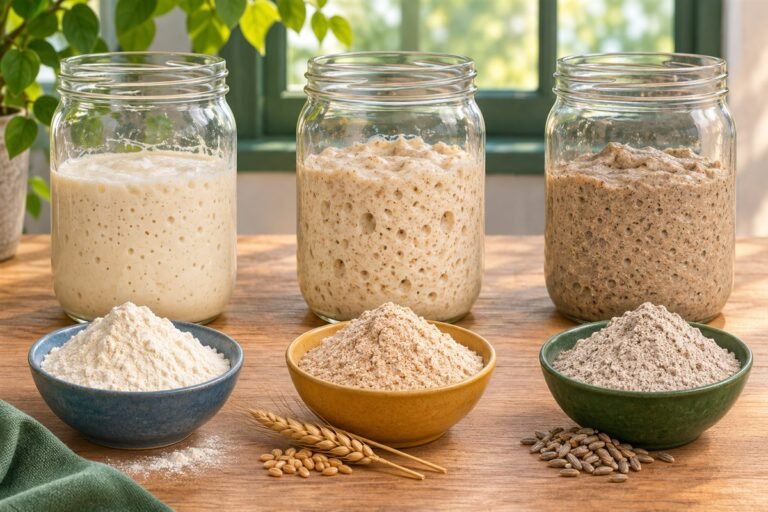
Two starters can have the same hydration percentage and still feel different. Flour type, extraction, protein, bran, particle size, and storage affect water absorption and structure. Compare flour by weight and observe it over repeated feedings.
Separate Hydration From Consistency
Hydration is the water weight divided by flour weight. A starter with equal flour and water weights is 100% hydration, but that number does not describe every physical detail.
Different flours absorb and hold water differently. One starter may look thick and hold bubbles while another spreads, even though both have the same calculated hydration.
Use the Sourdough Starter Hydration Calculator for the ratio. Use observations for texture and activity.
Compare White, Whole-Wheat, and Rye Flour
White flour has much of the bran and germ removed. Whole-wheat flour includes more of the grain, while rye has a different structure and baking behavior from wheat.
Whole-grain flours can provide more minerals and microorganisms, and they may absorb more water. Rye starters can feel pasty and show activity differently from strong white bread-flour starters.
These are useful patterns, not guarantees. Brand, milling, freshness, and storage can change the result within the same flour category.
Run a Fair Flour Comparison
Divide one active starter into equal measured portions. Feed each with the same flour weight, water weight, container shape, temperature, and timing, but use a different named flour.
Mark the starting levels and record texture immediately after feeding. Then note rise, bubbles, aroma, spreading, peak time, and how easily each starter falls after peak.
Repeat the comparison for more than one cycle. The first feeding may still reflect the previous flour, so a repeated pattern is more meaningful.
Adjust Water Only for a Clear Goal
If the goal is a specific handling consistency, a flour change may justify a measured water adjustment. Calculate the new hydration and write it down instead of adding unmeasured splashes.
If the goal is to compare flour activity, keep hydration fixed during the test. Changing flour and water together hides which variable caused the difference.
A thicker appearance does not automatically mean a healthier starter. Judge predictable rise, aroma, bubbles, and repeated performance together.
Transition Without Losing the Record
You can change flour gradually or at one feeding, depending on the maintenance plan. Label the transition date and record the percentage or type used at each feeding.
Keep temperature and ratio stable while learning the new pattern. A new peak time may be normal rather than evidence that the culture failed.
Once the starter settles into a repeatable rhythm, update the maintenance record. Future comparisons should name the flour rather than saying only “100% hydration starter.”
Avoid Common Flour Comparison Mistakes
- Equating hydration with texture: record both.
- Changing water during the test: keep the comparison controlled.
- Judging one feeding: repeat the observation.
- Omitting the flour brand: milling differences matter.
- Calling thickness health: assess activity and aroma too.
A simple comparison log turns a vague texture difference into useful evidence. It also helps explain why a starter behaves differently after a flour purchase.
Build a Repeatable Record
Use the downloadable log for at least three comparable batches. Record the formula before mixing, the conditions during the process, and the result after the same observation period. Notes such as “better” are weak unless they state what changed.
Keep photographs, weights, temperatures, and timing beside the written result. If a batch differs unexpectedly, mark it as an exception instead of deleting it. The exception may reveal a scale, ingredient, handling, or environment problem that deserves a separate test.
Measure with the same tools whenever possible. Label each sample before the process begins, and add units to every number. This small discipline prevents a useful trial from becoming an unlabeled memory.
When the pattern becomes stable, write a short operating rule for the next batch. State the exact input, target checkpoint, acceptable range, and action when the result falls outside that range.
Download the Practical Log
Open the CSV in a spreadsheet and replace the example row with your own measurements.
Keep the Formula and Result Together
A consistent record makes the next adjustment smaller and easier to explain.
Use the Sourdough Starter Hydration Calculator
The Sourdough Starter Hydration Calculator handles the arithmetic for this topic. This article explains the physical observations and process decisions the calculator cannot measure.
Calculate first, then record what actually happened. Keeping those jobs separate prevents the guide from competing with its parent tool.
Calculate the Formula
Set the measured input, then test it in a controlled batch.
اسٹارٹر کے آٹے کے عام سوالات
ایک جیسی ہائیڈریشن پر ساخت کیوں بدلتی ہے؟
مختلف آٹے پانی کو مختلف طریقے سے جذب اور باندھتے ہیں، اس لیے برابر وزن کے باوجود گاڑھا پن بدل سکتا ہے۔
کیا رائی کا آٹا زیادہ گاڑھا ہوتا ہے؟
اکثر رائی کی ساخت الگ اور پیسٹ جیسی لگ سکتی ہے، مگر برانڈ، ملنگ اور تازگی بھی اثر انداز ہوتے ہیں۔
آٹے کا درست موازنہ کیسے کریں؟
ایک جیسا اسٹارٹر، پانی، درجہ حرارت، برتن اور وقت رکھیں، صرف آٹے کی قسم بدلیں۔
کیا پانی فوراً بدل دینا چاہیے؟
اگر مقصد آٹے کا موازنہ ہے تو پانی نہ بدلیں۔ مطلوبہ ساخت کے لیے بعد میں ناپی ہوئی تبدیلی کریں۔
نتیجہ کتنی فیڈنگ کے بعد دیکھیں؟
ایک سے زیادہ سائیکل دیکھیں کیونکہ پہلی فیڈنگ میں پچھلے آٹے کا اثر باقی رہ سکتا ہے۔
Sources and Further Reading
Related Cooking Tools

Author and Founder