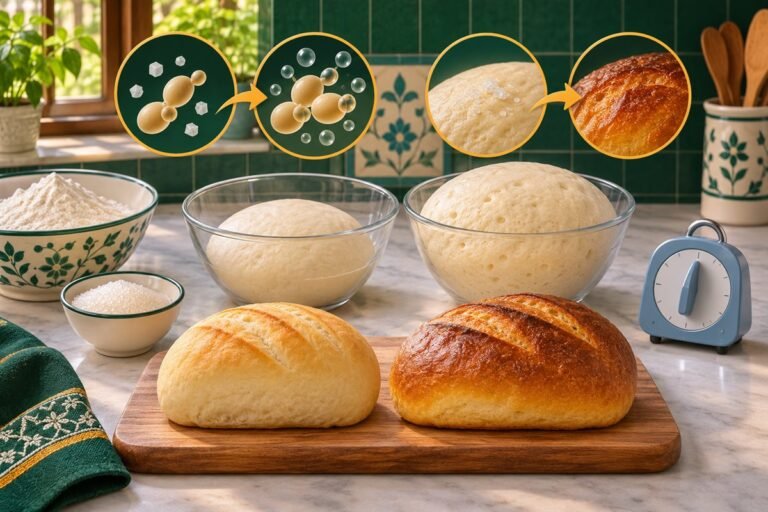
Sugar can change fermentation speed, crust color, tenderness, moisture, and flavor in bread. Its effect depends on the amount, the type of sugar, the yeast, and the full formula. A controlled test helps you separate a useful change from an accidental one.
Understand Sugar’s Different Jobs in Dough
Sugar does several jobs at once. It adds sweetness, supports browning, helps retain moisture, and can soften the crumb. A small amount may also provide readily available food for yeast during early fermentation.
These effects do not rise at the same rate. A little sugar may change crust color before the loaf tastes sweet. A rich sweet dough can behave very differently because sugar competes with flour and yeast for available water.
Judge sugar by the bread you intend to make. A lean sandwich loaf, soft bun, and festive sweet bread need different formulas and should not share one universal percentage.
Calculate Sugar From Total Flour
Baker’s percentage uses total flour as the 100% reference. Add the flour in the final dough and any preferment before calculating the sugar weight. The Dough Sugar Percentage Calculator handles that arithmetic.
For 1,000 g total flour at 5% sugar, the target is 50 g. Write down the exact ingredient because white sugar, honey, syrup, and fruit puree do not have the same water content or flavor.
Do not add liquid sweetener without checking total hydration. If the sweetener contributes water, a precise formula accounts for it rather than silently making the dough wetter.
Watch Fermentation Instead of the Clock
King Arthur Baking explains that small sugar quantities can help yeast, while high sugar levels can slow it. In a sweet dough, yeast has less easy access to water, so the planned rise may take longer even though more food is present.
Use the same dough milestone for comparison, such as a marked rise in a straight-sided container. Record dough temperature, yeast type, salt, sugar percentage, and the actual time needed to reach that point.
Do not fix a slow sweet dough by adding random yeast during fermentation. Review the formula, yeast choice, temperature, and mixing method before changing the next batch.
Read Browning and Crumb Together
Sugar supports crust browning and can deepen color before the center is fully baked. Check internal doneness with the method appropriate for the bread instead of relying on crust color alone.
It can also help bread retain moisture and feel tender. That benefit can become a gummy or overly soft result if hydration, bake time, or cooling is not adjusted for the formula.
Cool both test loaves for the same amount of time before slicing. Compare crust color, crumb structure, tenderness, sweetness, and next-day softness on one record.
Change the Formula One Variable at a Time
Make two small doughs with the same flour, water plan, yeast, salt, mixing, proof target, pan, and oven setting. Change only the sugar percentage or sugar type. Label both bowls before mixing.
Photograph the loaves under the same light and cut equal slices after cooling. A fair comparison protects you from crediting sugar for a difference caused by proofing, shaping, or pan size.
Repeat a promising result before scaling it. One loaf can reveal a useful direction, but repeated batches show whether the process is dependable.
Avoid Common Sugar Formula Mistakes
- Using final-dough flour only: include prefermented flour.
- Treating every sweetener as dry sugar: account for water and composition.
- Judging doneness by color: confirm the interior.
- Changing yeast and sugar together: isolate the variable.
- Slicing while hot: cool before judging crumb.
A good trial record connects the percentage to the observed loaf. Keep the result even when it fails, because it defines a boundary for the next test.
Build a Repeatable Record
Use the downloadable log for at least three comparable batches. Record the formula before mixing, the conditions during the process, and the result after the same observation period. Notes such as “better” are weak unless they state what changed.
Keep photographs, weights, temperatures, and timing beside the written result. If a batch differs unexpectedly, mark it as an exception instead of deleting it. The exception may reveal a scale, ingredient, handling, or environment problem that deserves a separate test.
Measure with the same tools whenever possible. Label each sample before the process begins, and add units to every number. This small discipline prevents a useful trial from becoming an unlabeled memory.
When the pattern becomes stable, write a short operating rule for the next batch. State the exact input, target checkpoint, acceptable range, and action when the result falls outside that range.
Download the Practical Log
Open the CSV in a spreadsheet and replace the example row with your own measurements.
Keep the Formula and Result Together
A consistent record makes the next adjustment smaller and easier to explain.
Use the Dough Sugar Percentage Calculator
The Dough Sugar Percentage Calculator handles the arithmetic for this topic. This article explains the physical observations and process decisions the calculator cannot measure.
Calculate first, then record what actually happened. Keeping those jobs separate prevents the guide from competing with its parent tool.
Calculate the Formula
Set the measured input, then test it in a controlled batch.
بریڈ ڈو میں چینی کے عام سوالات
چینی کا فیصد کس وزن سے نکالا جاتا ہے؟
چینی کا فیصد کل آٹے کے وزن سے نکالیں، جس میں پری فرمنٹ کا آٹا بھی شامل ہو۔
کیا زیادہ چینی خمیر کو تیز کرتی ہے؟
ضروری نہیں۔ کم مقدار مدد کر سکتی ہے، لیکن زیادہ چینی پانی کھینچ کر خمیر کی رفتار کم کر سکتی ہے۔
چینی سے کرسٹ جلدی بھوری کیوں ہوتی ہے؟
چینی بیکنگ کے دوران رنگ بنانے والے رد عمل میں حصہ لیتی ہے، اس لیے صرف رنگ سے اندر کی پختگی نہ جانچیں۔
شہد اور سفید چینی برابر ہیں؟
نہیں۔ شہد میں پانی اور مختلف ذائقہ ہوتا ہے، اس لیے ہائیڈریشن اور ذائقہ الگ نوٹ کریں۔
بہتر تجربہ کیسے کریں؟
دو چھوٹے بیچ بنائیں، صرف چینی کی مقدار بدلیں، باقی اجزا اور بیکنگ کی حالت ایک جیسی رکھیں۔
Sources and Further Reading
Related Cooking Tools

Author and Founder