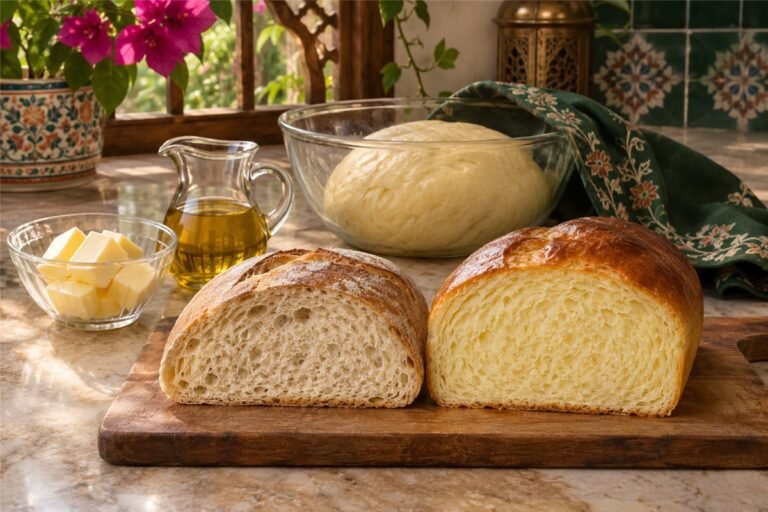
Fat can make bread more tender, soften the crust, and improve keeping quality, but its effect depends on type, percentage, temperature, and mixing method. Compare enriched and lean doughs with controlled test batches instead of assuming every fat behaves the same.
Understand What Fat Does in Bread
New Mexico State University explains that fat lubricates gluten strands and helps produce a more tender bread. It can also soften the crust, add flavor, and help the loaf stay soft longer.
Those benefits do not mean more is always better. Alabama Cooperative Extension notes that large amounts can reduce bread volume, and the complete effect depends on the formula.
Lean bread and enriched bread serve different goals. Compare a change against the intended product rather than one universal idea of quality.
Calculate Fat From Total Flour
Baker’s percentage expresses fat weight as a share of total formula flour. Include flour in preferments when defining the total unless the specific formula states otherwise.
For 1,000 g flour at 5% fat, the target is 50 g. Keep butter, oil, shortening, egg yolk, and dairy contributions clearly identified instead of treating all enriched ingredients as pure fat.
The calculator handles a direct entered fat percentage. A complex ingredient may require its actual composition if the formula needs precise fat accounting.
Identify the Fat Type and Condition
Liquid oil, softened butter, melted butter, and solid shortening enter dough differently. Temperature changes butter’s firmness and can affect how it disperses during mixing.
Record the exact ingredient and its condition. Replacing solid fat with liquid oil can change handling even when the nominal weight stays the same.
Do not use an unsourced conversion between fat products. Start with a tested formula or a small comparison batch.
Choose an Appropriate Mixing Order
Some enriched dough methods develop part of the gluten before gradually adding fat. This can help the dough accept a substantial fat load without leaving greasy pockets.
Other formulas add a modest amount earlier. Follow the tested method, keep the dough from overheating, and note how long it takes to become cohesive.
If fat smears out or the dough breaks, pause the arithmetic diagnosis and inspect temperature, mixing development, and ingredient condition.
Compare Handling, Crumb, and Keeping Quality
Evaluate stickiness, extensibility, proofing behavior, loaf volume, crumb tenderness, crust softness, and the rate at which the bread firms after baking.
Use the same flour, water, yeast, salt, shape, and bake conditions when comparing two fat percentages. A different pan or proof can hide the effect you intended to measure.
Record observations at a fixed cooling time and again the next day. Keeping quality is a time-based outcome, not only a first-slice impression.
Common Fat Formula Mistakes
- Treating all fats alike: name the product and condition.
- Using final-dough flour only: count total flour.
- Adding fat without a mixing plan: follow a tested order.
- Changing the bake too: keep comparison conditions steady.
- Judging while hot: cool bread before evaluating crumb.
A successful fat change should be documented as a complete formula and process. Save both the target percentage and the observed result so the next baker can reproduce the decision.
Run a Controlled Kitchen Trial
Compare fat levels with two small doughs that use the same total flour, water plan, yeast, salt, mixing, proof, shape, and bake. Change only the named fat and its percentage. Record whether the fat was liquid, softened, or cool when added. These details matter because ingredient condition can change incorporation and dough temperature.
Judge the loaves after full cooling and again the next day. Compare volume, crust, crumb tenderness, slicing, and firmness over time. If the formulas use butter, remember that butter may contribute some water while pure oil does not. Keep the test focused enough that the observed difference can reasonably be linked to the fat decision. Photograph equal slices under the same light and label them before tasting so appearance and handling notes stay tied to the correct formula.
Download the Dough Fat Trial Log
Use this spreadsheet record to keep formula inputs and observed results together.
Download the Practical Record
Open the CSV in a spreadsheet and replace the example row with your own batch.
Use the Dough Fat Percentage Calculator
The Dough Fat Percentage Calculator performs the percentage or preferment arithmetic for this task. Use this article’s log to record conditions, observations, and decisions the calculator cannot measure.
Keep the formula result and the physical result together. That creates a usable record without making the article compete with the calculator.
Calculate the Formula
Set the weights first, then observe the real dough or preferment.
بریڈ ڈو میں چکنائی کے عام سوالات
چکنائی بریڈ کو کیسے بدلتی ہے؟
یہ ڈو کو نرم کر سکتی ہے، کرسٹ کو ملائم بناتی ہے اور بریڈ کو زیادہ دیر نرم رکھ سکتی ہے۔
فیصد کس وزن سے نکلتا ہے؟
کل فارمولے کے آٹے سے، جس میں پری فرمنٹ کا آٹا بھی شامل ہو سکتا ہے۔
کیا تیل اور مکھن برابر ہیں؟
نہیں۔ ان کی ساخت اور پانی کی مقدار مختلف ہو سکتی ہے، اس لیے آزمودہ تبدیلی استعمال کریں۔
چکنائی کب شامل کریں؟
ترکیب کے آزمودہ مکسنگ طریقے کے مطابق، خاص طور پر زیادہ چکنائی والے ڈو میں۔
نتیجہ کب دیکھیں؟
بریڈ ٹھنڈی ہونے کے بعد کرم دیکھیں اور اگلے دن نرمی بھی نوٹ کریں۔
Sources and Further Reading
Related Cooking Tools
Choose the calculator that matches the next formula decision, then return to your batch record to compare the observed result.

Author and Founder