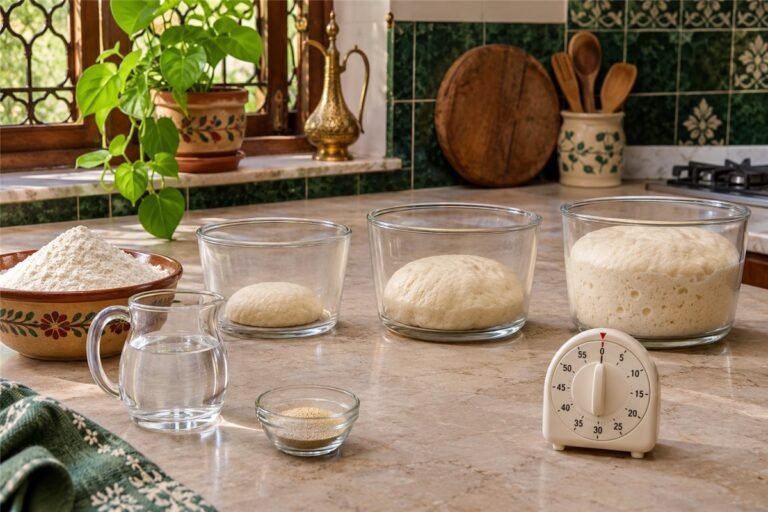
More yeast usually makes dough reach a fermentation milestone sooner under similar conditions, while less yeast usually takes longer. The relationship is not a perfect timer because temperature, salt, sugar, flour, and yeast condition also affect the result.
Separate Yeast Weight From Fermentation Time
The calculator determines yeast weight from total flour and a chosen percentage. It does not promise a specific rise time because fermentation is a biological process influenced by the full dough environment.
Two doughs with the same yeast percentage can behave differently when one is warmer, sweeter, saltier, or made with different flour. Treat the percentage as one controlled input.
Define the milestone you are measuring, such as a target volume increase or readiness for shaping. “Finished fermenting” is too vague for a useful comparison.
Calculate Yeast on the Correct Flour Total
Add all formula flour, including flour in a sponge or preferment, before applying the yeast percentage unless the formula explicitly defines another basis.
For 1,000 g flour at 1% yeast, the calculation gives 10 g. The type matters because fresh, active dry, and instant yeast are not automatically interchangeable gram for gram.
Follow the product and recipe instructions for the yeast form. Record the type, brand or batch, storage condition, and date opened when troubleshooting.
Control Temperature During a Trial
Temperature strongly changes fermentation speed. Washington State University’s food-science material explains that cool conditions slow yeast activity and excessive heat can kill yeast.
Measure actual dough temperature after mixing rather than relying only on room temperature. Friction from mixing and ingredient temperatures can move the dough away from the intended target.
When comparing yeast amounts, keep the dough temperature as close as practical. Otherwise, a warm low-yeast dough may appear faster than a cool high-yeast dough.
Account for Salt and Sugar
Salt moderates yeast activity. Sugar can support fermentation at modest levels, while highly sweet dough creates a different environment and may require a formula designed for enriched bread.
Do not raise yeast automatically to solve every slow dough. First check temperature, yeast freshness, salt accuracy, sugar level, and whether the dough was mixed as planned.
Record all changes. If yeast, salt, and temperature move together, the trial cannot show which change caused the new schedule.
Observe Dough Instead of Chasing the Clock
Mark the container and inspect expansion, bubbles, strength, and aroma. Compare the same milestone across trials, such as the time required to reach a stated rise.
A faster rise is not automatically better. The intended flavor, structure, production window, and proofing plan determine whether a schedule works.
Use a small test batch before changing a large production formula. Repeat it so one unusually warm day does not become a permanent rule.
Common Yeast Planning Mistakes
- Ignoring yeast type: record instant, active dry, or fresh.
- Using the wrong flour base: count all formula flour.
- Comparing different temperatures: measure final dough temperature.
- Calling faster better: judge the complete bread process.
- Changing several ingredients: isolate the test variable.
Discard a plan based on yeast percentage alone when the product instructions or recipe require a different conversion. The calculator supports the formula, not a universal substitution claim.
Run a Controlled Kitchen Trial
Test yeast percentage with two small doughs that share the same flour, water, salt, mixing method, container, and target temperature. Change only the yeast weight. Mark the starting level and record the time each dough reaches the same chosen milestone. Do not compare one dough at double volume with another at a different visual target.
The result belongs to that formula and environment. A warmer kitchen, sweet dough, old yeast, or a different flour can shift the next trial. Use the observed time to improve planning, then repeat before applying a large change to production. Consistent milestone notes are more valuable than treating one test as a permanent fermentation table. Also record dough temperature at mixing and at the chosen milestone, because room temperature alone may not explain a timing difference.
Download the Yeast Fermentation Trial Log
Use this spreadsheet record to keep formula inputs and observed results together.
Download the Practical Record
Open the CSV in a spreadsheet and replace the example row with your own batch.
Use the Dough Yeast Percentage Calculator
The Dough Yeast Percentage Calculator performs the percentage or preferment arithmetic for this task. Use this article’s log to record conditions, observations, and decisions the calculator cannot measure.
Keep the formula result and the physical result together. That creates a usable record without making the article compete with the calculator.
Calculate the Formula
Set the weights first, then observe the real dough or preferment.
بریڈ خمیر کے عام سوالات
زیادہ خمیر کیا کرتا ہے؟
ملتے جلتے حالات میں یہ عموماً ڈو کو جلدی مطلوبہ مرحلے تک پہنچاتا ہے۔
کیا فیصد سے صحیح وقت مل جاتا ہے؟
نہیں۔ درجہ حرارت، نمک، چینی اور خمیر کی حالت بھی رفتار بدلتے ہیں۔
خمیر کا وزن کس آٹے سے نکالیں؟
کل فارمولے کے آٹے سے، مگر مخصوص ترکیب کی ہدایت پہلے دیکھیں۔
ڈو کا درجہ حرارت کیوں لکھیں؟
کیونکہ مکسنگ کے بعد اصل ڈو کا درجہ حرارت خمیر کی رفتار پر بڑا اثر ڈالتا ہے۔
مختلف خمیر برابر ہیں؟
ضروری نہیں۔ انسٹنٹ، ایکٹو ڈرائی اور تازہ خمیر کے لیے ترکیب اور پیکٹ کی ہدایات دیکھیں۔
Sources and Further Reading
Related Cooking Tools
Choose the calculator that matches the next formula decision, then return to your batch record to compare the observed result.

Author and Founder