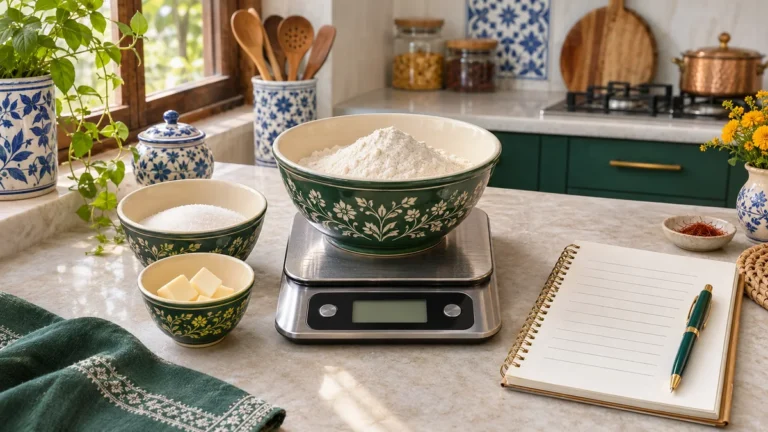
A calculator can multiply ingredient amounts, but a larger batch can behave differently in a bowl, pan, pot, or oven. A small controlled test shows whether the scaled quantities, equipment, timing, and actual yield still work together before guests or customers depend on the result.
Define One Scaled Recipe Test
Write the original yield, target yield, and scale factor before you start. Choose a test size that is large enough to reveal equipment limits but small enough to repeat without wasting a full event batch.
Keep the original recipe method available beside the scaled list. Mark which steps are unchanged and which must use different equipment, timing, or batch order.
State the purpose of the test. A family meal, catered tray, freezer batch, and sale portion may require different final yield checks.
Weigh the Ingredients That Matter Most
Use grams for flour, sugar, fats, liquids, and other ingredients where weight improves repeatability. NIST recommends a kitchen scale and tare function for consistent recipe measurement.
Do not invent a gram conversion for an ingredient when the source recipe provides only volume and no verified density. Measure it with the same method during the first test, then record an observed weight if that will improve future batches.
Whole eggs, packets, leaves, and other countable items may not divide neatly. Decide the practical rounding rule before mixing and note the actual amount used.
Identify Steps That Do Not Scale Linearly
Ingredient multiplication is linear, but process behavior may not be. A deeper pot can heat and reduce differently. A crowded pan can brown less. A larger dough or batter can require a different mixing sequence.
Seasoning and strong flavor ingredients deserve a measured test rather than automatic extra rounding. Additions can be adjusted after tasting only when food safety and recipe structure allow it.
Cooking time should be checked by the appropriate doneness or safety method for the food. Do not multiply the original time by the serving factor.
Check Bowl, Pan, Pot, and Oven Capacity
Compare the planned batch with the safe working capacity of the mixer, bowl, pot, pan, and oven. Leave room for mixing, boiling, expansion, and safe handling.
Two ordinary batches may be more repeatable than one overloaded batch. If you split production, record whether both batches receive the same ingredient weights and process time.
Keep pan depth visible. The same total batter spread across a different area can change cooking time, browning, and final texture.
Measure Actual Yield and Portion Results
After cooking or baking, weigh the finished batch when practical and count complete portions at the intended serving size. Record leftovers that cannot form another full portion.
Compare planned and actual yield without hiding trimming, sticking, evaporation, or serving loss. A one-time difference is a clue, not a permanent correction factor.
Repeat the test if the result matters financially or operationally. A stable range from ordinary batches is more useful than one unusually good or poor result.
Also record how long preparation, mixing, cooking, cooling, and portioning take. The ingredient list may scale correctly while the production window becomes unrealistic. Keep active work time separate from unattended cooking or cooling so the note remains useful for future planning.
Download the Scaled Recipe Test Record
The CSV keeps the scale factor, planned yield, actual yield, equipment, process changes, and next adjustment together. Replace the illustrative row with your own recipe.
Save a new row when equipment, ingredient source, or portion standard changes. Do not overwrite the conditions behind an earlier successful batch.
Record a Scaled Recipe Test
Connect multiplied quantities to the batch you actually produced.
Use the Recipe Scaling Calculator
The Recipe Scaling Calculator multiplies ingredient quantities from original to target servings. This article owns the controlled test that checks whether the larger process still works.
Enter the original and target servings, preserve units, and review rounding before shopping. Then record actual yield rather than treating the calculated serving count as guaranteed.
Scale the Ingredient Plan
Calculate the new ingredient quantities, then test the process with the record above.
Common Scaled Recipe Test Mistakes
- Multiplying cooking time: verify the food with a suitable endpoint instead.
- Overloading equipment: respect safe working capacity.
- Changing several variables: make one documented correction at a time.
- Ignoring actual yield: count complete portions after production.
- Rounding every line early: keep precision until a practical purchase or count decision.
اسکیل کی ہوئی ریسپی کے عام سوالات
کیا پکانے کا وقت بھی تین گنا کریں؟
نہیں۔ وقت سیدھا ضرب نہ کریں، مناسب ڈوننس یا محفوظ درجہ حرارت سے نتیجہ چیک کریں۔
پورا بڑا بیچ پہلے ہی بنانا چاہیے؟
اہم موقع سے پہلے ایک قابل انتظام ٹیسٹ بیچ بنائیں اور اصل پیداوار لکھیں۔
انڈے آدھے آئیں تو کیا کریں؟
عملی راؤنڈنگ اصول پہلے طے کریں اور اصل استعمال شدہ مقدار ریکارڈ کریں۔
برتن چھوٹا ہو تو کیا کریں؟
بیچ کو دو حصوں میں بنائیں اور دونوں کے وزن اور عمل کو یکساں رکھیں۔
اصل پیداوار کیوں مختلف ہو سکتی ہے؟
بھاپ، چپکنے، تراشنے، برتن اور پورشن سائز کی وجہ سے تیار مقدار بدل سکتی ہے۔
Sources and Recipe Scaling Resources
View 4 Sources
- NIST. Metric Recipes (SP 1290)
- NIST. Metric Kitchen: Cookware and Tools
- USDA Food and Nutrition Service. About the Food Buying Guide
- King Arthur Baking. Recipe Success Guide
Related Recipe Planning Tools
Explore More Cooking Calculators
Browse tools for recipe scaling, ingredient yield, bread formulas, dough production, and kitchen measurements.

Author and Founder