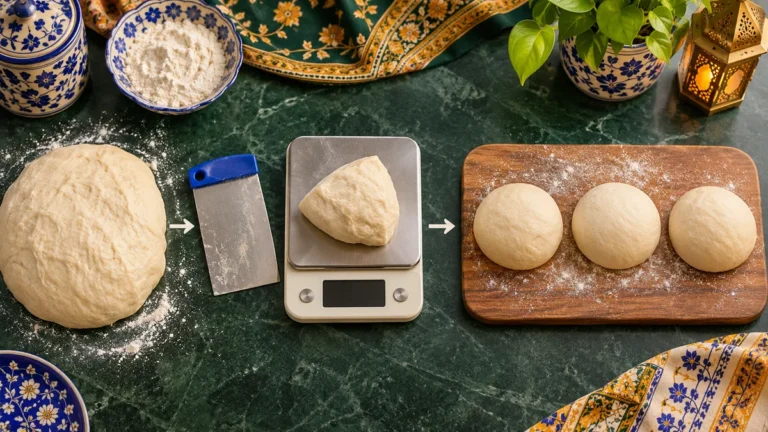
Equal bread loaves begin with the net dough available after mixing or bulk fermentation, not the ingredient total written on a recipe. A scale and short reconciliation help you divide that real batch into consistent portions while keeping scraps, bowl residue, and deliberate reserve visible.
Weigh the Net Bread Dough Batch
Place a clean container on the scale and press tare. Transfer the dough and record the net weight. If the batch is too large for the scale, divide it into temporary containers and add their net weights.
Choose a consistent stage. A batch weighed after mixing may differ slightly from one weighed after bulk fermentation because dough remains on tools or a container.
Do not subtract an estimated bowl weight when tare is available. If you must use a known container weight, record it and confirm that the container is the same one.
Set a Loaf Target Before Cutting
Decide whether the target describes raw dough placed in the pan or another clear stage. Write the target beside the batch weight so it does not change during division.
The target should come from a tested loaf or pan plan. This article does not choose a universal loaf size. Bread style, pan, intended baked weight, and baking loss can change the appropriate raw portion.
Calculate the number of full portions before cutting. Keep any expected reserve or handling allowance separate instead of hiding it inside every piece.
Cut Dough With a Bench Scraper
Turn the dough onto a clean work surface and form a rough shape that is easy to divide. Use a bench scraper to cut rather than pulling long strands from the mass.
Make the first pieces slightly below the target when possible. It is easier to add a small piece than to keep cutting many overweight portions.
Cover waiting dough when your formula dries quickly. Work in an orderly sequence so the first portion is not shaped long before the last one is weighed.
Reweigh and Correct Every Dough Portion
Place each piece on the tared scale. Add or remove a small amount until it reaches your working target or documented tolerance.
Attach small additions firmly during preshaping so they do not remain as loose lumps. Avoid many tiny cuts that damage the dough more than a planned early adjustment.
Line the checked portions in order and count them again. A correct weight does not prevent a missing or duplicated loaf in a large batch.
Reconcile Pieces, Reserve, and Remainder
Add the final portion weights and any deliberate reserve. Compare the total with the net batch weight. The difference may be dough on the scraper, scale platform, bowl, or work surface.
Record a visible remainder instead of silently adding it to one loaf. If the remainder is useful, state whether it becomes a test roll, starter scrap, or another product.
A repeated unexplained difference can show a weighing or handling problem. Check tare, container changes, and transcription before changing the recipe.
Download the Bread Dough Division Record
The CSV keeps batch weight, target weight, planned count, actual portions, and remainder together. Add columns when you regularly make more than three loaves.
Use one row per batch. The record helps separate a calculator plan from what actually reached each pan.
Record a Bread Dough Division
Check the batch total before final shaping.
Use the Bread Loaf Count Calculator
The Bread Loaf Count Calculator determines how many complete target-weight loaves fit within available dough after the reserve you enter. This article owns the physical weighing and division process.
Use a measured net batch weight and a tested target. The calculator can identify a planned remainder, but the scale confirms what happened during handling.
Count Full Loaves Before Dividing
Bring the measured batch, target loaf weight, and explicit reserve to the calculator.
Divide Dough Without a Scale Only When Necessary
A repeated-halving method can create roughly equal pieces when no scale is available. Shape the dough into an even log, cut it in half, then halve the pieces again for four portions.
This method does not verify weight. Dough thickness, trapped gas, and an uneven log can produce different pieces. Mark the result as estimated.
Use the same pan positions and observe the finished loaves. When consistent loaf size matters, a suitable kitchen scale is the clearer method.
Common Bread Dough Division Mistakes
- Using recipe yield as actual batch weight: weigh the net dough.
- Changing the target during cutting: decide before dividing.
- Skipping tare: remove the container from the reading.
- Ignoring remainder: record reserve, scraps, and unexplained loss.
- Shaping before the final check: correct portions while adjustment is easy.
بریڈ ڈو تقسیم کرنے کے عام سوالات
بیچ کا وزن کب کریں؟
ایک واضح مرحلہ منتخب کریں، مثلاً بلک فرمنٹیشن کے بعد، اور ہر بیچ میں وہی مرحلہ رکھیں۔
برتن کا وزن کیسے نکالیں؟
خالی برتن ترازو پر رکھ کر ٹئیر دبائیں، پھر ڈو شامل کریں۔
حصہ زیادہ ہو تو کیا کریں؟
بینچ اسکریپر سے چھوٹا ٹکڑا نکالیں اور دوبارہ وزن کریں۔
بچا ہوا ڈو کہاں لکھیں؟
اسے الگ ریمینڈر یا مخصوص استعمال کے طور پر ریکارڈ کریں، کسی ایک روٹی میں چھپا کر نہ ڈالیں۔
ترازو نہ ہو تو کیا کریں؟
ڈو کو ہموار لاگ بنائیں اور بار بار آدھا کریں، مگر نتیجے کو اندازہ سمجھیں۔
Sources and Bread Dough Division Resources
View 4 Sources
- Community Loaves. Modern Formula Step-by-Step
- NIST. Metric Kitchen: Cookware and Tools
- King Arthur Baking. Recipe Success Guide
- U.S. Government Publishing Office. Bread Formulas and Production Guidance
Related Bread Planning Tools
Explore More Cooking Calculators
Browse tools for recipes, dough formulas, bread production, pizza planning, and kitchen measurements.

Author and Founder