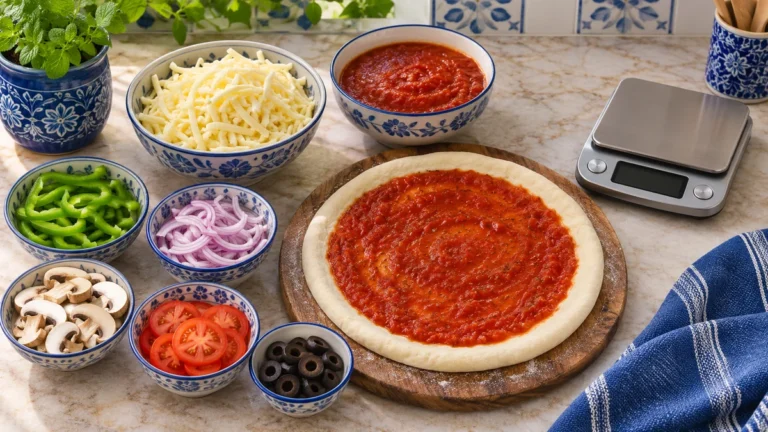
Consistent pizza topping portions begin with usable ingredient weight, a defined pizza style, and a short batch check. The goal is not to make every slice identical. It is to give each pizza the intended coverage while limiting shortages, heavy patches, and unexplained waste.
Define Pizza Topping Portion Control
Portion control means using a repeatable amount for a defined pizza size and coverage style. It does not mean placing every onion strip or mushroom slice in exactly the same position.
Name the pizza before setting a portion. Record diameter, crust style, covered area, and whether the topping is light, standard, or heavy for your own menu. A number without that context is hard to reuse.
Keep each topping separate. Cheese, cooked chicken, mushrooms, and olives have different density, moisture, preparation loss, and coverage. One universal scoop cannot describe them all.
Weigh Usable Toppings After Preparation
Start with the ingredient that will actually reach the pizza. Drain brined olives, trim unusable parts, and cook an ingredient first when your process normally uses it cooked. Record that stage as usable weight.
Raw purchase weight and prepared weight answer different questions. Purchase weight helps ordering. Usable weight helps portioning. Save both only when you can measure the preparation loss clearly.
Use a clean container and press tare before adding food. Follow ordinary food-safety practices for temperature, clean surfaces, and separation of raw ingredients.
Create One Reference Pizza
Place the prepared pizza base on the normal work surface. Apply sauce and cheese according to the usual process, then add the tested topping with the intended coverage.
Weigh the topping before and after making that pizza. The difference is the amount used. A prefilled portion cup can also work, but verify its filled weight instead of assuming every scoop is equal.
Photographs can help staff remember the coverage pattern, but the scale provides the measurable reference. Keep the image as a visual aid, not as proof of weight.
Check Several Pizzas as One Batch
One pizza may receive a little more or less because pieces vary in size. A batch check shows whether the process is stable across several pizzas.
Weigh the full prepared batch, complete a known number of pizzas, and weigh the usable remainder. Subtract the remainder from the starting weight. Divide actual use by completed pizzas for the observed average.
Record spills and discarded food separately. Otherwise the difference looks like topping placed on pizza even when some never reached the product.
Adjust the Station Before Changing the Target
If portions vary, check the station first. A deep container, inconsistent draining, mixed piece sizes, or an awkward scoop can cause more variation than the target itself.
Arrange ingredients in the order they are applied. Use a container that lets the worker see the remaining batch. Refill at a defined point instead of mixing an old estimate with a new container.
Change one part at a time. If you change the scoop, cut size, and target weight together, the next batch will not show which change improved control.
Download the Pizza Topping Portion Record
The CSV captures starting weight, remaining weight, completed pizzas, actual use, and average use per pizza. Replace the sample row with a normal batch from your kitchen.
Do not treat the average as a permanent industry rule. Retest after a change in pizza size, covered area, ingredient cut, supplier, preparation, or portion style.
Check a Pizza Topping Batch
Measure actual use across several completed pizzas.
Use the Pizza Topping Calculator for Planning
The Pizza Topping Quantity Calculator turns your measured coverage rate and pizza area into a planning quantity. This article owns the kitchen process for producing a trustworthy rate.
Use the calculator after the batch check, not before it. Enter a value tied to one topping, one preparation stage, and one pizza style. Confirm the planned quantity against the next real batch.
Plan Toppings From a Measured Rate
Use your checked portion and covered area to estimate a future pizza batch.
Use a Practical Portion Check Range
A target can have a small working range when individual pieces make an exact gram value unrealistic. Set the range only after several normal batches show the variation your station can control.
Review a batch that falls outside the range before blaming the worker. Check draining, cut size, container tare, scale position, and recorded pizza count. A weak measurement process can create a false failure.
Do not widen the range simply to make every result pass. If the target affects food cost or product quality, investigate repeated drift and correct its cause. Keep the range tied to one topping and pizza style, then review it when the process changes.
Common Pizza Topping Portion Errors
- Using purchase weight as usable weight: measure after normal trimming, draining, or cooking.
- Combining different toppings: keep one record per ingredient.
- Ignoring spills: record loss that did not reach a pizza.
- Trusting one scoop: verify the filled weight and check a batch.
- Keeping an old target after a change: retest when size, cut, or supplier changes.
پیزا ٹاپنگ پورشن کے عام سوالات
ٹاپنگ کا وزن کب کریں؟
اسی حالت میں وزن کریں جس میں ٹاپنگ پیزا پر ڈالی جاتی ہے، مثلاً زیتون نکالنے یا سبزی کاٹنے کے بعد۔
ایک پیزا کافی ہے؟
پہلا پیزا حوالہ دیتا ہے، لیکن کئی پیزا کا بیچ چیک اوسط استعمال بہتر دکھاتا ہے۔
گری ہوئی ٹاپنگ کہاں لکھیں؟
اسے الگ ضیاع لکھیں تاکہ وہ پیزا پر استعمال شدہ مقدار میں شامل نہ ہو۔
ہر ٹاپنگ کے لیے ایک ہی چمچ استعمال ہو سکتا ہے؟
چمچ استعمال ہو سکتا ہے، مگر ہر ٹاپنگ کا بھرا ہوا وزن الگ جانچیں۔
دوبارہ ٹیسٹ کب کریں؟
پیزا سائز، کٹ، تیاری، سپلائر یا پورشن انداز بدلنے پر دوبارہ وزن کریں۔
Sources and Pizza Portion Resources
View 4 Sources
- USDA FSIS. Safe Food Handling and Preparation
- FoodSafety.gov. Four Steps to Food Safety
- Baker's Quality. Pizza Product and Topping Guide
- NIST. Metric Kitchen: Cookware and Tools
Related Pizza Planning Tools
Explore More Cooking Calculators
Browse tools for recipe quantities, batch scaling, pizza planning, ingredients, and kitchen measurements.

Author and Founder