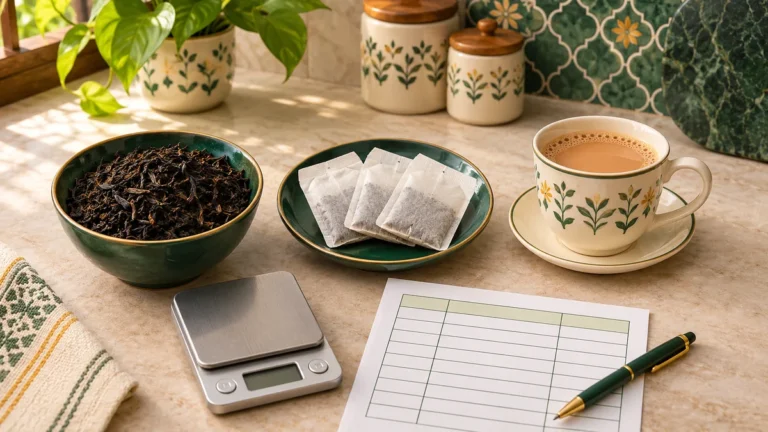
A useful tea purchase record keeps dry tea products separate from prepared chai. Loose tea is usually tracked by mass, tea bags by bag count and box size, and chai by cups only when you are studying serving habits.
Choose the Tea Measurement That Matches the Purchase
Start with the label and receipt. A loose-tea pouch normally lists a net mass such as grams. A tea-bag box lists the number of bags and may also show the net mass. Those are purchase measurements because they describe the item that enters your cupboard.
A cup of chai is a prepared drink. It contains water or milk, dry tea, and perhaps sugar or spices. Its liquid volume is not the same as the dry-tea mass used to make it. Keep those two stages in separate columns.
If a household buys both formats, create one row for loose tea and another for tea bags. This prevents a 250 g pouch and a box of 50 bags from being treated as interchangeable without evidence.
Build a Loose Tea Purchase Record
Use a kitchen scale when a packet label or receipt does not give the usable amount you need. Place an empty container on the scale, press tare, and add the dry leaves. Record the number in grams and keep the container out of the result.
Your basic stock record can use four fields: opening stock, purchases, dry tea used, and closing stock. The arithmetic check is opening stock plus purchases minus dry use. A small difference may come from spills, scale resolution, or entries made on different days.
Expected Closing Stock
opening dry stock + dry purchases − dry tea used
Unexplained Difference
measured closing stock − expected closing stock
Do not treat an unexplained difference as proof that someone used a specific amount. Recheck dates, package weights, and whether a partly used pouch was missed.
Start a Tea Purchase Record
Use the CSV for loose tea, bags, prices, stock, and notes. Replace the illustrative row with your household data.
Record Tea Bags Without Hiding Box Differences
Tea-bag boxes can differ in bag count and in the mass of tea inside each bag. Record the box count, bags per box, and net mass when it is shown. This gives you enough information to compare like with like.
A lower box price does not always mean a lower price per bag or per gram. Divide the box price by the bag count for a per-bag comparison. Use net mass only when both products clearly state it and the tea type is comparable.
Price Per Bag
box price ÷ number of bags
Dry Tea Per Bag
box net mass ÷ number of bags
Keep flavor, tea type, and strength preferences outside the arithmetic. A purchase record can show cost and quantity, but it cannot decide which product tastes better.
Keep Chai Cups in a Separate Use Log
A cup count can help explain when tea use rises, but it should not replace dry measurement. Cup sizes, brewing strength, shared pots, and leftover chai can all change the amount of dry tea used per serving.
For one ordinary week, note the cups served and the dry tea added to each pot. Keep milk and sugar in their own records. At the end of the week, compare total dry tea with total cups only as a household observation.
Do not turn that observation into health or brewing advice. It is simply a way to connect a purchase record with your own preparation routine.
Use the Tea Calculator for Quantity and Cost
The Tea Quantity and Cost Calculator turns a measured dry-use rate into a planning quantity. It can subtract usable stock, apply packet rules, and estimate cost from the price you enter.
Enter loose tea in a matching mass unit. For tea bags, first decide whether the tool setup represents bag count or the dry mass shown on the box. Do not enter cups of prepared chai as grams.
Plan Your Next Tea Purchase
Use measured dry tea, cupboard stock, packet size, and a current shop price.
Review the Tea Record Before Restocking
Choose one review day each week. Check the measured closing stock against the ledger, then look at the next shopping date. A regular review is easier to follow than several small guesses made during the week.
Set a restocking reminder from the household’s own use record, not from a generic serving claim. A busy week with guests can raise use, while travel can lower it. Keep the unusual week in the file and mark why it changed instead of deleting it.
When prices change, add a new dated purchase row. Do not rewrite an older receipt. The history lets you compare current cost with the product, package size, and seller that were actually used.
If the closing stock does not match the ledger, correct the cause you can verify. Leave a short note for an unresolved difference. A transparent record is more useful than forcing every row to balance.
Avoid Common Tea Record Mistakes
- Mixing grams and cups: prepared chai volume is not dry tea mass.
- Counting boxes without bag counts: record the contents of each box.
- Assuming every bag is equal: check the label before comparing products.
- Adding milk and sugar to the tea total: keep separate household ledgers.
- Using a cup estimate as a brewing rule: record your routine without presenting it as advice.
چائے کی خریداری کے عام سوالات
کھلی چائے کس اکائی میں لکھیں؟
کھلی چائے کو گرام میں ناپیں۔ ڈبہ یا پیالی کا وزن ترازو سے منفی کریں اور صرف خشک پتی کا وزن لکھیں۔
ٹی بیگ کا ریکارڈ کیسے بنائیں؟
ڈبوں کی تعداد کے ساتھ ہر ڈبے میں موجود بیگ بھی لکھیں۔ اگر خالص وزن درج ہو تو اسے بھی الگ کالم میں محفوظ کریں۔
کیا چائے کی پیالیاں گرام میں شامل ہوں گی؟
نہیں۔ تیار چائے میں پانی یا دودھ ہوتا ہے۔ پیالیوں کو استعمال کے الگ ریکارڈ میں لکھیں، خشک پتی کے ذخیرے میں نہیں۔
دو ڈبوں کی قیمت کیسے موازنہ کریں؟
قیمت کو بیگوں کی تعداد سے تقسیم کریں۔ اگر وزن واضح ہو تو فی گرام قیمت بھی دیکھیں، مگر چائے کی قسم ایک جیسی ہونی چاہیے۔
کیلکولیٹر میں کیا داخل کریں؟
خشک چائے کا ناپا ہوا استعمال، موجودہ ذخیرہ، پیکٹ کا سائز اور دکان کی موجودہ قیمت داخل کریں۔
Sources and Tea Measurement Resources
View 4 Sources
- National Institute of Standards and Technology. Metric Kitchen: Cookware and Tools
- National Institute of Standards and Technology. NIST Metric Recipes
- Institute of Child Nutrition. Weights and Measures Instructor’s Manual
- NIST. SI Units: Volume
Related Ration Planning Tools
Planning More Household Groceries?
Browse calculators for measured quantities, stock, packs, and costs.

Author and Founder