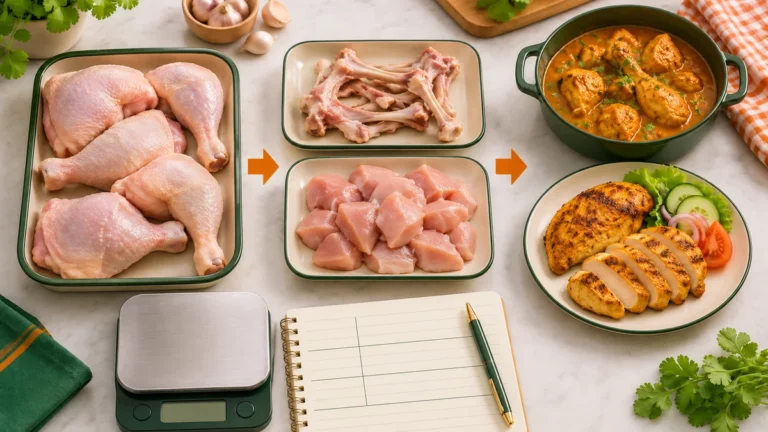
Chicken purchase weight is the amount bought before trimming or cooking. Bone, skin, packaging, liquid loss, and cooking can change the later weights, so every record needs a clear stage label.
Separate the Four Chicken Weight Stages
Purchase weight is what the seller weighs or the package states. Usable raw weight is what remains after removing packaging and any bone, skin, or trim you do not plan to use. Cooked weight is measured after the selected cooking method.
Bone and trim are not always waste. A household may use bones for stock or skin in another dish. Name the destination instead of automatically labeling everything discarded.
Keep bone-in and boneless products in separate groups. Their purchase weights answer different questions, and combining them can hide the reason one batch produced less edible meat.
Measure a Household Chicken Yield Trial
Use one clearly named cut or product. Record the package or seller weight, then remove packaging. If you separate bones or trim, weigh each group in a tared container before cooking.
Cook the usable portion with your normal method. Weigh the complete cooked batch at a consistent point, such as after a fixed resting time. Note any pieces sampled or left in the pan before weighing.
- Record the cut, brand or seller, and purchase weight.
- Weigh packaging only if it was included in the first reading.
- Record bone, skin, and trim according to how your household uses them.
- Weigh the usable raw portion.
- Cook, rest consistently, and weigh the complete cooked batch.
Repeat several ordinary batches before using a factor for planning. A single result may reflect an unusual cut, extra liquid, longer cooking, or a weighing mistake.
Record a Chicken Yield Trial
Use the CSV for purchase, bone and trim, usable raw, cooked weight, method, and notes.
Calculate Only the Yield You Actually Measured
A usable-raw factor compares the usable raw portion with the purchase weight. A cooked factor can compare cooked weight with either purchase weight or usable raw weight. Always write the denominator beside the result.
Usable Raw Share
usable raw weight ÷ purchase weight
Cooked Share of Purchase
cooked weight ÷ purchase weight
Cooked Share of Usable Raw
cooked weight ÷ usable raw weight
Suppose an illustrative 1,500 g bone-in purchase leaves 1,150 g usable raw and 850 g cooked. The cooked share of purchase is 850 ÷ 1,500. The cooked share of usable raw is 850 ÷ 1,150. Those are different factors because they answer different questions.
Keep several decimal places in your stored calculation and round only the displayed result. Do not claim the example applies to another cut or method.
Compare Bone-In and Boneless Offers Carefully
Price per purchase kilogram is not the same as price per usable kilogram. A bone-in cut may have a lower shelf price but a different usable share. A boneless product may cost more while requiring less trimming.
Run separate trials for the products your household actually buys. Divide purchase cost by the measured usable raw weight for one comparison, or by cooked weight for a meal-output comparison. Keep flavor, preference, and intended dishes outside the arithmetic.
Do not count bones as loss when you use them for stock. Create a second-use note so the record reflects the household process.
Use the Chicken Calculator for Shopping
The Chicken Quantity and Cost Calculator plans the purchase amount, stock, package or increment rules, and cost. Enter purchase-basis values when the seller charges by purchase weight.
If your household target begins with cooked portions, first use a matching household trial to estimate the purchase basis. Label the result as an estimate and review it after the next shop.
Plan a Chicken Purchase
Use a measured purchase basis, current stock, seller increment, and current local price.
Choose the Weight That Belongs on the Shopping List
Use the seller’s basis for the final shopping line. If the shop charges by kilogram of bone-in chicken, the list should contain an estimated bone-in purchase weight. If the shop sells fixed boneless packages, use the package’s stated net weight.
When a meal plan starts with a cooked amount, work backward only with a matching trial. Divide the cooked target by the tested cooked share of purchase. Keep the estimate separate from the original measurement so another person can follow the reasoning.
Add a small planning margin only when the household has a clear reason, such as variable trimming in repeated trials. Record the margin instead of hiding it inside the yield factor. That makes it easy to remove after the process becomes more consistent.
After shopping and cooking, compare the actual purchase and cooked result with the estimate. One review turns a rough forecast into a better household record without claiming that the same factor applies everywhere.
Avoid Common Chicken Weight Mistakes
- Dropping the stage label: write purchase, usable raw, or cooked.
- Mixing bone-in and boneless trials: keep product types separate.
- Ignoring packaging or sampled pieces: note anything missing from the final weight.
- Calling all bones waste: record a second use when your household keeps them.
- Using one online factor for every cut: measure the product and method you actually use.
مرغی کے وزن کے عام سوالات
خریداری کا وزن کون سا ہے؟
جو وزن دکاندار یا پیکٹ بتائے وہ خریداری کا وزن ہے۔ ہڈی، جلد یا تراش نکالنے کے بعد اسے خام قابل استعمال وزن نہ سمجھیں۔
ہڈی اور تراش کیسے لکھیں؟
ہر حصے کو الگ صاف برتن میں ناپیں۔ اگر ہڈیاں شوربے میں استعمال ہوں تو انہیں ضائع مقدار نہ کہیں، دوسرا استعمال لکھیں۔
پکا وزن کیوں کم ہو سکتا ہے؟
پکانے کے دوران نمی اور چربی نکل سکتی ہے۔ کٹ، طریقہ اور وقت نتیجہ بدلتے ہیں، اس لیے اپنا بیچ ناپیں۔
کیا ایک تناسب ہر مرغی پر چلتا ہے؟
نہیں۔ ہڈی والی، بغیر ہڈی اور مختلف کٹس الگ رکھیں۔ کئی عام بیچ ناپنے کے بعد اپنا اندازہ بنائیں۔
کیلکولیٹر میں کون سا وزن ڈالیں؟
دکاندار کی قیمت جس بنیاد پر ہو وہ خریداری وزن استعمال کریں۔ پکے ہدف کو پہلے اپنے آزمائشی ریکارڈ سے خریداری وزن میں بدلیں۔
Sources and Chicken Yield Resources
View 4 Sources
- USDA Food and Nutrition Service. Food Buying Guide: Meat and Meat Alternates
- USDA Food and Nutrition Service. Food Buying Guide Appendix B
- USDA Food and Nutrition Service. Meats and Meat Alternates Yield Tables
- NIST. Metric Kitchen: Cookware and Tools
Related Ration Planning Tools
Planning More Household Groceries?
Browse calculators for measured quantities, stock, packs, and costs.

Author and Founder