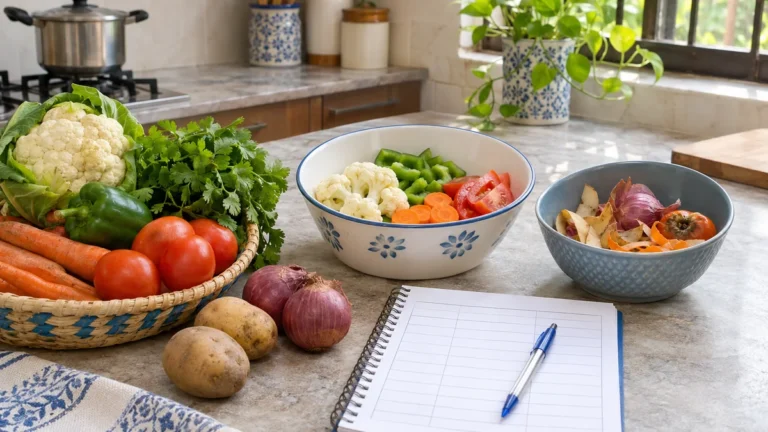
A produce waste log records what vegetable or fruit was not used, how much was lost, why it happened, and what you will change at the next shop. It works best when edible trim, spoiled food, and forgotten stock stay in separate categories.
Set the Boundary for a Produce Waste Log
Choose a seven-day period and list the produce that enters the household during that period. Include fresh vegetables and fruit bought for home use. Keep restaurant meals and food used outside the household out of the record unless you deliberately include them from the start.
Record the item when it becomes unusable or leaves the kitchen. Do not count a soft tomato as waste while it is still usable. Do not count potatoes that remain in the cupboard at the end of the week. They are closing stock for the next review.
Use one measurement basis for each item. Weigh loose vegetables in grams or kilograms. Count items only when pieces are the way you buy and plan them. A row may say “four lemons,” but it should not be added to a kilogram total.
Separate Spoilage, Trim, and Unused Stock
Waste has different causes. Spoilage means the item became unsuitable before you used it. Preparation trim is the peel, stem, or other part removed while cooking. Unused stock is still available and should stay in the cupboard total.
Edible trim needs its own note. Coriander stems used in a sauce are not waste. Vegetable peels used in stock are a second use. Record what the household actually does instead of assigning every removed part to one category.
When the reason is unknown, write “reason not confirmed.” A clear unknown is better than a confident guess. After several records, the repeated and verified reasons are the ones that can guide a purchase change.
Measure Produce Waste Without Adding the Container
Place an empty bowl on a kitchen scale and press tare before adding discarded produce. The display should return to zero. Then weigh only the item. If you do not have a scale, count pieces or use another consistent household measure and name it in the log.
Keep wet waste separate from packaging. A bag, tray, or absorbent pad can change the reading. The log is not a legal inspection. It is a household record, so consistent methods matter more than false precision.
Write the measurement soon after it happens. Waiting until the bin is mixed makes the item and reason harder to identify. Wash hands and handle discarded food according to ordinary kitchen hygiene practices.
Use the Produce Waste CSV for One Week
The downloadable CSV includes the date, item, starting quantity, measured loss, reason, and action for the next shop. Replace the illustrative row with your own figures. Keep notes short enough that another household member can understand them.
Do not rewrite old rows when the next week is different. Add a new week. The history shows whether a smaller purchase, different storage place, or changed meal plan actually reduced the repeated loss.
Start a Produce Waste Log
Record one week before changing your shopping amount.
Review the Log Before the Next Vegetable Shop
At the end of the week, group rows by item and reason. Look for a repeated loss, not the largest single event. One damaged bag may be unusual. Tomatoes spoiled twice because too many were bought may point to a shopping problem.
Choose one response for the next ordinary shop. You might buy a smaller amount, move an item to a visible shelf, or plan one meal earlier in the week. Do not change price, quantity, storage, and meal timing at once if you want to know what helped.
Review the new week against the old one. Keep the same unit and similar household conditions where practical. Mark travel, guests, or a special event because they can make an ordinary comparison misleading.
Connect the Waste Log to the Vegetable Calculator
The Vegetable Quantity and Cost Calculator plans a purchase from quantities, stock, buying rules, and prices that you enter. The waste log does not replace those inputs. It helps you decide whether the next quantity should change.
Use a measured purchase amount from the next shop. Keep waste as a separate observation instead of silently adding a guessed percentage to every vegetable. A repeated household record is stronger than a universal waste assumption.
Plan the Next Vegetable Shop
Take the reviewed amount, current usable stock, seller unit, and local price to the calculator.
Avoid Common Produce Waste Log Errors
- Counting stock as waste: produce still available belongs in closing stock.
- Mixing grams and pieces: keep unlike units in separate rows.
- Including bowls and bags: tare the container before weighing.
- Guessing every reason: mark an unconfirmed cause honestly.
- Changing too many things: test one practical shopping change at a time.
سبزی اور پھل کے ضیاع کے عام سوالات
ضیاع کب لکھیں؟
جب سبزی یا پھل گھر کے قابل استعمال ذخیرے سے نکل جائے تو اسے لکھیں۔ جو چیز ابھی استعمال ہو سکتی ہے وہ ضیاع نہیں، موجودہ ذخیرہ ہے۔
وزن کیسے ناپیں؟
خالی برتن ترازو پر رکھ کر صفر کریں، پھر صرف ضائع چیز ڈالیں۔ اگر ترازو نہ ہو تو گنتی کریں اور اکائی واضح لکھیں۔
چھلکے ہمیشہ ضیاع ہیں؟
نہیں۔ جو چھلکے یا ڈنٹھل کسی دوسرے کھانے میں استعمال ہوں، انہیں دوسرے استعمال کے طور پر لکھیں۔
وجہ معلوم نہ ہو تو کیا لکھیں؟
وجہ معلوم نہیں لکھیں۔ غلط اندازہ مستقبل کی خریداری کو غلط سمت دے سکتا ہے۔
کیلکولیٹر میں ضیاع کیسے شامل کریں؟
پہلے ریکارڈ سے اگلی خریداری کی مناسب مقدار طے کریں، پھر موجودہ ذخیرہ اور دکان کی اکائی کے ساتھ کیلکولیٹر استعمال کریں۔
Sources and Produce Waste Resources
View 4 Sources
- U.S. EPA. Resources for Assessing Wasted Food
- U.S. EPA. Food Waste Logbook
- NIST. Metric Kitchen: Cookware and Tools
- FoodSafety.gov. FoodKeeper App
Related Ration Planning Tools
Planning More Household Groceries?
Browse calculators for measured quantities, usable stock, package rules, and current costs.

Author and Founder