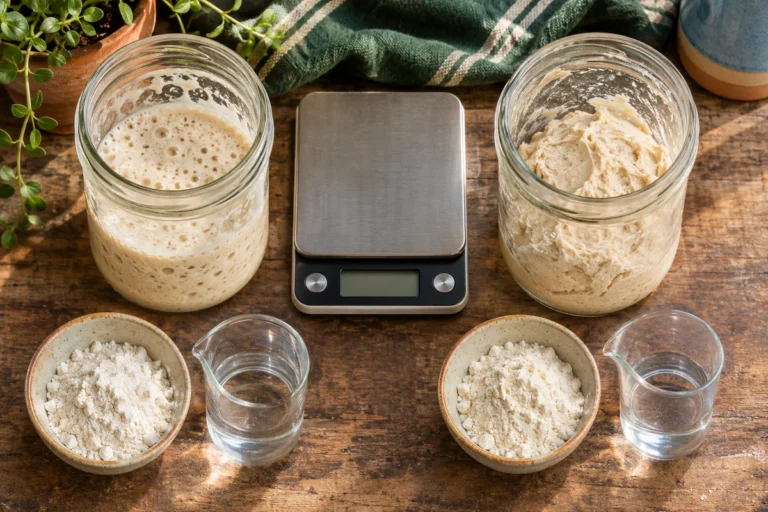
Changing starter hydration means changing the water-to-flour ratio by weight. Make the change with measured flour and water, keep the flour type and temperature steady, and observe more than one feeding before judging the new texture or timing.
Understand What Starter Hydration Measures
Starter hydration is water weight divided by flour weight, multiplied by 100. A starter with equal weights of water and flour is 100% hydration. A starter with less water than flour is stiffer.
The seed starter already contains flour and water. When you change hydration, include those existing amounts in the total instead of calculating only the new feed.
Use grams because hydration is a weight ratio. Cups and spoons can vary with packing, flour type, and measuring technique.
Choose One Reason for the Change
Decide why you are changing the starter before choosing a number. You may want a firmer culture for easier handling, a liquid culture that mixes quickly, or a specific hydration required by a bread formula.
Do not change hydration, flour type, temperature, and feeding schedule at the same time. A controlled change makes the starter response easier to understand.
Write the old hydration, target hydration, seed weight, flour type, and planned feeding time. That short record prevents an accidental change from becoming the new routine.
Calculate the Existing Flour and Water
For a known seed hydration, split the seed into its flour and water parts. At 100% hydration, a 40 g seed contains 20 g flour and 20 g water. At another hydration, the split is different.
The calculator handles this accounting and then adds the new flour and water needed for the target. Avoid rounding each intermediate value too early because small starters can shift noticeably from a few grams.
If the seed hydration is unknown, label the calculation as an estimate. A fresh measured build from known flour and water may be clearer than pretending the old starter composition is exact.
Observe Texture Without Treating It as Strength
A lower-hydration starter can feel firm and may show less dramatic height in a wide jar. A liquid starter can spread and display bubbles differently. Appearance alone does not prove that one culture is stronger.
Track rise, peak time, aroma, and the ability to repeat the cycle. Compare the new state with its own starting mark rather than expecting the same shape as the old hydration.
Give the culture time to settle into the new routine. If it behaves poorly, verify weights and temperature before making another large change.
Update the Bread Formula Accounting
When starter enters a dough, it contributes both flour and water. A different starter hydration can change the dough’s total hydration unless the final-dough water or flour is adjusted.
Break the starter into flour and water components when comparing formulas. This is the same overall accounting principle used for preferments in baker’s percentages.
Keep the maintenance starter decision separate from the dough formula decision. You can maintain one hydration and build a separate levain at another hydration when a recipe requires it.
Download the Hydration Change Log
Keep the old hydration, target, seed composition, feed weights, and observations together.
Download the Hydration Change Log
Open the file in a spreadsheet and replace the example row with your own observations.
Use the Starter Hydration Calculator
The Sourdough Starter Hydration Calculator splits the seed starter into flour and water, then calculates the feed needed to reach a target hydration and total weight.
Use the result as a measured build. Label the jar with the target, record the actual response, and keep the observation separate from the arithmetic.
Calculate a Hydration Change
Enter the current seed and target hydration before weighing the next feed.
Common Hydration Change Mistakes
Do not call a starter 75% hydration because the latest feed used 75 g water for 100 g flour while ignoring the seed. The correct final ratio includes the flour and water already inside that seed.
- Using volume measures: weigh flour and water in grams.
- Rounding early: keep calculation precision until the final practical weights.
- Changing flour at the same time: keep the comparison controlled.
- Judging by jar height alone: stiff and liquid starters expand differently.
- Forgetting dough accounting: update the flour and water contributed to the final formula.
Keep the old and new records side by side so the change remains reversible.
اسٹارٹر ہائیڈریشن کے عام سوالات
سو فیصد ہائیڈریشن کیا ہے؟
اس میں پانی اور آٹے کا وزن برابر ہوتا ہے، مثلاً پچاس گرام پانی اور پچاس گرام آٹا۔
کیا کپ سے ہائیڈریشن ناپ سکتے ہیں؟
درست تناسب کے لیے گرام میں وزن کریں کیونکہ کپ بھرنے کا طریقہ مقدار بدل دیتا ہے۔
کیا کم پانی والا اسٹارٹر کمزور ہوتا ہے؟
ضروری نہیں۔ سخت اور پتلا اسٹارٹر مختلف نظر آتے ہیں، اس لیے مسلسل بڑھنے کا ریکارڈ دیکھیں۔
بیج اسٹارٹر کو حساب میں کیوں شامل کریں؟
اس میں پہلے سے آٹا اور پانی موجود ہیں، انہیں چھوڑنے سے آخری تناسب غلط ہو جاتا ہے۔
تبدیلی کے بعد فوراً فیصلہ کرنا چاہیے؟
نہیں۔ چند خوراکوں تک ایک جیسے حالات رکھیں اور پھر وقت، بو اور بڑھنے کا موازنہ کریں۔
Sources and Further Reading
Related Cooking Tools

Author and Founder