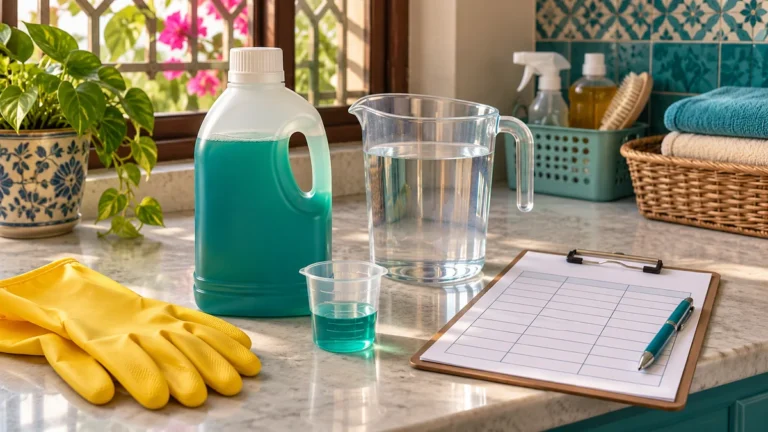
A concentrated cleaner label can include a container size, dilution direction, approved surface, contact time, safety warning, and storage instruction. These details do different jobs. A clear record preserves the maker’s exact directions instead of turning a remembered ratio into an unsafe household rule.
Start With the Exact Cleaner and Intended Task
Write the full product name and form before copying any number. A concentrated floor cleaner, laundry product, disinfectant, and general surface cleaner may use different directions even when the bottles look similar.
Match the record to the task named on the label. A direction for a hard, nonporous surface does not automatically apply to fabric, food-contact equipment, skin, or another surface.
Use the physical bottle as the main source. Retail listings can shorten directions or show an older package. Add the date because formulas and labels can change.
Copy Dilution Wording Exactly as Printed
Record the label’s own quantity, unit, water amount, method, and intended use. Do not replace them with a household phrase such as “one cap” unless the label defines that cap and use.
Some directions vary by task or soil level. Give each stated use its own note. Do not choose the strongest mixture simply because it sounds more effective.
The EPA advises users of registered disinfectants to follow the application method on the label. Safety and effectiveness can change when a product is used another way.
Keep Container Size and Usable Yield in Different Fields
The concentrate container size is the amount purchased. Ready-to-use yield is the amount available after following one stated dilution direction. Keep those values separate.
Copy a yield only when the label or manufacturer states it. If no yield is printed, mark the field as not stated. Do not publish a guessed conversion as a product fact.
A product may have more than one possible yield because different approved tasks use different directions. Attach the task name to every yield note.
Record Warnings, Contact Time and Storage
Safety statements are not optional notes. Record required protective equipment, ventilation, first-aid wording, contact time, rinsing directions, and storage instructions that apply to the planned task.
Never mix cleaners unless the label clearly instructs it. The CDC warns against mixing bleach with other cleaners or disinfectants because dangerous vapors can result.
The CSV keeps product identity, package size, task, exact label direction, warnings, storage, and purchase action in separate columns.
Start a Cleaner Label Record
Copy the package wording before estimating a purchase.
Review the Record Before Shopping
Check whether an open bottle already matches the planned task. Record the usable amount only when it can be identified and stored as the label directs.
Mark buy, hold, or verify. Use verify when the label is damaged, the product is in an unlabeled container, or the task is not covered by the directions you can read.
Keep cleaners away from food records and food storage areas. A household shopping list can include both, but the storage and safety notes should remain distinct.
Handle an Unlabeled or Transferred Cleaner Safely
Do not identify a cleaner by color, smell, or container shape. A transferred liquid can lose the warnings and directions that made the original package usable.
If the product cannot be confirmed, keep it out of the available-stock total and mark the record for safe disposal guidance. Never pour it into a drink bottle or food container.
When the label permits a working solution in another container, copy every required secondary-container instruction. Keep the preparation date and intended task with that container.
Use the Cleaning Supply Calculator After Label Review
The Cleaning Supply Quantity Calculator handles the quantity, stock, buying unit, and price values you enter. It does not create product directions.
Use only the buying basis that matches the seller’s price, such as one bottle or one refill. Keep the exact label record beside the result so the planned quantity is not mistaken for a safety instruction.
Plan the Cleaning Supply Purchase
Bring the verified bottle size, available stock, seller unit, current price, and label notes.
Avoid Common Cleaner Label Errors
- Using a remembered ratio: copy the current label.
- Ignoring the task: connect every direction to its stated use.
- Guessing ready-to-use yield: record it only when supported.
- Mixing products: never combine cleaners without label direction.
- Treating a calculator as safety advice: keep the two roles separate.
کنسنٹریٹڈ کلینر لیبل کے عام سوالات
ڈائلیوشن ہدایت کہاں سے لیں؟
موجودہ بوتل کے لیبل سے عین الفاظ، مقدار اور استعمال لکھیں۔ یادداشت یا کسی دوسرے کلینر کا تناسب استعمال نہ کریں۔
کیا مختلف کلینر ملائے جا سکتے ہیں؟
نہیں، جب تک اسی مصنوعات کا لیبل واضح طور پر ایسا کرنے کی ہدایت نہ دے۔ بلیچ کو دوسرے کلینرز کے ساتھ ملانا خطرناک ہو سکتا ہے۔
بوتل کا سائز اور تیار محلول ایک چیز ہیں؟
نہیں۔ بوتل میں کنسنٹریٹ کی مقدار خریداری ریکارڈ ہے، جبکہ تیار محلول کی مقدار صرف لیبل کے مطابق استعمال کے بعد بنتی ہے۔
لیبل واضح نہ ہو تو کیا کریں؟
ریکارڈ میں تصدیق درکار لکھیں اور مصنوعات استعمال نہ کریں جب تک درست ہدایت نہ مل جائے۔
کیلکولیٹر کیا بتاتا ہے؟
کیلکولیٹر خریداری مقدار اور قیمت کا اندازہ دیتا ہے۔ یہ حفاظتی ہدایت یا مکسنگ نسخہ نہیں بناتا۔
Sources and Cleaner Safety Resources
View 4 Sources
- U.S. EPA. Using Products Only as Directed on the Label
- U.S. EPA. Pesticide Label Review Manual
- U.S. CDC. When and How to Clean and Disinfect Your Home
- Poison Control. Cleaning Products
Related Ration Planning Tools
Planning More Household Groceries?
Browse calculators for measured quantities, usable stock, package rules, and current costs.

Author and Founder