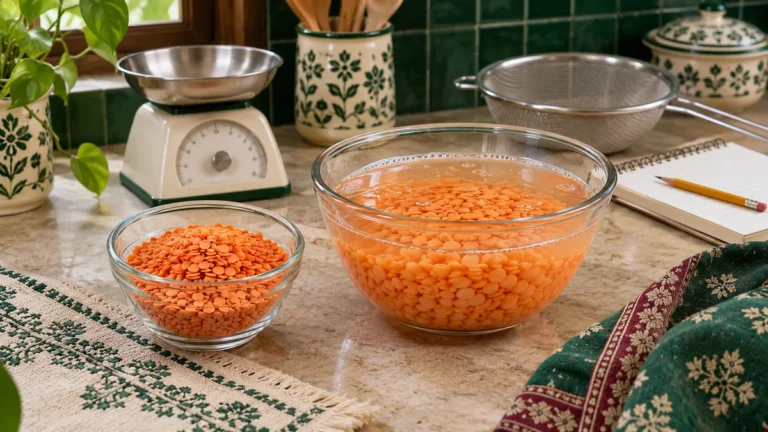
Daal is bought and stored dry, while soaked daal contains absorbed water. The higher soaked weight does not mean more dry daal appeared. It means the measurement moved to a different preparation stage.
Why Soaked Daal Weighs More Than Dry Daal
Dry pulses have lost water during processing and storage. During soaking, water moves back into the pulse. The drained bowl therefore contains the original dry solids plus absorbed water.
The change depends on the pulse, its age, soaking time, water conditions, and draining method. Whole chickpeas, kidney beans, split peas, and red lentils should not share one automatic factor. Utah State University Extension notes that lentils and split peas do not require the same presoak used for many whole dry beans.
This article uses daal as a household shopping term. Follow a trusted recipe and food-safety instructions for the exact pulse you cook, especially kidney beans. The measurement method below is not a cooking-safety guide.
Keep Shopping and Pantry Records on a Dry Basis
Weigh daal before rinsing or soaking. Tare the empty bowl, add the dry pulse, and record grams. Keep each product on its own row, such as masoor daal, moong daal, chana daal, or whole beans.
A dry basis matches the package, receipt, and pantry container. It also allows opening stock, new purchases, and closing stock to use the same unit. Do not add soaked weight to a dry pantry total.
Run a Dry-to-Soaked Daal Trial
A household trial can show how one pulse behaves with one routine. It should not be turned into a universal conversion for every daal.
- Sort and weigh the dry daal in grams.
- Record the pulse name and soaking method.
- Follow the appropriate soaking and safety guidance for that pulse.
- Drain in the same strainer for the same amount of time.
- Weigh the drained soaked daal in a tared bowl.
Repeat the trial before using it for planning. A longer drain can lower surface water, while a shorter drain can leave more water clinging to the pulse. Consistent handling matters as much as the scale.
Record Dry and Soaked Daal
Use the CSV to keep the pulse, dry weight, soaking method, drain time, and soaked weight together.
Calculate a Trial-Specific Soaking Factor
Divide drained soaked weight by dry weight for the same trial. This factor can help prepare a familiar recipe, but shopping should still return to the dry amount.
Trial soaking factor
drained soaked weight ÷ dry weight
Estimated dry equivalent
drained soaked target ÷ tested factor
Suppose an illustrative 300 g dry batch weighs 540 g after soaking and draining. Its factor is 540 ÷ 300 = 1.80. That number belongs only to the named pulse, soak, and drain routine.
Know When a Soaked Weight Is Useful
A soaked weight can help repeat a recipe when prep is shared between people. One person may soak and drain the pulse, while another cooks later. A label can show exactly what is in the container.
It can also help when a recipe starts with “soaked and drained” daal. The record should still keep the original dry weight so the next shopping list has a purchase basis.
Do not use soaked weight to estimate personal dietary intake. Water gain, shared dishes, leftovers, and serving differences make that inference unreliable.
Control the Drain Step Before Comparing Trials
Surface water can remain between pulses and along the bowl. It adds weight even though it is not absorbed inside the daal. Use the same strainer, shake it the same way, and wait the same number of minutes before each soaked reading.
Do not press or squeeze one batch if earlier batches were allowed to drain naturally. Record a torn bag, mixed pulse, or interrupted soak instead of forcing the number into the usual group.
If a recipe cooks lentils directly without a presoak, keep that method in a separate record. The dry shopping amount is still valid, but a “soaked weight” comparison does not describe that workflow.
Store Preparation Labels With the Daal
A clear label should include the pulse name, dry starting weight, soak date, and whether the container holds soaked or cooked daal. This is especially useful when several family members share kitchen work.
Do not leave a prepared container identified only by color. Different pulses can look similar after soaking, while their cooking needs and original dry amounts may differ.
Use Dry Daal in the Daal Calculator
The Daal Quantity and Cost Calculator needs a consistent purchase basis. Use measured dry daal for household demand and dry stock for the pantry amount.
The calculator manages days, stock, packs, and entered prices. The daal calculator guide explains those fields. This article only separates dry purchase weight from a preparation-stage weight.
Plan Daal From a Dry Household Record
Enter your measured dry-use rate, current stock, pack size, and shop price.
Avoid Common Daal Measurement Errors
- Buying from soaked weight: return to the tested dry amount for shopping.
- Combining pulses: keep masoor, moong, chana, and whole beans separate.
- Changing drain time: use the same strainer and timing for comparable trials.
- Ignoring food safety: follow pulse-specific safety instructions, especially for kidney beans.
- Treating one trial as a rule: repeat ordinary batches before using a factor.
دال بھگونے اور وزن کے عام سوالات
خریداری کے لیے خشک یا بھیگی دال کا وزن لکھیں؟
خریداری اور ذخیرے کے لیے خشک دال لکھیں۔ بھیگی دال میں جذب شدہ پانی شامل ہوتا ہے۔
کیا ہر دال کا بھگونے والا تناسب ایک جیسا ہے؟
نہیں۔ قسم، عمر، پانی اور وقت نتیجہ بدلتے ہیں۔ ہر دال الگ آزمائیں۔
دال کو کتنی دیر چھاننا چاہیے؟
ہر آزمائش میں ایک ہی چھلنی اور وقت رکھیں تاکہ پیمائش قابل موازنہ ہو۔
کیا مسور اور چنے کی دال ایک ساتھ ریکارڈ ہو سکتی ہیں؟
انہیں الگ رکھیں کیونکہ بھگونے اور پانی جذب کرنے کا انداز مختلف ہو سکتا ہے۔
کیلکولیٹر میں کون سا وزن استعمال کریں؟
خشک دال اور خشک ذخیرہ استعمال کریں۔ بھیگی دال صرف تیاری کے نوٹ میں رکھیں۔
Sources and Daal Preparation Resources
View 4 Sources
- Utah State University Extension. Dry beans rehydrate in water; lentils and split peas differ from many whole beans. Food Storage Booklet
- North Dakota State University Extension. Pulse-specific soaking and pressure-cooking methods. Pressure Cook Dry Beans
- Utah State University Extension. Kidney bean handling and cooking safety. Killer Kidney Beans
- NIST. Kitchen scales, grams, and tare. Metric Kitchen: Cookware and Tools
Related Ration Planning Tools
Planning More Household Groceries?
Browse practical quantity and cost tools for the Ration cluster.

Author and Founder