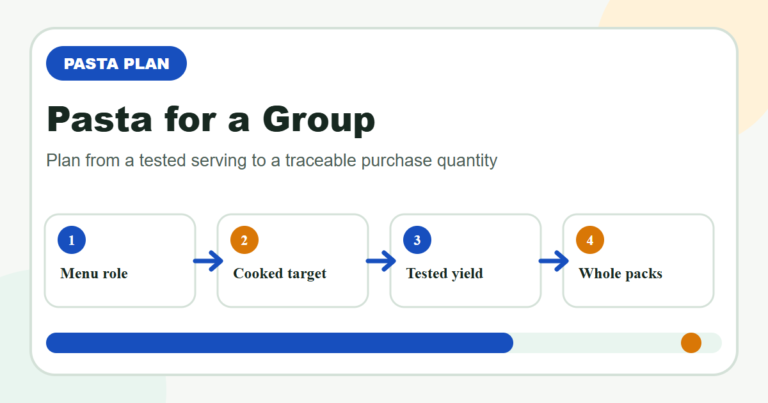
Dry pasta gains water during cooking, so a cooked serving target must be converted back to dry purchasing weight. Pasta shape, doneness, holding time, sauce, and service style all affect the useful result. Plan the finished plate first, then test the exact product instead of treating every pasta as identical.
Decide Whether Pasta Is a Main Dish or Side
A pasta main course normally carries more of the meal than a small buffet side. Rich sauce, meat, vegetables, bread, and other courses can all change what guests are likely to take.
Write down whether the plan covers cooked pasta alone or finished pasta with sauce. Do not enter a sauced portion as if all of its weight were pasta.
The Pasta for Guests Calculator converts a cooked pasta target into dry pasta. Keep sauce and toppings in their own recipe calculation.
Understand Dry and Cooked Pasta Boundaries
Purchasing records use dry pack weight. Service records may use drained cooked pasta or a finished sauced dish. Choose one boundary and label it clearly.
Cooked pasta demand = guests × cooked pasta per guest
Dry pasta needed = reserve-inclusive cooked demand ÷ measured cooked-to-dry yield
USDA’s grains table lists different cooked yields for different pasta shapes. One pound of dry pasta does not create the same cup volume for every shape.
Measure the Yield of the Exact Pasta
Weigh a dry sample, cook it for the planned time, drain it by the normal method, and weigh the usable cooked pasta before sauce. Divide cooked weight by dry weight.
Use the same salt, water, stirring, rinsing, draining, and holding procedure planned for service. A test drained for 30 seconds cannot represent production pasta held in water or sauce.
Repeat the test if the shape, brand, cooking time, or preparation method changes.
Calculate a Pasta Order for 50 Guests
Suppose 50 guests receive 220 g of cooked pasta each. Base demand is 11 kg. A 10% reserve raises it to 12.1 kg cooked.
At a measured cooked-to-dry yield of 2.4, the exact dry requirement is about 5.042 kg. If pasta comes in 500 g packs, round upward to 11 packs, or 5.5 kg.
The extra 0.458 kg dry pasta is pack-rounding surplus. It is not another guest reserve and should remain visible.
Keep Sauce, Mix-Ins, and Pasta Separate
A finished macaroni salad, baked pasta, or sauced spaghetti weighs more than the drained pasta. Cost and quantity planning become unreliable when sauce weight is hidden inside a pasta yield.
Scale the sauce recipe for the same number of portions. Then combine the production plans only after each component has a clear yield.
For baked dishes, account for pan capacity and final serving count separately. The dry-pasta calculator does not predict oven loss or sauce absorption.
Control Holding and Batch Timing
Pasta can continue absorbing moisture and soften during holding. Plan smaller cooking batches when service is long or when the kitchen cannot cool and reheat pasta under an approved process.
Test the serving utensil and portion after the actual holding time. A scoop measured immediately after draining may not represent the later service portion.
Quantity math does not replace food-safety rules. Use the current procedure for cooking, cooling, reheating, and hot or cold holding.
Avoid Common Pasta Planning Errors
- Using finished dish weight: isolate cooked pasta before sauce.
- Copying one yield across shapes: test the product.
- Using cups as exact weight: weigh when precision matters.
- Adding two reserves: show one explicit allowance.
- Ignoring whole packs: report pack surplus separately.
Check the planned dry pasta against kitchen capacity before purchasing.
Record Planned and Actual Group Food Quantities
Use the downloadable worksheet to keep the menu role, guest count, portion, reserve, measured yield, pack or vessel rounding, and actual outcome together. Replace the fictional row with your own event values.
After service, record actual attendance, prepared quantity, leftovers, and discarded food. One event cannot create a universal standard, but repeated comparable records can improve the next plan.
Keep the parent calculator’s export with the event sheet. A result without its input definitions is difficult to review later.
If the menu, product, service style, or equipment changes, treat the new event as a different comparison group rather than forcing it into the old average.
Download the Group Food Planning Worksheet
Open the CSV in a spreadsheet and replace every fictional value with your own measured event information.
Plan, Serve, and Review the Result
Keep the planned portion, yield, reserve, purchase rounding, and actual leftovers in one record.
Use the Pasta for Guests Calculator
The Pasta for Guests Calculator performs the matching quantity calculation. This article helps you choose and verify the service assumptions placed into it.
Calculate With Your Event Values
Enter the guest count, tested portion, reserve, and yield or capacity required by the tool.
مہمانوں کے لیے پاستا کے عام سوالات
خشک پاستا اور پکا پاستا کیوں الگ ہیں؟
پاستا پکنے کے دوران پانی جذب کرتا ہے، اس لیے پکا ہوا وزن خشک پیک سے زیادہ ہوتا ہے۔
کیا ہر شکل کا ییلڈ ایک جیسا ہے؟
نہیں۔ اسپگیٹی، میکرونی اور شیل پاستا کا جذب اور کپ والی مقدار مختلف ہو سکتی ہے۔
ساس کو پاستا وزن میں شامل کریں؟
نہیں۔ پہلے سادہ پکے پاستا کی مقدار نکالیں، پھر ساس کی ریسپی الگ اسکیل کریں۔
ہولڈنگ کا حساب پر کیا اثر ہے؟
پاستا مزید نمی جذب کر سکتا ہے، اس لیے اصل سروس وقت پر پورشن دوبارہ چیک کریں۔
پیک کب راؤنڈ کریں؟
مکمل خشک ضرورت نکالنے کے بعد ہی بیچنے والے کے پورے پیک تک اوپر راؤنڈ کریں۔
Sources and Further Reading
Related Group Food Planning Tools
More Guest Food Planning Guides

Author and Founder
1 thought on “How Much Dry Pasta to Cook per Person for a Group”