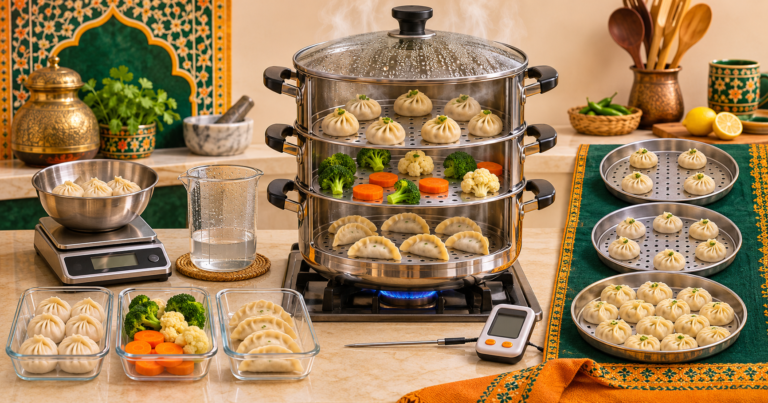
A steamer basket can hold many pieces and still produce an uneven batch. Food size, spacing, blocked holes, tier position, water level, lid fit, condensate, and cooking time all affect practical capacity. The useful maximum is the largest repeatable load that steams evenly in the real setup.
Confirm the Complete Steamer Setup
Record the steamer manufacturer, model, basket diameter, basket depth, number of tiers, pot, lid, heat source, and manufacturer limits. A basket that fits loosely in another pot may leak steam or sit too close to the water.
Check handles, feet, vents, seals, and the space between water and food. Assemble every part used in service before measuring available food area.
Use the Steamer Basket Batch Capacity Calculator after measuring the accepted load. It cannot judge steam flow or doneness.
Standardize the Food Pieces and Starting Condition
Choose one product, cut size, piece weight, starting temperature, and preparation method. A batch of equal dumplings behaves differently from mixed vegetables or thick fish portions.
Weigh or count the pieces placed in each tier. Record whether food is fresh, chilled, frozen, wrapped, or stacked. Do not combine different products in the first capacity trial.
Repeat the same loading pattern for at least three tests. Changing food size between trials makes the capacity comparison unreliable.
Leave Clear Paths for Steam
Arrange food so steam openings are not sealed by large flat pieces, liners, or crowded edges. Follow the manufacturer’s instructions for liners and spacing.
Map the basket as center, middle ring, and outer edge. Place matching pieces in each zone so you can compare results without relying on one sample.
A neat tight arrangement may increase count but reduce circulation. Lower the approved count when edge or center pieces repeatedly finish differently.
Test Every Tier and Position
Multi-tier steamers may not cook every position at the same rate. Mark the top, middle, and bottom tier and keep their order fixed during the first trial.
Check representative pieces from each tier and zone using the operation’s approved doneness method. If tiers are rotated, record when and how the rotation occurs.
Do not report one total cooking time when a tier needs a separate process. The approved batch must include its placement and rotation instructions.
Verify Water Reserve and Condensate Control
Start with the water amount and level allowed by the manufacturer. Record remaining water after the full cycle. The basket must remain above the water as designed.
Watch for boil-over, dry operation, excessive condensate, lid drips, and wet food surfaces. Do not open the lid repeatedly merely to watch the test because that changes the steam cycle.
Stop the trial if the equipment requires unsafe refilling or shows signs of damage. Capacity never overrides the operating manual.
Record Doneness and Quality Separately
Use an appropriate food thermometer and approved checks where required. USDA guidance recommends checking food in the thickest part and in several places for irregular items.
Also record texture, moisture, color, breakage, sticking, and usable yield. A safe product can still fail the kitchen’s quality standard.
Keep the time and temperature log required by the operation. The capacity worksheet should identify that record, not replace it.
Avoid Common Steamer Capacity Errors
- Counting pieces only: check steam paths and size.
- Testing one position: compare tiers and zones.
- Blocking holes: use approved liners and spacing.
- Ignoring water reserve: record the full cycle.
- Judging one sample: check several locations.
Approve the largest load that repeats evenly with the documented equipment, food, pattern, and cycle.
Build a Repeatable Equipment Test Record
Use the downloadable CSV for at least three trials with the same equipment, recipe, and method. Record planned settings, actual measurements, staff observations, failures, corrections, usable yield, and the final decision.
Change one factor at a time when possible. If the recipe, load, attachment, rack, heat setting, and timing all change together, the team cannot tell which change caused the result.
Keep failed trials. They show the boundary that should not be repeated and explain why the approved operating level may be lower than a printed maximum.
Name the person who ran the test and the date. Add a photo or loading sketch when it helps another trained staff member repeat the accepted setup.
Write the final standard as a range when normal product variation matters. A single exact number can imply more precision than the food or equipment supports.
Review the record after any change to the model, recipe, ingredient, attachment, utensil, or service method. Capacity belongs to a defined setup, not every item that looks similar.
Download the Equipment Test Worksheet
Open the CSV in a spreadsheet and replace the example row with measurements from your own controlled trial.
Keep the Test Traceable
Record the setup, result, failure, correction, and approved operating standard.
Use the Steamer Basket Batch Capacity Calculator
The Steamer Basket Batch Capacity Calculator performs the matching arithmetic. This article covers the physical trial and operational evidence that a calculator cannot observe.
Calculate With Measured Inputs
Complete a real equipment trial, then enter the verified capacity, load, or yield.
اسٹیمر باسکٹ کے عام سوالات
کیا باسکٹ پوری بھر سکتے ہیں؟
صرف اس وقت جب بھاپ کے راستے کھلے رہیں اور ہر جگہ کھانا یکساں تیار ہو۔
ٹکڑے ایک جیسے کیوں ہوں؟
یکساں سائز اور وزن سے مختلف جگہوں کا درست موازنہ ممکن ہوتا ہے۔
ہر ٹائر چیک کرنا ضروری ہے؟
ہاں۔ اوپر، درمیان اور نیچے کی حرارت اور بھاپ کا اثر مختلف ہو سکتا ہے۔
پانی کتنا رکھیں؟
اسی ماڈل کی دستی ہدایات کے مطابق پانی رکھیں اور سائیکل کے بعد بچا پانی ریکارڈ کریں۔
کیا ایک ٹکڑا چیک کرنا کافی ہے؟
نہیں۔ مختلف ٹائر اور زون سے نمائندہ ٹکڑے منظور شدہ طریقے سے جانچیں۔
Sources and Further Reading
Related Kitchen Capacity Guides
More Equipment Capacity Guides

Author and Founder