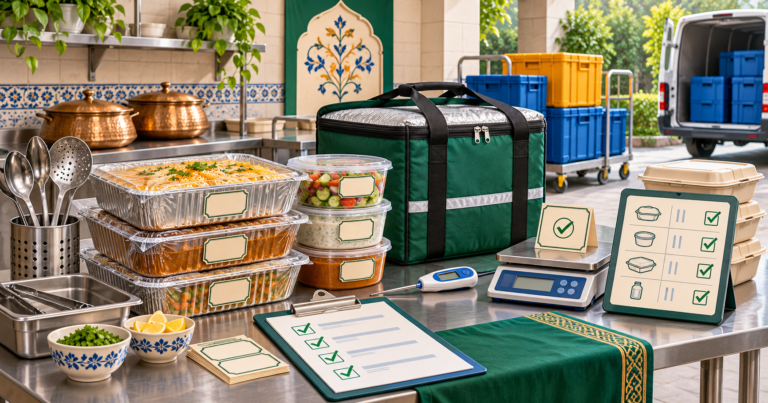
A catering packing checklist should confirm more than container count. It should connect the menu, serving plan, food-safety controls, equipment, labels, loading order, and receiving handoff. The final verifier needs evidence that the right items are present and ready for the planned trip.
Build the Checklist From the Service Plan
Start with guest count, menu, portion plan, service style, venue facilities, travel time, and setup schedule. Convert each need into a countable checklist group.
Separate food containers, serving utensils, plates, cups, fuel, linens, labels, cleaning supplies, and backup items. One long mixed list is harder to verify.
Use the Catering Packing Checklist Count Calculator to compare required and confirmed units. Keep safety checks as separate pass or fail fields.
Label Food and Match It to the Menu
Every sealed container should identify the dish, quantity or portion group, destination, and any handling instruction needed by the team.
Keep allergen and special-diet items clearly separated according to the operation’s verified procedure. A colored sticker alone is weak if nobody knows what the color means.
Cross-check the container count against the final menu, not an early proposal. Record substitutions so receiving staff know what changed.
Verify Time and Temperature Controls
The FDA Food Code is a model used by food-service regulators. Its 2026 edition includes controls for time and temperature of foods that require safety management.
Check product temperature with an appropriate, calibrated measuring device where required. The 2022 Food Code inspection guidance notes that surface-only infrared readings may miss problems inside food.
Follow local law and the business food-safety plan. Do not invent a transport limit from this checklist or use a count as proof that food remained safe.
Inspect Carriers, Crates, and the Vehicle
Confirm that insulated carriers, crates, shelves, and the vehicle are clean, suitable, and able to protect food from contamination and movement.
FDA transportation guidance calls for sanitary equipment and adequate temperature control when food requires it. Pre-cooling and written procedures may apply to regulated operations.
Load heavy and stable items first while preserving access to items needed at setup. Keep chemicals and nonfood supplies away from exposed food-contact items.
Use Two-Step Counting and Sign-Off
The packer confirms each item when it enters the staging area. A second verifier checks the grouped count, label, condition, and assigned carrier before loading.
Do not pre-check boxes for items expected later. Mark packed only when the item is physically present and ready.
Use initials or a name for each completed group. Accountability makes a missing item easier to trace and improves the next checklist.
Complete a Departure and Receiving Handoff
Before departure, confirm route, contact numbers, arrival window, unloading point, and who receives the order. Record the departure check time.
At delivery, the receiver should compare major groups, condition, and required temperature records. Note damaged, missing, or delayed items immediately.
Keep the signed checklist with the event record. It can show whether the problem began during packing, transport, unloading, or service.
After the event, note anything unused, missing, damaged, or difficult to unload so the next checklist improves.
Avoid Common Catering Packing Mistakes
- Counting food only: include service equipment.
- Checking before packing: verify physical presence.
- Using unclear labels: name dish and destination.
- Ignoring temperature: follow the safety plan.
- Skipping handoff: record departure and receipt.
The checklist supports operations but does not replace food-safety training, local regulations, or a qualified manager’s decisions.
Build a Repeatable Review Record
Use the downloadable CSV for at least three comparable checks. Record the source document, units, date, physical result, person responsible, and final action. Replace the fictional row with your own information.
Keep exceptions instead of deleting them. A damaged delivery, unusual event, temporary promotion, or different preparation method can explain why one result does not match the normal pattern.
Review the complete record before changing a standard. One result can raise a useful question, while repeated comparable results provide a stronger basis for a new operating rule.
Use clear status words such as pending, verified, approved, rejected, or monitor. Vague notes make it difficult for the next person to understand whether a decision is complete.
Attach the supporting receipt, invoice, photograph, temperature log, or recipe version when it matters. The number should be traceable without relying on memory.
Download the Practical Record
Open the CSV in a spreadsheet and replace the example row with your own measurements and evidence.
Keep the Decision Traceable
Record the source, unit, result, owner, and next action in one place.
Use the Catering Packing Checklist Count Calculator
The Catering Packing Checklist Count Calculator performs the matching arithmetic. This article covers records, evidence, and operational decisions that the calculator cannot observe.
Calculate the Measured Result
Confirm the units and source values first, then save the result with the evidence.
کیٹرنگ پیکنگ چیک لسٹ کے عام سوالات
چیک لسٹ کہاں سے شروع کریں؟
مہمانوں کی تعداد، حتمی مینو، پورشن پلان، سفر کا وقت، مقام کی سہولت اور سروس طریقے سے ضروری گروپ بنائیں۔
صرف ڈبوں کی گنتی کافی ہے؟
نہیں۔ سرونگ چمچ، پلیٹیں، کپ، لیبل، صفائی کا سامان، ایندھن، بیک اپ اور حفاظتی ریکارڈ بھی الگ چیک کریں۔
درجہ حرارت کیسے جانچیں؟
کاروبار کے منظور شدہ فوڈ سیفٹی پلان اور مقامی قانون کے مطابق مناسب اور کیلیبریٹڈ آلہ استعمال کریں، صرف سطحی اندازہ نہ لگائیں۔
دو افراد سے تصدیق کیوں؟
پیکر موجود چیز نشان زد کرتا ہے اور دوسرا شخص تعداد، لیبل، حالت اور صحیح کیریئر کی آزاد جانچ کرتا ہے۔
وصولی پر کیا ریکارڈ کریں؟
وقت، اہم گروپ، حالت، مطلوبہ درجہ حرارت ریکارڈ اور کسی کمی، نقصان یا تاخیر کو فوراً لکھیں۔
Sources and Further Reading
Related Cooking Tools
Related Food Cost and Catering Guides

Author and Founder