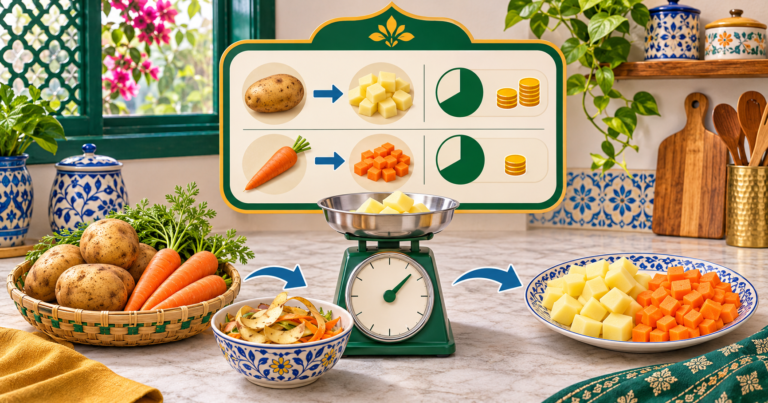
The cheapest ingredient per kilogram may not be the cheapest ingredient to serve. Peel, bone, stems, drained liquid, spoilage, and cooking loss reduce the usable amount. Edible-yield costing compares what remains after the preparation step that matters to the recipe.
Define the Form the Recipe Actually Uses
Name the exact ingredient form required by the recipe, such as peeled potato cubes, drained beans, boneless chicken, or trimmed coriander leaves.
The USDA Food Buying Guide separates food as purchased from edible portion. Its yield descriptions also depend on how the food is prepared and served.
Do not compare a ready-to-use product with an untrimmed product as if both kilograms provide the same usable food.
Run a Consistent Yield Test
Weigh the unopened or untrimmed ingredient before preparation. Then follow one defined trimming, draining, or deboning method and weigh the usable result.
Use the same scale, operator instructions, and endpoint for each sample. Water left after draining or excessive trimming can distort the comparison.
USDA guidance describes documented in-house yield tests using repeated samples when local results differ from reference data. Repetition helps separate a normal yield from one unusual item.
Convert Shelf Price Into Usable Unit Cost
The Usable Ingredient Unit Cost Calculator converts an as-purchased price through a measured yield percentage. Keep the units matched before entering values.
If one kilogram costs PKR 200 and yields 80% usable food, the usable kilogram costs more than PKR 200. The lost 20% is already part of the purchase cost.
Do not add the discarded weight again as a separate charge. Record any disposal value or by-product use only when it is real and measured.
Compare Products Under the Same Kitchen Conditions
Test competing brands or forms on the same day when possible. Storage age, thawing, moisture, and operator skill can change yield.
Use equal purchase weights or clearly convert the results to one usable unit. Compare quality, cooking behavior, and finished portion results beside cost.
A cheaper usable cost is not automatically the better purchase if the product fails the recipe, creates safety concerns, or requires unavailable labor.
Keep Labor and Convenience Separate
A ready-cut ingredient may cost more per purchase unit but save preparation time. A whole ingredient may cost less but require skilled trimming and cleanup.
Raw food cost does not automatically include labor. The USDA Food Buying Guide specifically notes that labor varies by the form purchased.
Record preparation minutes separately if they affect the decision. Do not invent an hourly value unless the business has an approved labor-cost method.
Update Yield When the Product Changes
Supplier, size grade, season, maturity, packaging, and storage can change edible yield. Retest when the item no longer matches the recorded description.
Keep the original samples and dates in the log. A rolling average from comparable tests is usually more stable than one perfect-looking result.
Mark unusual damaged or spoiled deliveries instead of blending them silently into the normal yield. They may need a supplier-quality review.
Avoid Common Edible Yield Comparison Mistakes
- Comparing different forms: define the recipe-ready form.
- Testing once: repeat comparable samples.
- Leaving water in drained food: use one endpoint.
- Mixing kilograms and grams: normalize units.
- Hiding labor: record time separately.
Yield is a planning estimate, not a guarantee. Product quality and kitchen practice still need observation.
Build a Repeatable Review Record
Use the downloadable CSV for at least three comparable checks. Record the source document, units, date, physical result, person responsible, and final action. Replace the fictional row with your own information.
Keep exceptions instead of deleting them. A damaged delivery, unusual event, temporary promotion, or different preparation method can explain why one result does not match the normal pattern.
Review the complete record before changing a standard. One result can raise a useful question, while repeated comparable results provide a stronger basis for a new operating rule.
Use clear status words such as pending, verified, approved, rejected, or monitor. Vague notes make it difficult for the next person to understand whether a decision is complete.
Attach the supporting receipt, invoice, photograph, temperature log, or recipe version when it matters. The number should be traceable without relying on memory.
Download the Practical Record
Open the CSV in a spreadsheet and replace the example row with your own measurements and evidence.
Keep the Decision Traceable
Record the source, unit, result, owner, and next action in one place.
Use the Usable Ingredient Unit Cost Calculator
The Usable Ingredient Unit Cost Calculator performs the matching arithmetic. This article covers records, evidence, and operational decisions that the calculator cannot observe.
Calculate the Measured Result
Confirm the units and source values first, then save the result with the evidence.
قابل استعمال پیداوار کی لاگت کے سوالات
قابل استعمال پیداوار کیا ہے؟
خریدے گئے وزن میں سے چھلکا، ہڈی، ڈنٹھل یا غیر استعمال شدہ حصہ نکالنے کے بعد بچنے والی خوراک قابل استعمال مقدار ہے۔
ایک کلو کی قیمت کافی کیوں نہیں؟
دو مصنوعات کا خریداری وزن برابر ہو سکتا ہے، لیکن صفائی اور تیاری کے بعد کھانے کے قابل مقدار مختلف نکل سکتی ہے۔
پیداوار ٹیسٹ کیسے کریں؟
ایک ہی ترازو، تیاری کا طریقہ اور اختتامی حالت رکھیں، پھر خریداری اور قابل استعمال دونوں وزن واضح طور پر لکھیں۔
تیار کٹی چیز ہمیشہ مہنگی ہے؟
ضروری نہیں۔ اس کی قابل استعمال لاگت کے ساتھ وقت، مزدوری، معیار اور ضائع ہونے والی مقدار الگ دیکھیں۔
دوبارہ ٹیسٹ کب ضروری ہے؟
سپلائر، موسم، سائز، پیکنگ یا معیار بدلنے پر نئی مثالیں لیں اور پرانے ریکارڈ کے ساتھ نتیجہ ملائیں۔
Sources and Further Reading
Related Cooking Tools
Related Food Cost and Catering Guides

Author and Founder
1 thought on “How to Compare Ingredients by Edible Yield Cost”