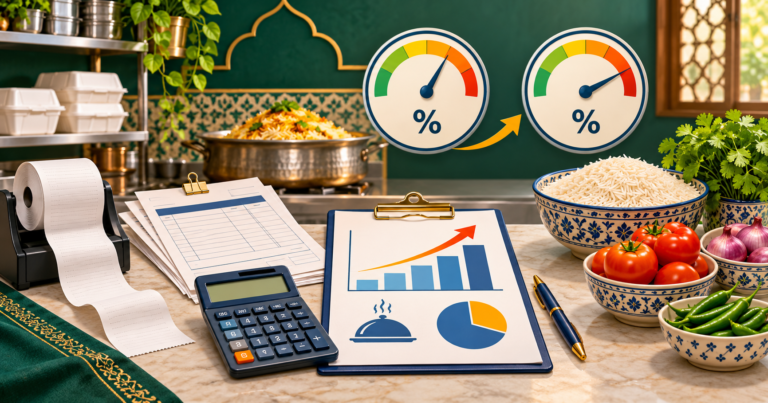
Food cost percentage can rise even when a recipe has not changed. Ingredient prices may increase, portions may grow, waste may rise, discounts may reduce sales, or the mix of products sold may shift. A useful audit separates these causes instead of treating one percentage as a complete diagnosis.
Confirm the Numerator and Denominator
Start by confirming what was counted as food cost and what was counted as food sales. Both values must cover the same dates and the same operation.
Do not compare one week of purchases with one month of sales. Purchases can also differ from food actually used when inventory moves sharply.
Use the Food Cost Percentage Calculator only after the source totals are aligned. Save the date range beside the result.
Separate Purchase Price From Quantity Used
A higher invoice price and higher ingredient use are different problems. OpenStax separates material price variance from material quantity variance because each points to a different cause.
Compare the actual unit price with the approved standard price. Then compare actual usage with the standard quantity for the number of portions produced.
Do not change a recipe because a supplier price rose for one delivery. Confirm the invoice unit, pack size, quality, and whether the change is temporary.
Check Portion Size and Batch Yield
Oversized portions can raise food cost without changing any written recipe. Use the same scoop, ladle, scale, or cutting pattern during the audit.
Count actual saleable portions from a batch. A planned yield that is never reached can understate the cost of every plate.
Review trim, cooking loss, broken portions, and staff meals separately. These uses may be valid, but they should not disappear from the record.
Review Waste and Inventory Timing
Waste from spoilage, preparation, overproduction, and returned food affects cost in different ways. Label the reason instead of keeping one unexplained waste total.
A large purchase before a busy period can raise purchases while the inventory remains unused. A usage-based review needs opening inventory, purchases, and closing inventory for the same period.
Keep the simple calculator result separate from a full accounting measure. The article helps investigate inputs; it does not replace inventory controls or professional accounts.
Examine Discounts and Sales Mix
Food cost percentage can rise when discounts reduce net sales, even if ingredient spending stays flat. Check whether the sales figure is gross or net of promotions and refunds.
Sales mix also matters. Selling more low-margin dishes can move the overall percentage even when each recipe performs as expected.
Compare product groups and major dishes before assuming the whole menu has one cause. A weighted mix can hide strong and weak items.
Use a Short Variance Review Meeting
Bring the cost percentage, top invoice changes, batch-yield notes, waste log, and sales mix to one brief review. Assign one owner to each unexplained item.
Choose the largest verified cause first. A small price change across one minor ingredient may matter less than a repeated portioning gap.
Set a next check date and record the action taken. A percentage without a follow-up date becomes a warning that nobody owns.
Avoid Common Food Cost Audit Mistakes
- Mixing periods: align cost and sales dates.
- Blaming prices only: inspect usage and yield.
- Ignoring discounts: confirm the sales basis.
- Using one menu average: review sales mix.
- Changing many controls: test one major cause first.
The goal is not to force one ideal percentage on every operation. The goal is to understand why the current result differs from the approved plan.
Build a Repeatable Review Record
Use the downloadable CSV for at least three comparable checks. Record the source document, units, date, physical result, person responsible, and final action. Replace the fictional row with your own information.
Keep exceptions instead of deleting them. A damaged delivery, unusual event, temporary promotion, or different preparation method can explain why one result does not match the normal pattern.
Review the complete record before changing a standard. One result can raise a useful question, while repeated comparable results provide a stronger basis for a new operating rule.
Use clear status words such as pending, verified, approved, rejected, or monitor. Vague notes make it difficult for the next person to understand whether a decision is complete.
Attach the supporting receipt, invoice, photograph, temperature log, or recipe version when it matters. The number should be traceable without relying on memory.
Download the Practical Record
Open the CSV in a spreadsheet and replace the example row with your own measurements and evidence.
Keep the Decision Traceable
Record the source, unit, result, owner, and next action in one place.
Use the Food Cost Percentage Calculator
The Food Cost Percentage Calculator performs the matching arithmetic. This article covers records, evidence, and operational decisions that the calculator cannot observe.
Calculate the Measured Result
Confirm the units and source values first, then save the result with the evidence.
فوڈ کاسٹ فیصد آڈٹ کے عام سوالات
فوڈ کاسٹ فیصد اچانک کیوں بڑھتا ہے؟
قیمت، پورشن، ضائع ہونے والی خوراک، رعایت، فروخت کی ترکیب یا غلط تاریخوں کے باعث فیصد بدل سکتا ہے۔
کیا صرف رسیدیں دیکھنا کافی ہے؟
نہیں۔ اصل استعمال، بیچ کی پیداوار، پورشن سائز، انوینٹری اور خالص فروخت بھی ایک ہی مدت کے لیے دیکھیں۔
قیمت اور مقدار کا فرق کیسے الگ کریں؟
اصل یونٹ قیمت کو معیاری قیمت سے الگ ملائیں، پھر استعمال شدہ مقدار کو تیار کیے گئے پورشن کے معیار سے جانچیں۔
رعایت فیصد پر کیسے اثر ڈالتی ہے؟
رعایت خالص فروخت کم کر سکتی ہے، اس لیے خوراک کی لاگت برابر رہنے کے باوجود فیصد اوپر جا سکتا ہے۔
آڈٹ کے بعد پہلا قدم کیا ہو؟
سب سے بڑے تصدیق شدہ فرق کا مالک مقرر کریں، ایک عملی تبدیلی کریں اور اگلی جانچ کی واضح تاریخ لکھیں۔
Sources and Further Reading
Related Cooking Tools
Related Food Cost and Catering Guides

Author and Founder
3 thoughts on “Why Food Cost Percentage Changes and How to Audit It”