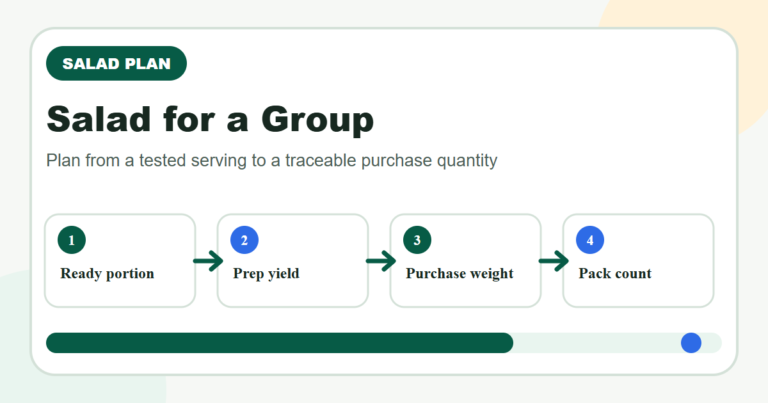
Salad planning has two different weights: ready-to-serve salad and as-purchased produce. Trimming, washing, draining, peeling, and damaged leaves reduce usable yield. First set the plated or buffet portion, then divide by a measured preparation yield to calculate what to buy.
Define the Type and Role of the Salad
A small side salad, buffet salad, composed grain salad, and main-course salad do not share one portion standard. List the ingredients and service role before choosing the ready-to-serve weight.
Decide whether the target includes dressing, protein, croutons, fruit, cheese, or only prepared vegetables. Keep heavy add-ins separate when they have their own recipe and yield.
The Salad for Guests Calculator converts a ready-to-serve target into as-purchased weight. It needs your measured preparation yield.
Separate Ready-to-Serve and As-Purchased Weight
Ready-to-serve weight is what reaches the service bowl after trimming, washing, draining, and cutting. As-purchased weight includes the parts you may not serve.
Ready-to-serve demand = guests × salad per guest × reserve factor
As-purchased weight = ready-to-serve demand ÷ preparation yield
USDA’s Food Buying Guide uses the same as-purchased and edible-portion distinction for menu and purchasing calculations.
Measure Preparation Yield for the Salad Mix
Weigh each ingredient before preparation and again when it is ready to serve. Divide usable weight by purchase weight. Test ingredients separately when their trim losses differ greatly.
USDA notes that yield changes with product quality, storage, handling, cooking method, and service form. A local test is valuable when a supplier or season changes.
Drain washed leaves consistently before weighing. Surface water can make a salad appear to yield more while diluting dressing and reducing quality.
Work Through a 50-Guest Salad Example
Fifty guests at 120 g of ready-to-serve salad need 6 kg before reserve. A 10% reserve raises the target to 6.6 kg.
At an 80% measured preparation yield, divide 6.6 kg by 0.80. The purchase requirement is 8.25 kg. If the produce mix comes in 1 kg packs, buy nine packs.
The remaining 0.75 kg purchase capacity is pack surplus. It should not be described as an additional reserve.
Keep Dressing and Crisp Add-Ins Separate
Dressing changes weight and can make leaves wilt during long service. Calculate dressing from a tested recipe and add it at the planned time instead of hiding it inside the vegetable yield.
Store croutons, nuts, seeds, and other crisp items separately until service when appropriate. Their counts and allergen controls need their own records.
A mixed salad should have a recipe ratio so scaling does not produce mostly inexpensive leaves and too little of the other components.
Plan Buffet Refills and Food Safety
Prepare the total required amount, but consider presenting it in smaller refill batches. This can protect appearance and reduce the amount exposed at one time.
Record the quantity placed out, refilled, returned, and discarded. Do not treat every unserved tray as reusable without following the operation’s food-safety procedure.
The calculator handles quantity only. Temperature control, allergens, washing, cross-contamination, and safe service remain separate responsibilities.
Avoid Common Salad Planning Errors
- Using purchase weight as serving weight: apply yield.
- Weighing wet leaves: drain consistently.
- Including dressing twice: define the boundary.
- Using one yield for every ingredient: test major components.
- Rounding before yield: round only to seller packs.
After the event, compare ready-to-serve output and leftovers with the plan.
Record Planned and Actual Group Food Quantities
Use the downloadable worksheet to keep the menu role, guest count, portion, reserve, measured yield, pack or vessel rounding, and actual outcome together. Replace the fictional row with your own event values.
After service, record actual attendance, prepared quantity, leftovers, and discarded food. One event cannot create a universal standard, but repeated comparable records can improve the next plan.
Keep the parent calculator’s export with the event sheet. A result without its input definitions is difficult to review later.
If the menu, product, service style, or equipment changes, treat the new event as a different comparison group rather than forcing it into the old average.
Download the Group Food Planning Worksheet
Open the CSV in a spreadsheet and replace every fictional value with your own measured event information.
Plan, Serve, and Review the Result
Keep the planned portion, yield, reserve, purchase rounding, and actual leftovers in one record.
Use the Salad for Guests Calculator
The Salad for Guests Calculator performs the matching quantity calculation. This article helps you choose and verify the service assumptions placed into it.
Calculate With Your Event Values
Enter the guest count, tested portion, reserve, and yield or capacity required by the tool.
مہمانوں کے لیے سلاد کے عام سوالات
تیار سلاد اور خریداری وزن میں فرق کیا ہے؟
تیار سلاد دھلائی، تراش اور نکاسی کے بعد قابل سروس حصہ ہے، جبکہ خریداری وزن مکمل پروڈکٹ ہوتا ہے۔
ییلڈ کیسے ناپیں؟
خریدنے سے پہلے وزن کریں، تیاری کے بعد قابل استعمال وزن کریں، پھر دوسرے وزن کو پہلے پر تقسیم کریں۔
کیا ڈریسنگ سلاد وزن میں شامل ہو؟
صرف تب جب آپ کا پورشن معیار واضح طور پر تیار ڈریسنگ والا سلاد بیان کرتا ہو۔
گیلے پتے کیوں مسئلہ ہیں؟
سطحی پانی وزن بڑھاتا، ڈریسنگ پتلی کرتا اور حقیقی قابل استعمال ییلڈ کو چھپا سکتا ہے۔
ریزرو اور پیک سرپلس ایک ہیں؟
نہیں۔ ریزرو منصوبہ شدہ اضافی مقدار ہے، جبکہ پیک سرپلس پورے پیک خریدنے سے بنتا ہے۔
Sources and Further Reading
Related Group Food Planning Tools
More Guest Food Planning Guides

Author and Founder
1 thought on “How Much Salad to Prepare per Person for a Group”