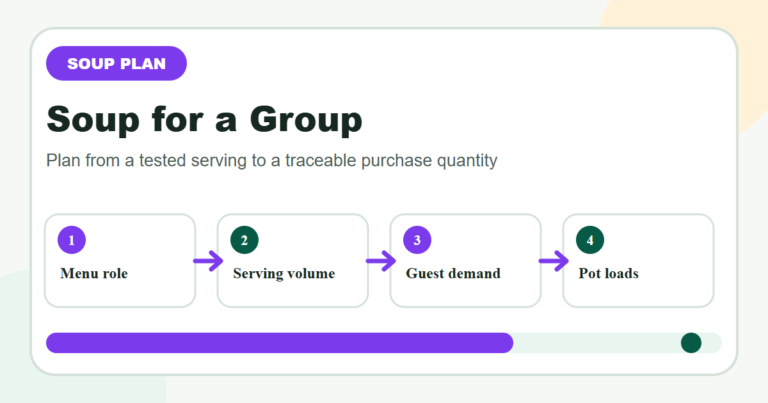
Soup quantity should be based on finished ready-to-serve volume, not concentrate, stock, or raw ingredient volume. A starter cup, buffet bowl, and main-course soup are different planning jobs. Choose the serving vessel and ladle first, then multiply a tested portion by attendance and one justified reserve.
Define Whether Soup Is a Starter or Main
A small starter served before a main meal needs a different volume from a hearty soup that is the meal. Buffet self-service, table service, and takeaway containers also create different portion control.
List the cup or bowl size, planned fill line, and serving utensil. Do not plan from the container’s rim capacity when the normal fill is lower.
The Soup for Guests Calculator multiplies your selected finished volume. It does not choose a dietary serving for you.
Calculate Finished Soup Volume
Use the soup after reconstitution, cooking loss, garnish, and final adjustment. Concentrate or stock volume is only an ingredient input.
Base soup volume = guests × milliliters per guest
Planned liters = base milliliters × (1 + reserve ÷ 100) ÷ 1,000
The USDA Food Buying Guide lists ready-to-serve and reconstituted soup as different purchase forms. Keeping the boundary visible prevents under-dilution or double-counting water.
Test the Ladle, Cup, and Bowl Together
Fill the service vessel as staff will fill it, then measure the actual volume. A labeled ladle measures fluid volume, but repeated partial or heaped ladles can change the portion.
USDA’s portion-control resource recommends filling a measuring utensil level to the top for consistent service. Train the same action that the calculator assumes.
Count how many planned fills come from one test liter. If the count differs from the expected result, fix the utensil or portion standard before scaling.
Work Through a 40-Guest Soup Plan
A plan for 40 guests at 300 ml each needs 12,000 ml, or 12 liters, before reserve. A 10% reserve increases the target to 13.2 liters.
If each pot has a practical usable capacity of 8 liters, divide 13.2 by 8 and round upward. Two pot loads provide 16 liters of capacity.
The 2.8 liters of unused capacity is not extra soup. It is empty working room created by whole-vessel rounding.
Separate Recipe Yield From Service Volume
A standardized soup recipe should state its tested total yield and portion size. Scale ingredients from that yield, then compare the finished liters with the guest-service plan.
Evaporation, solids, blending, straining, and added water can change volume. Record the final measured yield instead of assuming ingredient volumes simply add together.
The Institute of Child Nutrition publishes recipes that show total yield and portion tools, such as an 8-ounce ladle for a one-cup soup serving. Use your own tested recipe and equipment.
Plan Pot Capacity, Refills, and Holding
Use practical working capacity, not a pot filled to the rim. Leave room for stirring, transport, and safe handling according to the kitchen’s equipment instructions.
If service uses a smaller tureen or chafing insert, plan refill timing separately. The cooking-vessel count does not tell you how many front-of-house refills are needed.
Follow approved temperature, cooling, reheating, and allergen procedures. A quantity result does not prove safe holding.
Avoid Common Soup Planning Errors
- Using concentrate volume: plan finished soup.
- Filling vessels to the rim: use practical capacity.
- Mixing ounces by weight and volume: keep units clear.
- Counting empty pot space as soup: report it separately.
- Ignoring solids and garnish: test the final recipe.
Run one full-size production test when a recipe or vessel is new.
Record Planned and Actual Group Food Quantities
Use the downloadable worksheet to keep the menu role, guest count, portion, reserve, measured yield, pack or vessel rounding, and actual outcome together. Replace the fictional row with your own event values.
After service, record actual attendance, prepared quantity, leftovers, and discarded food. One event cannot create a universal standard, but repeated comparable records can improve the next plan.
Keep the parent calculator’s export with the event sheet. A result without its input definitions is difficult to review later.
If the menu, product, service style, or equipment changes, treat the new event as a different comparison group rather than forcing it into the old average.
Download the Group Food Planning Worksheet
Open the CSV in a spreadsheet and replace every fictional value with your own measured event information.
Plan, Serve, and Review the Result
Keep the planned portion, yield, reserve, purchase rounding, and actual leftovers in one record.
Use the Soup for Guests Calculator
The Soup for Guests Calculator performs the matching quantity calculation. This article helps you choose and verify the service assumptions placed into it.
Calculate With Your Event Values
Enter the guest count, tested portion, reserve, and yield or capacity required by the tool.
مہمانوں کے لیے سوپ کے عام سوالات
سوپ کی مقدار کہاں سے شروع کریں؟
پہلے طے کریں کہ سوپ اسٹارٹر، سائیڈ یا مکمل کھانا ہے، پھر تیار سروس والی مقدار چنیں۔
کیا کنسنٹریٹ کا حجم استعمال کریں؟
نہیں۔ پانی، پکانے اور آخری ایڈجسٹمنٹ کے بعد تیار سوپ کا حجم درج کریں۔
لاڈل کیسے چیک کریں؟
اصل کپ یا باؤل میں معمول کے طریقے سے سوپ ڈالیں اور بھرنے کی مقدار ناپیں۔
برتن کی پوری گنجائش کیوں نہ لیں؟
ہلانے، اٹھانے اور محفوظ کام کے لیے عملی بھرائی عموماً کنارے تک گنجائش سے کم ہوتی ہے۔
کیا خالی برتن کی جگہ اضافی سوپ ہے؟
نہیں۔ یہ پورے برتنوں تک راؤنڈنگ سے بننے والی غیر استعمال شدہ گنجائش ہے۔
Sources and Further Reading
Related Group Food Planning Tools
More Guest Food Planning Guides

Author and Founder