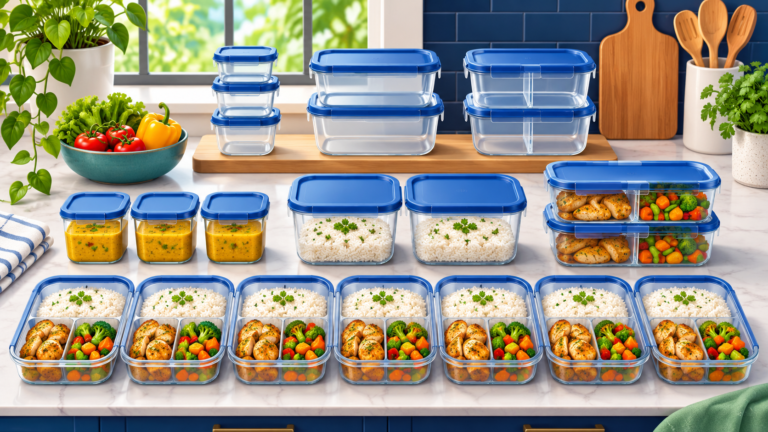
The best meal prep container is not simply the largest box on the shelf. A practical size keeps each component separate when needed, closes without crushing food, stacks in the available space, supports the approved cooling and storage process, and matches a portion people can use. Test the menu before buying a full case.
Map the Weekly Menu Before Choosing a Box
List each planned meal, component, target portion, sauce, garnish, and serving day. Note foods that should stay separate until eating. Rice, daal (دال), vegetables, salad, and bread do not always belong in one undivided space.
Group meals by packing pattern rather than buying a different box for every recipe. A small set of tested formats is easier to store, label, count, and replace.
Keep nutrition or medical portion decisions outside this packaging exercise. Use the portions already selected by the household or a qualified professional.
Compare Shape, Compartments, and Working Volume
Record outside dimensions, inside dimensions, compartments, lid depth, material, and maker instructions. A tall container may suit curry but waste shelf space for a flat meal.
Fill each compartment with measured water to understand its shape, then test the real food. Rounded corners, dividers, and lids can reduce usable space below the stated total.
Use the Meal Prep Container Count Calculator after you know the accepted size and weekly meal count. The tool owns the count arithmetic; this guide owns the packaging trial.
Pack the Real Meal and Check Separation
Use the normal scoop or scale and pack every component. Check whether sauce crosses a divider, crisp food becomes wet, bread is compressed, or a bulky item prevents the lid from closing.
Leave clearance at the top and around the sealing rim. Do not reduce a selected food portion merely to make the wrong package fit. Choose another layout when the meal needs more space.
Open the container after the expected holding period. Judge appearance, texture separation, ease of eating, and the amount left in corners.
Check Lid Fit, Stack Height, and Storage Space
Close the lid according to the maker’s directions. Inspect every edge and stack the normal number of filled containers. Record bowing, lid release, rocking, and the height of the stack.
Measure the usable refrigerator or freezer shelf before purchasing a case. Include airflow and access required by the appliance and your approved storage process.
Test labels on the real lid and side. A label should stay readable without covering vents, seals, or required manufacturer information.
Plan Cooling, Reheating, and Reuse Correctly
Package size affects cooling, but a container choice does not create a food-safety plan. FDA guidance includes smaller portions and containers that facilitate heat transfer among acceptable cooling methods.
Follow local rules and the approved process for cooling, refrigeration, freezing, reheating, and holding. Reheat in the package only when its manufacturer allows that intended use.
Reusable containers need a defined cleaning, sanitizing, inspection, and replacement process. Discard damaged items according to the maker’s guidance and local requirements.
Run a Small Weekly Pilot
Prepare two or three meals in each candidate format before buying in bulk. Record packing time, fridge footprint, leakage, stack stability, label readability, cleaning effort, and actual household use.
Check how many containers return on time if the system depends on reuse. The theoretical count may be too low when boxes remain at work or school.
Choose the fewest formats that cover the menu well. A slightly higher unit price can be worthwhile when it prevents leaks, wasted shelf space, or unused specialty sizes.
Avoid Common Meal Prep Container Errors
- Buying by total volume: test compartments and lid depth.
- Using one shape for every meal: group by packing pattern.
- Ignoring shelf space: measure the full stack.
- Assuming microwave use: check maker instructions.
- Counting boxes only: include returns, damage, and spares.
Recheck the standard when the menu, portion, appliance, storage space, container supplier, or household routine changes.
Build a Repeatable Test Record
Use the downloadable CSV for at least three comparable trials. Record the exact container or equipment ID, food or drink, portion tool, fill level, lid or service setup, route, failures, corrections, usable yield, and decision.
Change one factor at a time when possible. If the product, package, portion, temperature, route, and staff method all change together, the team cannot identify the cause of a result.
Keep failed trials and photographs when they explain the approved standard. A failure is useful evidence, not a reason to erase the record.
Name the person who ran the test and the date. Ask another trained person to repeat the accepted setup without verbal help. If that person cannot reproduce it, improve the written standard.
Write a practical range when normal variation makes one exact number misleading. Record the package lot or supplier code when small manufacturing differences could matter.
Review the record after any change to the menu, package, portion tool, appliance, route, service method, or applicable rule. The result belongs to the tested setup.
Download the Test Worksheet
Open the CSV in a spreadsheet and replace the example row with measurements from your own controlled trial.
Keep the Test Traceable
Record the setup, result, failure, correction, and approved operating standard.
Use the Meal Prep Container Count Calculator
The Meal Prep Container Count Calculator performs the matching arithmetic. This article covers the physical trial and service evidence that a calculator cannot observe.
Calculate With Measured Inputs
Complete a real trial, then enter the verified working volume, portion, count, or service rate.
میل پریپ کنٹینر کے عام سوالات
ایک ہی سائز ہر کھانے کے لیے کافی ہے؟
ضروری نہیں۔ سالن، چاول، سلاد اور روٹی کے لیے مختلف شکل یا تقسیم درکار ہو سکتی ہے۔
کمپارٹمنٹ والا باکس کب بہتر ہے؟
جب اجزا الگ رکھنے سے ذائقہ، بناوٹ یا استعمال بہتر رہے۔
مائیکروویو میں باکس رکھ سکتے ہیں؟
صرف اس وقت جب بنانے والے کی ہدایات اس استعمال کی اجازت دیں۔
کتنے باکس خریدیں؟
حقیقی ہفتہ وار پلان، واپسی، دھلائی، نقصان اور چند اضافی باکس شامل کریں۔
کولنگ کیسے چیک کریں؟
منظور شدہ فوڈ سیفٹی پلان اور مقامی قانون کے مطابق الگ ریکارڈ رکھیں۔
Sources and Further Reading
Related Food Packaging and Service Guides
More Food Packaging Guides

Author and Founder
3 thoughts on “How to Choose Meal Prep Container Sizes for a Weekly Plan”