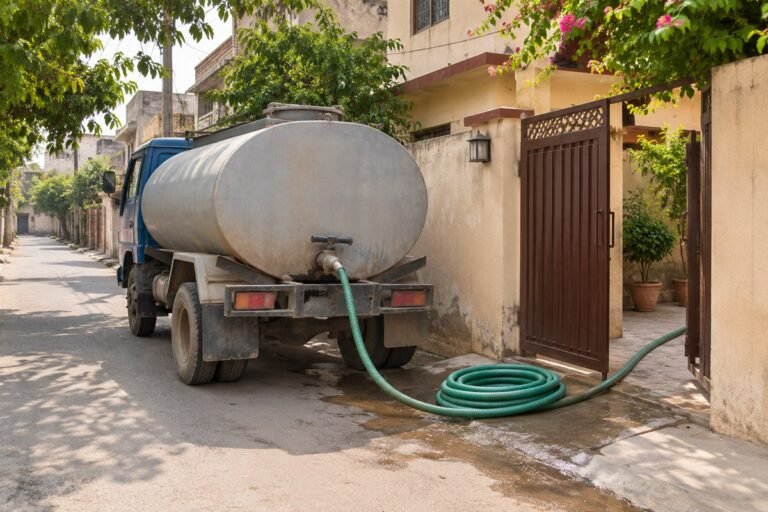
A water tanker budget depends on more than the price of one visit. The volume that fits, the amount you actually receive, and the water left in storage all affect how soon you need another order. A monthly estimate tells you how much cash to set aside while your delivery schedule tells you when to use it.
Give the Water Budget a Clear Start Date
Choose a period you can compare with your order records, such as the next 30 days. Record the usable water already stored at the start. If you keep a separate supply for a particular purpose, count only the amount that is available for the uses in this plan.
Use your recent meter readings or a delivery and storage log to estimate household use. Mark days that included extra laundry, guests, or other unusual demand. Check a typical week alongside those days before selecting your planning figure. A household that just changed its routine may need to start with an estimate and check it more often.
Plan water costs in liters and rupees. A quote described as one tanker is useful only if you know the actual volume it represents. Ask for liters on the receipt or quote. Keep each source's volume in the same unit before you add different supplies together.
Subtract Other Usable Supply Before Counting Tankers
In this fictional plan the household uses 350 L a day for 30 days, or 10,500 L. It expects 2,100 L from other usable supply that month and starts with 900 L in storage. That leaves 7,500 L to order. Keep the other supply estimate tied to the dates on which it is likely to arrive.
Tanker Liters Needed = Planned Use − Other Usable Supply − Opening Usable Storage, With a Minimum of Zero
If the opening amount and other supply cover the expected use, the monthly model calls for zero new orders. The dates can still change that result. A source that usually arrives in the final week cannot cover a shortfall in week one. Mark any late or uncertain delivery so you can see when it matters.
Check what happened in the previous period before reusing the estimate. If your last planned order arrived just after your new period began, record its water when it actually arrived. Do the same for storage. Count the volume left at the start, then count only deliveries that land during the new period.
Check How Much Water Fits Before You Order
The working storage capacity is the maximum usable amount you intend to hold. Subtract the amount currently in storage to find the free space. With a working capacity of 3,500 L and 700 L currently stored, there is room for 2,800 L. A 2,500 L load fits under those example conditions.
On another day you could have more water left in the same tank. Check the current reading when you confirm the order. If the full load cannot fit, ask about a smaller option or a different time before comparing its cost. A lower advertised price per liter saves little if you must pay for a volume you cannot accept.
The worksheet uses a planning volume. It cannot tell whether a water source is suitable for drinking or other uses. Check the source and its intended use with the relevant provider or local authority. Use volume figures from sources that are appropriate for the needs you include in the budget.
Price the Delivered Liters and the Whole Order
In this example a 2,500 L load is quoted at PKR 1,800 with a PKR 250 charge per visit. The full delivery costs PKR 2,050, or PKR 0.82 per liter at the quoted volume. If the quoted price already includes the visit, keep it as one amount. Add a fee only when it applies to the order.
To buy 7,500 L at 2,500 L per delivery takes exactly three orders. At PKR 2,050 each, the month costs PKR 6,150. The plan ends with zero liters if use and all arrivals match the example. A household may choose to price an extra buffer separately if that fits its storage and cash.
Test the Cost When Received Volume Changes
Suppose each delivery provides only 2,300 L at the same price. The cost per received liter is about PKR 0.89. Three loads provide 6,900 L, leaving a 600 L gap. Four orders cost PKR 8,200 and provide 9,200 L, which is 1,700 L above the planned need if all four volumes fit and arrive when needed.
Treat a difference between quoted and received volumes as a reason to check your record and the order. Ask the supplier how the delivered amount is confirmed. A measured pattern over several orders makes a stronger starting point for the next plan than a single rough reading.
Put the Order Dates Next to Other Household Bills
Use a short dated schedule to check the storage balance between deliveries. Start from your actual usable stock, add arrivals, and subtract estimated use. Mark when the balance will be too low for the next day. Then check which delivery amounts fit before those dates and what each order will cost.
Record the actual payment on each order date. An order paid at booking belongs on that earlier date in your cash plan. If you need to compare the timing against other household bills, use the bill calendar guide to see how the payments line up.
Download the Worksheet
Replace the fictional example rows with your own figures. Open the CSV in a spreadsheet or print it for a paper record.
اکثر پوچھے جانے والے سوالات
ٹینکر کا بجٹ کس حساب سے بنائیں؟
روزانہ استعمال کا اندازہ لگائیں اور وہ پانی نکالیں جو گھر میں موجود ہے یا دوسرے ذریعے سے ملے گا۔
ٹینک میں جگہ کیسے معلوم کریں؟
ٹینک کی قابل استعمال گنجائش میں سے موجود پانی نکالیں۔ بچی جگہ کو آرڈر کی مقدار سے ملائیں۔
ٹینکر کی قیمت میں کیا دیکھیں؟
پوری رقم پوچھیں اور معلوم کریں کہ ترسیل کی فیس شامل ہے یا الگ۔
پانی کم ملے تو حساب کیسے بدلیں؟
رسید اور وصول شدہ لیٹر دیکھیں۔ اگلے حساب میں ایسی مقدار رکھیں جس کی آپ تصدیق کر سکیں۔
کیا مہینے کا کل حساب کافی ہے؟
ہر ترسیل کی تاریخ بھی لکھیں تاکہ پہلے ہفتے کی کمی سامنے آئے۔
Sources and Further Reading
Related Budgeting Resources
More Household Budgeting Guides

Author and Founder