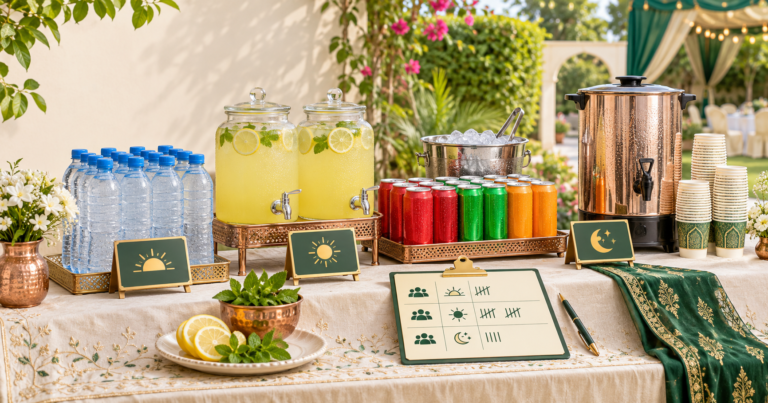
Drink planning needs more than a guest count. Service time, weather, activity, meal type, cup size, ice, and the beverage mix all change demand. Plan water first, then divide the remaining demand across tea, lemonade, soft drinks, juice, or other nonalcoholic options.
Define the Event and Service Period
Write the start time, end time, indoor or outdoor setting, expected activity, meal schedule, and guest groups. A two-hour seated meal differs from a long outdoor gathering.
Iowa State University Extension’s quantity-cooking guidance lists hourly beverage references for event planning. Treat them as a starting point and compare them with your service style and local records.
The Beverages for Guests Calculator can total the chosen rates. This article helps decide what those rates should represent.
Keep Drinking Water Separate From Other Choices
Water is a basic need and should not disappear inside an assumed beverage mix. Plan an accessible supply even when tea, lemonade, or soft drinks are also served.
Count bottles by net volume or plan dispensers by measured capacity. Include refill access, cups, and backup water for staff where appropriate.
Do not treat ice as drink volume. Record ice separately because melting, cooling method, and cup fill can change the amount of beverage actually served.
Use Cup Size and Pour Level
A two-liter bottle does not produce the same serving count with every cup. University of Virginia guidance shows different serving counts for six-ounce and eight-ounce glasses.
Measure the real cup to the normal fill line. Leave appropriate headspace and avoid assuming that the cup’s advertised capacity equals the typical pour.
For tea urns and dispensers, test the usable yield after accounting for residue and a practical stop level. Record the result instead of relying only on nominal capacity.
Divide Demand Across the Beverage Mix
Estimate what share of guests will choose each option during each service period. Morning tea, meal-time drinks, and late-event refreshments may have different mixes.
Do not plan a full single-beverage quantity for every option. That creates large overbuying when the choices compete with each other.
Keep special options, such as sugar-free drinks or child-friendly portions, visible in the plan. Their counts should reflect the intended group, not the entire guest list.
Adjust for Weather and Activity Carefully
Heat and outdoor activity can raise water demand, while cool weather may shift choices toward hot drinks. Use conditions as a reasoned adjustment, not a fabricated exact percentage.
Record temperature range, shade, activity, and event length after the event. These notes help explain why one gathering used more drinks than another.
Always maintain safe water availability. Do not reduce water below the event’s health, venue, or local requirements because another beverage is popular.
Stage Refills and Track Actual Use
Open or prepare drinks in controlled batches. Keep unopened reserve separate so waste and future use are easy to identify.
Record starting stock, refills, unopened remainder, prepared leftover, and disposal. A total purchase count alone cannot show what guests actually used.
Note the time of any shortage. Running out near closing may need a smaller correction than running out before the meal begins.
Avoid Common Party-Drink Planning Errors
- Combining water with optional drinks: plan it separately.
- Ignoring cup size: measure the normal pour.
- Planning every choice for every guest: assign mix shares.
- Counting ice as beverage: keep it separate.
- Recording purchases only: track refills and leftovers.
Use verified event records to improve the next plan instead of treating one rate as permanent.
Build a Repeatable Event Record
Use the downloadable CSV for at least three comparable events. Record the guest group, menu or package form, service style, planned amount, actual use, leftovers, shortages, and the reason for any adjustment.
Keep exceptions rather than deleting them. Weather, delayed arrivals, a menu substitution, a damaged delivery, or a different serving utensil can explain why one result does not match the usual pattern.
Review complete records before changing a standard. One event raises a useful question. Several comparable events provide a stronger basis for a new planning rule.
Use clear status terms such as planned, verified, served, leftover, shortage, and review. Vague notes make the next event harder to plan.
Download the Planning Worksheet
Open the CSV in a spreadsheet and replace the example row with your own event details.
Keep the Decision Traceable
Record the plan, actual use, leftovers, shortage, and reason for change.
Use the Beverages for Guests Calculator
The Beverages for Guests Calculator performs the quantity arithmetic. This article covers the real-world choices and records that the calculator cannot observe.
Calculate the Planned Quantity
Define the portion, serving basis, and adjustment first, then save the result with the event record.
تقریب کے مشروبات کے عام سوالات
پانی الگ کیوں گنیں؟
پانی بنیادی ضرورت ہے۔ اسے چائے، لیمونیڈ یا سافٹ ڈرنک کے انتخابی مکس میں چھپا کر کم نہ کریں۔
کپ کا سائز کیسے جانچیں؟
اصل کپ کو معمول کے فل لیول تک پانی سے بھریں اور حجم ناپیں۔ اشتہاری گنجائش ہمیشہ معمول کی مقدار نہیں ہوتی۔
گرمی میں مقدار کتنی بڑھائیں؟
مقامی ریکارڈ، تقریب کی مدت، سایہ اور سرگرمی دیکھ کر واضح ایڈجسٹمنٹ کریں۔ بغیر ثبوت کے ایک مقرر فیصد نہ بنائیں۔
کئی مشروبات ہوں تو کیا کریں؟
ہر وقت کے حصے کے لیے انتخاب کا متوقع حصہ دیں۔ ہر مشروب کو تمام مہمانوں کے لیے مکمل مقدار میں نہ گنیں۔
استعمال کیسے ریکارڈ کریں؟
شروع کا اسٹاک، ہر ریفل، بند بچا ہوا مال، تیار بچا ہوا مشروب، ضائع مقدار اور کمی کا وقت لکھیں۔
Sources and Further Reading
Related Cooking Tools
Related Guest Planning Guides

Author and Founder